

Best Secret Relationship Romance Books 2026 — Nobody Can Know, and That’s What Makes It Burn
Secret relationship romance is the trope where the obstacle isn’t external — it’s the lock on the door. Nobody can know. The boss can’t find out. The team can’t see it. The family can’t suspect. The entire architecture of the love story is built inside a space that officially doesn’t exist, and the structural pressure of maintaining the lie is the engine that makes every stolen hallway glance, every locked-office encounter, every 2 AM text that gets deleted before morning feel like the most consequential thing either character has ever done.
The trope works because it does something almost no other dynamic can: it makes the relationship itself the forbidden thing. Other tropes externalize the obstacle — the rivalry, the age gap, the professional hierarchy. Secret relationship internalizes it. The love is the problem. The want is the liability. The two people who have found each other are, by every structural measure, the thing that could destroy everything they’ve built. And the slow, inevitable process of deciding that the destruction is worth it — that’s the trope’s signature payoff.
Below: four trad-pub gateway comps that built the architecture the trope rides on, plus six indie Kindle Unlimited titles across FF and MM where the secrecy is structurally earned, the cost of exposure is real, and the on-page heat happens behind doors that were never supposed to open.

Twisted Love — Ana Huang

Alex Volkov is the cold, controlled, emotionally locked-down best friend of Ava Chen’s brother. He has been pointedly not looking at her for years. When her brother asks Alex to look out for Ava while he’s overseas, the arrangement becomes proximity — and the proximity becomes a thing neither of them can acknowledge out loud because her brother would destroy them both. The secret isn’t just about social disapproval. It’s about a man whose entire emotional architecture is built around never wanting anything, quietly dismantling himself for a woman he is categorically not allowed to have.
Huang does the secret relationship with the structural pressure the trope demands. Alex’s frozen interior is the load-bearing element — every secret meeting, every careful deletion of evidence, every midnight encounter that has to look like nothing the next morning is weighted by the fact that Alex Volkov does not do this. The exposure risk is real. The brother is real. The possessive architecture earns the secrecy because the reveal would end everything. Heat is high, on-page, sustained. The dark gateway for readers who want the trope with genuine stakes.
Birthday Girl — Penelope Douglas

Jordan is nineteen, living in her boyfriend’s father’s house, and Pike is thirty-eight. The secret isn’t whispered — it’s architectural. Every shared morning in the kitchen is a performance for an audience that cannot know. Every accidental brush of hands near the coffee pot is a near-miss that both of them replay for hours. The relationship that develops between them is, by every social and familial definition, the thing that would destroy both of their lives if anyone found out. Pike’s son — her boyfriend — is sleeping upstairs. The secrecy isn’t optional. It’s structural.
Douglas writes the secret relationship with the small-town claustrophobia the trope rewards. The Pacific Northwest house is the pressure cooker. The son is the structural enforcer. Every scene where Jordan and Pike share a space they shouldn’t share is weighted by the knowledge that the door could open at any moment. The age gap is twenty years. The forbidden charge is real. The secrecy earns the on-page heat because the cost of exposure is total. Heat is high — Douglas opens the door and stays inside it. The forbidden-secret gateway.

Common Goal — Sarina Bowen

Mark Kilfeather is a thirty-eight-year-old veteran NHL goalie — recently divorced, career-ending, quietly devastated. He has been closeted for his entire professional life. Jamie Canning is the younger assistant coach who has been patiently, silently waiting. The secret relationship architecture here is the closeted-athlete variant at its most structurally precise: the locker room is the surveillance environment, the media is the external threat, the career is the thing the secrecy is protecting, and the slow recognition that Mark has spent twenty years hiding the most important thing about himself is the engine.
Bowen writes the closeted-secret relationship with the patience the trope demands. Mark’s post-divorce loneliness is the structural foundation — the careful management of a life built around performing straightness while a younger man quietly rearranges everything Mark thought he knew about himself. The hockey setting amplifies the secrecy because the professional environment is the thing that would punish exposure. Heat is moderate on-page. The emotional architecture is the masterclass. For MM readers who want the secret relationship in sports-closeted register, Common Goal is the entry.
The Spanish Love Deception — Elena Armas

Catalina Martín needs a fake boyfriend for her sister’s wedding in Spain. Aaron Blackford is the unbearably tall, unbearably composed coworker she has spent two years hating. He volunteers. She accepts. The four days in Spain that follow are supposed to be a performance — fake hand-holding, fake affection, fake everything for three generations of relatives and one ex-fiancé. What actually happens is a secret neither of them is prepared for: the fake relationship becomes real, and neither of them can admit it — to the family, to each other, to themselves.
SLD belongs on the secret relationship shelf because the fake-dating architecture creates a structural paradox: everything they do in public is labeled performance, which means the real feelings developing underneath have nowhere to live except in secret. Catalina’s interiority is the engine — the reader watches her rationalize, deny, and fail to maintain the distance the arrangement was supposed to guarantee. The secret isn’t that they’re faking. The secret is that they stopped faking somewhere around day two and neither of them has said it out loud. Heat is moderate-to-high. The Mediterranean setting is the structural backdrop the emotional architecture rides on.
Get The Spanish Love Deception on Amazon →

Indie KU Secret Relationship — Where the Door Stays Locked and the Heat Stays On
The gateway comps above build the architecture beautifully — the secrecy, the structural cost of exposure, the slow recognition that the hidden thing is the real thing. And almost all of them stay inside trad-pub heat ceilings when the locked door finally opens. For readers who came to the trope because the secrecy is supposed to make the on-page payoff devastating, the indie KU shelf is currently the strongest place in the genre to find what mainstream romance is too careful to deliver.
Six titles below — three FF and three MM — each running Inferno-tier on-page heat earned by the structural secrecy. CEOs hiding what happens after the office clears. Construction foremen whose marriages ended because they never understood why. Hockey captains who can’t let the locker room see. Business rivals whose locked-office encounters would end both their careers. The secret relationship at its architectural extreme, finally behind the door the gateway titles only knocked on.

Cold Snap — Aurora North (F/F, Inferno Heat)
Elena Voss is the CEO they call the Ice Queen. Forty-one. Divorced. Worth three billion dollars and incapable of a genuine smile. She hasn’t let anyone past the glass desk in fifteen years, and she built it that way on purpose. Her executive assistant is twenty-eight, competent, quiet, and has been managing Elena’s professional life for a year without once crossing the line Elena drew around herself with surgical precision. Then a freak snowstorm strands them both at the company retreat lodge — one building, one night, one bed, zero witnesses — and the line Elena spent fifteen years drawing disappears in the space between their bodies.
Aurora North does the CEO-secret-relationship at architectural extreme. The snowed-in device is the catalyst, but the secrecy is the engine — what happens at the lodge cannot follow them back to the office. Except it does. The arrangement that develops after the storm is conducted in locked conference rooms, cleared calendars, and the twenty-minute window between when the last employee leaves and when the cleaning crew arrives. Every encounter is a career-ending liability for both of them. The ice-queen architecture cracking under the weight of wanting someone she employs is the trope’s signature payoff. Inferno-tier. Praise kink. Power exchange. Boss/employee. Read Cold Snap free on KU →

Structural Damage — Jace Wilder (M/M, Inferno Heat)
Garrett Cole is forty-two, recently divorced, and the best construction foreman in North Jersey. He thought his marriage failed because he was a workaholic. He was wrong. The new hire on his crew is twenty-four, built like the scaffolding Garrett spends his days climbing, and looking at Garrett with an expression that makes the hollow feeling in his chest suddenly, terrifyingly legible. The secret isn’t just professional — it’s existential. Garrett hasn’t told anyone. Hasn’t told himself. The arrangement that develops between them is conducted in supply closets, after-hours job sites, and the spare room of Garrett’s empty house, and it stays secret because the alternative is Garrett admitting, at forty-two, that everything he believed about himself was structurally wrong.
Jace Wilder writes the gay-awakening secret relationship with the architectural precision the trope demands. Garrett’s closeted interiority is the load-bearing element — the ex-wife who still calls, the crew who can’t see it, the duffel bag packed for the motel when the arrangement gets too close to looking like a relationship. The age gap is eighteen years. The blue-collar setting amplifies the secrecy because construction-site masculinity punishes what Garrett is slowly, agonizingly becoming. The kitchen kiss. The midnight doorway. The first time on his knees. All earned, all secret, all structurally devastating. Inferno-tier. Grumpy/sunshine. Boss/employee. He falls first. Read Structural Damage free on KU →


The Gatekeepers — Aurora North (F/F, Inferno Heat)
Victoria Chen is the Director of the Downtown Business Association — controlled, untouchable, the woman who decides which businesses survive and which get rejected. She hasn’t let anyone past her defenses in three years, not since a scandal nearly destroyed her career. Chloe is the small-business owner who shows up to fight Victoria’s zoning decision with a sandwich board and a public-relations war that neither of them is going to win. The enemies-to-lovers architecture is the surface structure. The secret relationship that develops underneath it — locked office doors, gala balconies, the three-day silences between encounters — is the thing that would destroy both of their professional lives if anyone saw it.
Aurora North layers the secret relationship inside the enemies-to-lovers shell with extraordinary structural precision. Victoria’s ice-queen composure is the wall. Chloe’s refusal to pretend the wall is real is the siege. The secrecy amplifies everything because the professional environment they share is the surveillance device — every colleague, every board meeting, every public event is a near-miss. The gala window scene. The locked office. The rainstorm confrontation. All conducted inside a relationship that officially does not exist. Inferno-tier. Competence kink. Touch starved. Praise kink. Read The Gatekeepers free on KU →
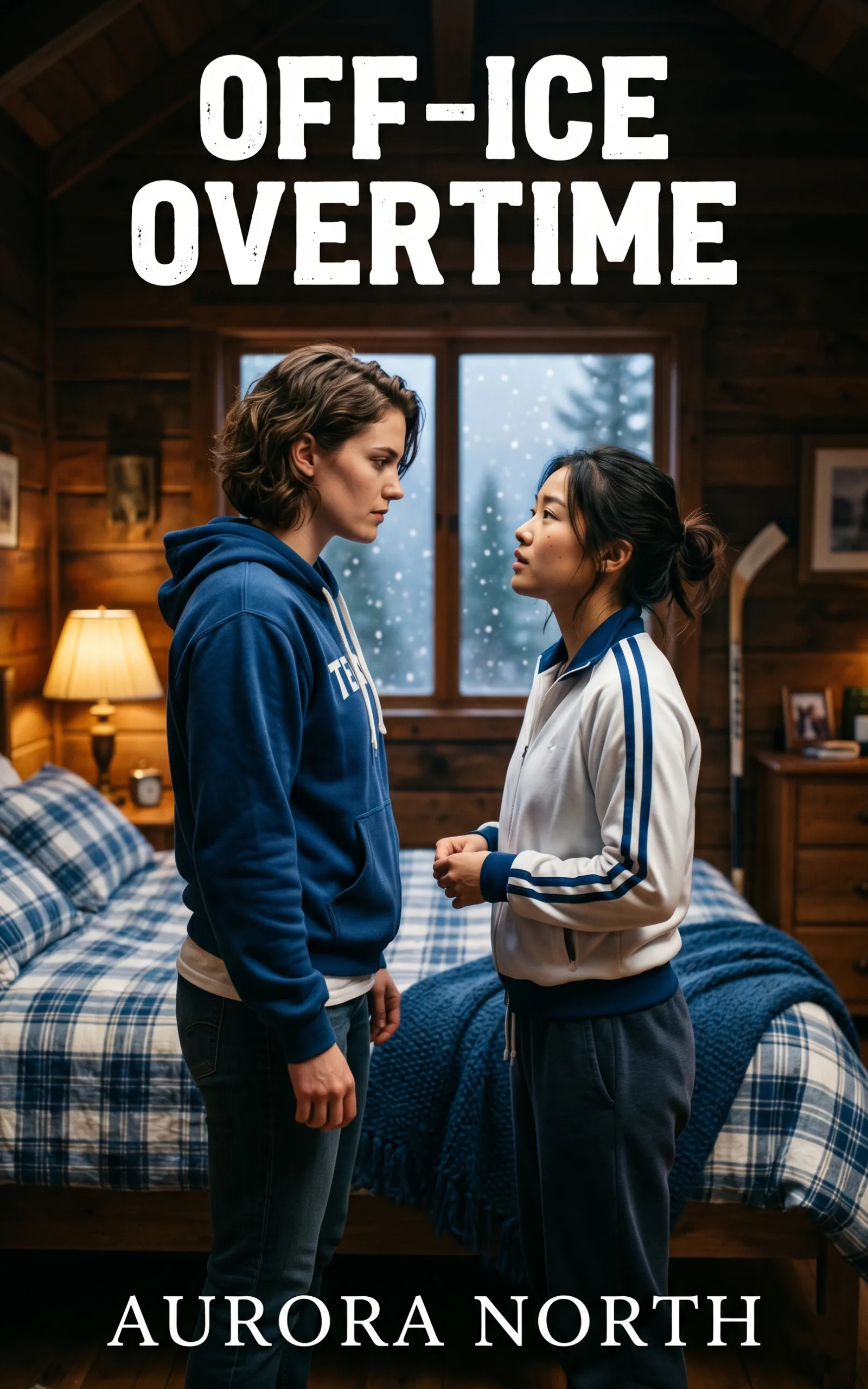
Off-Ice Overtime — Aurora North (F/F Hockey, Inferno Heat)
Rebecca Morrison has been her captain for six years. Six years of watching her lace her skates. Six years of her perfect, impossible control. Six years of pretending the pull in her chest is admiration and nothing more. When the team announces the off-season retreat — one cabin, one bed shared with the captain — the pretending stops. What replaces it is worse: a secret that cannot leave the cabin, cannot enter the locker room, cannot exist anywhere the team can see it, because the team is the thing both of them have built their lives around and the relationship would detonate it.
Aurora North does the teammates-secret-relationship variant at the structural extreme. The captain/player dynamic is the power enforcer. The team environment is the surveillance architecture. The forced proximity of the cabin is the catalyst, but the secrecy that follows them back to the season — the careful distance during practice, the professional composure that cracks in equipment rooms and parking lots — is the engine. The touch-her-and-die protectiveness from the captain’s side earns the trope’s signature payoff because the secrecy is protecting both the team and the woman she’s not supposed to be in love with. Inferno-tier. Slow burn. Forced proximity. Read Off-Ice Overtime on all retailers →


The Captain’s Crown — Chase Power (M/M Hockey, Inferno Heat)
He’s the captain. His best friend is the star. They’ve been inseparable for nine years — every road trip, every post-game debrief, every pre-dawn workout. Last night, in the captain’s office where he’s commanded twenty-two men, his best friend made him beg for it. Tomorrow they have practice. And he has to look him in the eye and pretend nothing happened. The secret relationship between a team captain and his star player is the MM hockey variant at its most structurally compressed — the locker room is the surveillance environment, the media is the exposure risk, and the nine years of friendship that preceded the first kiss is the thing both of them are terrified of losing.
Chase Power writes the best-friends-to-secret-lovers hockey variant with the precision the genre demands. The captain’s office. The connecting hotel door. The morning skates where the bruise on his collarbone has to be explained away as a check from practice. The slow recognition that nine years of “best friend” was nine years of being in love and calling it something else. The secret relationship earns its architecture because the cost of exposure is the team, the career, and the only friendship either of them has ever trusted completely. Inferno-tier. Praise kink. Coming out. Power exchange. Read The Captain’s Crown free on KU →

Yes, Captain — Jace Wilder (M/M Hockey, Inferno Heat)
Marc Donovan has been captain of this franchise for eight years. At thirty-six, with a Conn Smythe and zero public relationships, he has perfected the art of being exactly what the organization needs and nothing else. The rookie who shows up for training camp is too young, too talented, too dangerously willing to say the one word Marc has spent eighteen years in the league pretending he doesn’t need. The secret relationship between a captain and his rookie is the age-gap hockey variant at maximum structural pressure — the chain of command is real, the mentorship is public, and everything happening behind closed doors would end both of their careers.
Jace Wilder writes the captain/rookie secret-relationship with the structural seriousness the trope rewards. Marc’s eighteen-year closet is the load-bearing element — the careful management of media availability, the hotel rooms with the Do Not Disturb sign, the way he says “good” during practice and means something entirely different than what the coaching staff hears. The age gap is structural. The D/s dynamic is the thing the secrecy is protecting. The bi-awakening on the rookie’s side adds a second layer of hidden interiority the trope rarely attempts. Inferno-tier. Forbidden. Closeted. Praise kink. Slow burn. Read Yes, Captain on all retailers →

Why Secret Relationship Hits So Hard
The trope persists because it does something the other dynamics can’t: it puts the love story itself under surveillance. Other tropes generate tension from what keeps the characters apart — the rivalry, the professional hierarchy, the fake-dating terms. Secret relationship generates tension from what happens after the characters get together. The getting-together isn’t the climax. The staying-together-without-being-caught is the climax, and the slow decision to stop hiding is the emotional payoff the entire architecture has been building toward.
That’s also why the trope disproportionately rewards queer romance. Closeted-athlete, closeted-professional, closeted-at-forty — these aren’t decorative plot devices. They’re structurally real experiences that millions of readers recognize in their own lives. When Common Goal puts Mark Kilfeather’s twenty-year closet on the page, or when Structural Damage puts Garrett Cole’s forty-two-year-old gay awakening in a supply closet on a construction site, the trope is doing something literary: it’s telling a story about the cost of hiding the most important thing about yourself, and about the person who makes the cost of hiding finally higher than the cost of being seen.
And it’s why on-page heat matters structurally in the secret-relationship trope specifically. The locked door isn’t just a privacy device. It’s a confessional. What happens behind the door is the only space where both characters get to be fully themselves — no performance, no management, no careful professional composure. The explicit content in the indie KU shelf isn’t gratuitous. It’s architecturally required. The secrecy earns the intimacy. The intimacy earns the vulnerability. The vulnerability is what makes the eventual reveal devastating.

Frequently Asked Questions
What’s the spiciest secret relationship book on Kindle Unlimited?
Cold Snap (Aurora North, FF CEO/assistant snowed-in), Structural Damage (Jace Wilder, MM construction gay awakening), and Yes, Captain (Jace Wilder, MM hockey captain/rookie) all run Inferno-tier on the indie KU shelf with the structural secrecy fully intact. All featured above. All free with Kindle Unlimited where indicated.
Best gateway secret relationship book?
Twisted Love (Ana Huang) for dark possessive secret relationship. Birthday Girl (Penelope Douglas) for forbidden-secret with age gap. Common Goal (Sarina Bowen) for closeted-athlete MM. The Spanish Love Deception (Elena Armas) for the fake-dating-to-secret-real-feelings variant.
Best MM closeted secret relationship books?
Common Goal (Sarina Bowen, trad-pub gateway) for closeted NHL goalie. The Captain’s Crown (Chase Power, indie KU) for best-friends-to-secret-lovers hockey. Yes, Captain (Jace Wilder, indie KU) for captain/rookie age-gap closeted. Structural Damage (Jace Wilder, indie KU) for blue-collar gay awakening at forty-two. All feature real professional stakes, real closeted interiority, and the on-page heat the secrecy architecturally earns.
Best sapphic secret relationship books?
Cold Snap (Aurora North, CEO/assistant), The Gatekeepers (Aurora North, business rivals), and Off-Ice Overtime (Aurora North, hockey captain/teammate) are the FF secret relationship shelf on indie KU. All Inferno-tier. All feature professional environments as the surveillance architecture. All free with Kindle Unlimited or available at major retailers.
What’s the difference between secret relationship and forbidden romance?
Forbidden romance is about whether the relationship should happen. Secret relationship is about whether anyone finds out that it did. They overlap — Birthday Girl is both — but the architectural engine is different. Forbidden romance’s tension comes from crossing the line. Secret relationship’s tension comes from maintaining the lie after the line has been crossed. The daily performance of normalcy while the relationship exists in locked rooms and deleted texts is the trope’s signature pressure.
Are these books standalone?
Twisted Love kicks off the Twisted series (interconnected standalones). Birthday Girl, The Spanish Love Deception, and Common Goal are all standalone-readable. The Fractal Enigma indie KU titles featured above are all standalone first reads — no series commitment required.
This post contains Amazon affiliate links. As an Amazon Associate, Fractal Enigma earns from qualifying purchases at no extra cost to you.
Never miss a release — join the newsletter for new books, exclusive bonus chapters, and reader-only giveaways. 🔥
The form you have selected does not exist.