Best Hurt/Comfort Romance Books 2026 — Where Caretaking Is the Architecture
Hurt/comfort romance is the trope where the caretaking is the architecture. One protagonist has been carrying something — a third-degree burn, a public-disgrace scandal, a seventeen-year flinch, a four-year widowhood, a fire that took the restaurant, a marriage that quietly diminished them — and the other protagonist is the structurally specific person who finally walks into the architecture and asks the one question nobody else thought to ask. The trauma isn’t backstory. The trauma is the load-bearing element. The recovery is the slow architectural collapse of the careful defenses the protagonist has built around the wound, and the relationship is the work of one person earning the right to be inside that recovery process without making it about themselves.
The trope works because it puts romance’s signature emotional architecture under the highest possible structural pressure. Most romance externalizes obstacles — the rivalry, the lease, the fae court, the closet. Hurt/comfort internalizes the architecture entirely: the obstacle is the protagonist’s relationship with the thing that happened to them. The caretaker can’t fix it. The caretaker can only structurally show up, again and again, with the specific quiet competence the trope rewards — the right question at the right time, the careful navigation of triggers, the patience to let the hurt protagonist set the pace of their own recovery. The trope’s signature payoff isn’t the romance landing. It’s the moment the hurt protagonist realizes the caretaker has structurally been there the whole time, and that the recovery has somehow become survivable because of it.
Below: four trad-pub gateway comps plus six indie Kindle Unlimited titles across MM, FF, MF, and MMM where the trauma is treated with structural seriousness, the caretaking architecture is the engine, and the on-page heat earns every page of accumulated recovery. All featured below run High to Inferno-tier on-page heat. All free with Kindle Unlimited.
Ugly Love — Colleen Hoover
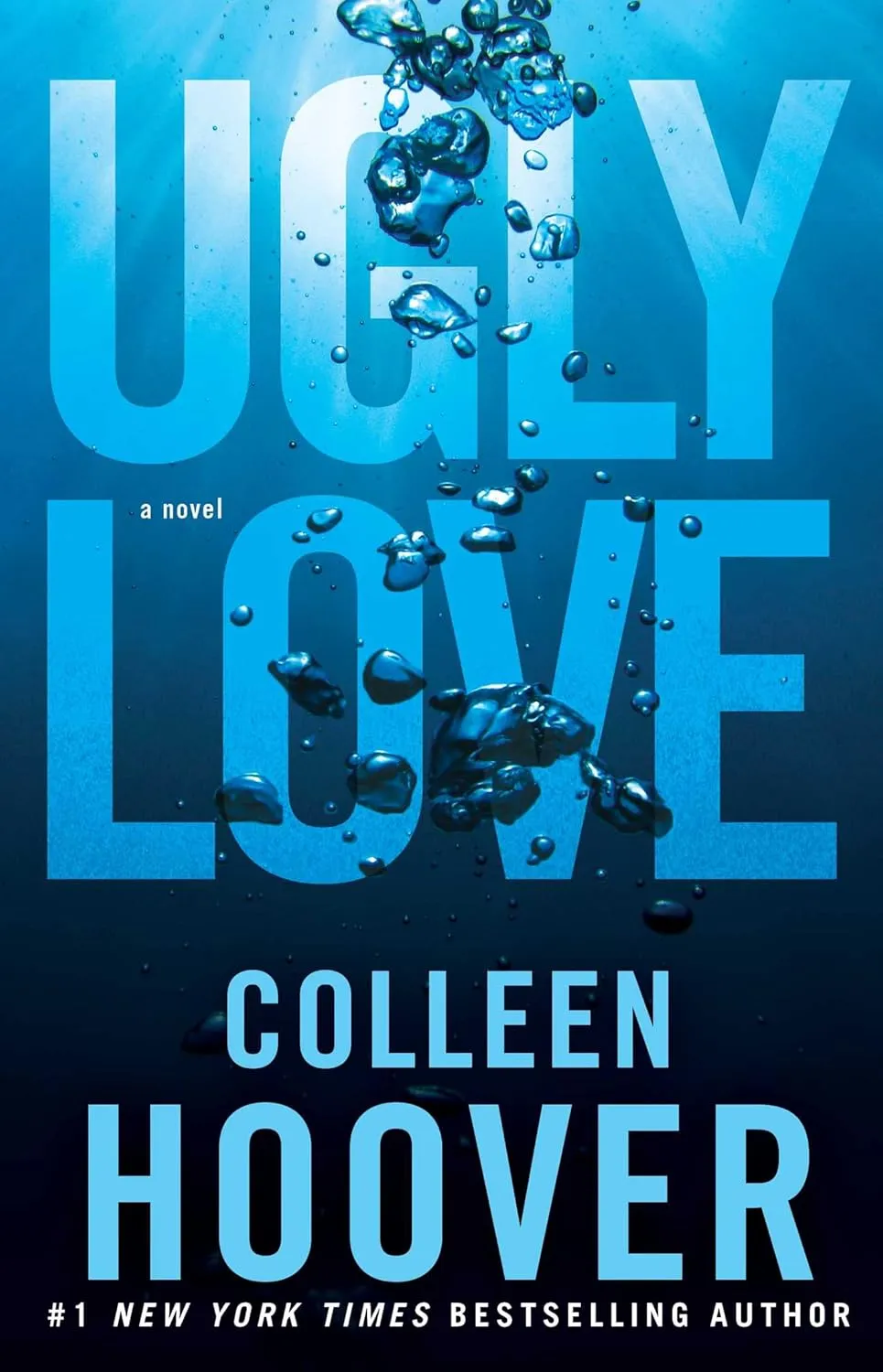
The architectural gateway of the modern mainstream hurt/comfort shelf. Tate and Miles meet under explicit FwB-no-questions rules — the kind of rules Miles needs because the six-year grief he hasn’t been able to navigate any other way is structurally still running his entire interior life. The dual-timeline structure is the architectural device. Past-Miles is the trauma; present-Miles is the caretaking architecture’s structural counterpart. Tate has to navigate a relationship with someone whose pain is structurally older than her, and the trope’s signature work happens in Tate’s slow recognition that the rules Miles imposed weren’t about controlling her — they were about controlling himself.
Hoover built her mainstream-romance reputation on this exact architectural pattern. The structural reason is precise: the trope rewards books that treat the trauma as the load-bearing element rather than as backstory exposition, and Hoover gives Miles’s past the full architectural weight it deserves. Heat is mainstream-romance — on-page, sustained. Standalone.
It Ends With Us — Colleen Hoover

The darker emotional-stakes hurt/comfort variant. Lily Bloom’s architectural inheritance is a childhood of watching her mother survive abuse, and the trope’s structural commitment lives in Lily’s slow recognition that the relationship she’s currently in has been replicating the architecture she promised herself she would escape. The book treats trauma with the structural seriousness the trope requires — the cycle, the careful management, the slow architectural collapse of the protagonist’s certainty that love and harm are negotiable trade-offs. Heat is mainstream-romance. Standalone (sequel It Starts With Us).
Hoover does the generational-trauma hurt/comfort architecture at trad-pub structural extreme. Atlas Corrigan’s role as the architectural counterpart — the man whose own childhood survival makes him structurally specific to Lily’s recovery — is treated with the patience the trope rewards. Important to note: this book includes on-page domestic violence; readers sensitive to that content may want to approach with care.
Get It Ends With Us on Amazon →

Common Goal — Sarina Bowen

The MM hockey hurt/comfort gateway. Mark Kilfeather is a thirty-eight-year-old veteran goalie navigating a recent divorce, a career that’s ending, and an internal architecture that has structurally never accommodated who he actually is. Jamie Canning is the twenty-three-year-old assistant coach whose careful presence is the trope’s signature caretaking architecture. Bowen does the structural caretaking work the trope rewards — Jamie doesn’t try to fix Mark, he simply structurally shows up, again and again, with the right kind of quiet competence at the moments Mark has been refusing to ask for help.
Bowen does the late-career hurt/comfort MM at trad-pub structural extreme. Mark’s post-divorce loneliness is real. Jamie’s caretaking architecture is patient. The slow recognition that the recovery has structurally been the only relationship Mark has been having with himself since the divorce is the trope’s signature payoff. Heat is moderate. Standalone within the Brooklyn Bruisers series.
Twisted Love — Ana Huang

The dark hurt/comfort variant with possessive caretaking architecture. Alex Volkov’s structural internal architecture has been built around a childhood that gave him no models for normal emotional regulation, and the entire arc of Twisted Love is the slow architectural process of Ava recognizing that what reads as obsessive controlling behavior is structurally Alex’s only language for protective love. Huang does the dark hurt/comfort with the seriousness the trope demands — the trauma is real, the caretaking architecture is unconventional, and the slow recognition that Alex has been quietly waiting fifteen years for someone who would not leave him is the trope’s signature payoff.
Huang built BookTok on this dynamic precisely because the dark hurt/comfort architecture works at the highest possible structural pressure — the trauma generates the protective dynamic, the dynamic generates the love story, and the love story generates the structural recovery that the trauma was supposed to make impossible. Heat is high. Series-required (Twisted series).

Boyfriend Material (Hall) & Beach Read (Henry)
Two more architectural-cousin gateway entries worth knowing. Boyfriend Material (Alexis Hall) does the architectural-cousin variant — Luc O’Donnell’s emotional architecture is the structural product of a decade of public-tabloid hurt, and Oliver Blackwood’s careful caretaking is the trope’s signature patient counterpart at romcom register. Beach Read (Emily Henry) does the grief hurt/comfort variant — January’s father just died, his secret life just collapsed her entire architectural understanding of her family, and Augustus’s quiet next-door presence is the structural counterpart to her summer of careful recovery. Both are mainstream-heat trad-pub gateways before the indie KU shelf takes the architectural commitment fully on.
Get Boyfriend Material on Amazon → · Get Beach Read on Amazon →
Indie KU Hurt/Comfort — Where the Recovery Earns Every Page
Here’s what the trad-pub hurt/comfort shelf does well: the architectural setup, the structural patience, the careful management of trauma as the load-bearing foundation. Here’s what it doesn’t always do: the explicit on-page caretaking-into-intimacy work at the moment the recovery architecture finally lands. The trauma-therapist Ménage with on-page bottom dynamics. The disgraced-VP-blue-collar fourteen-month silent recovery. The Fortune 500 ice queen’s seventeen-year flinch finally cracking. The MMM firefighter trauma recovery with the patient quietly seeing through walls.
The indie KU hurt/comfort shelf is currently the strongest place in romance for those architectural moments. Six titles below — across four pen names, every major pairing configuration — each running High to Inferno-tier on-page heat earned by the trope’s signature caretaking patience. An MMM firefighter trauma-recovery with a therapist who asks the one question nobody else thought to ask. An MF disgraced-VP blue-collar Wall-of-evidence fourteen-month wait. An FF restaurant-fire grumpy/sunshine kitchen rescue. An FF Fortune 500 ice queen seventeen-year flinch with intimacy coach. An FF trophy-wife twelve-year-trauma. A mature MM widower 40s late-recovery first love.
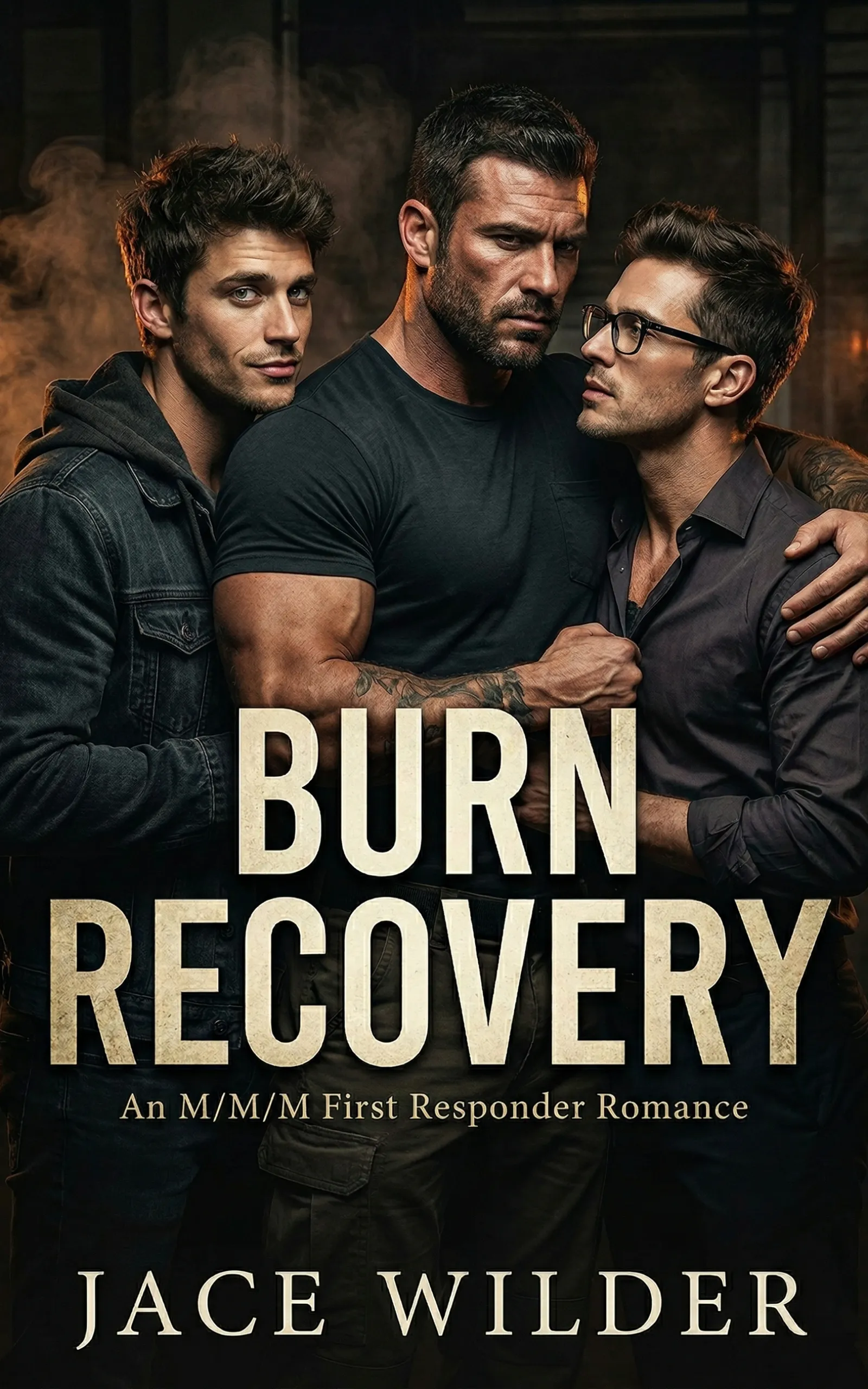
Burn Recovery — Jace Wilder (M/M/M Hurt/Comfort, Inferno Heat)
The MMM firefighter trauma-recovery architectural extreme. Jordan Reed nearly died in a structure fire. Third-degree burns. Eighteen months of silence. Four fired therapists. He’s done letting people in — until a man with crooked glasses asks him the one question nobody else thought to ask. Eli Voss is the trauma therapist who’s supposed to help Jordan heal. He’s warm, sharp, and very good at seeing through walls. He’s also falling for his patient. And the third man in this architecture is structurally specific in a way both of them are about to recognize.
Jace Wilder does the MMM firefighter trauma-recovery hurt/comfort at architectural extreme. Jordan’s eighteen-month silence is the load-bearing element. Eli’s professional restraint cracking under the weight of what he keeps recognizing about his patient is the structural counterpart. The Why Choose architecture compresses against the trauma-therapy ethics. Three men. Two scars. One fire that changed everything. Inferno-tier. Hurt/comfort. Forbidden romance. Friends to lovers. Slow burn. Found family. Grumpy/sunshine. Second chance. Caretaking. MMM. Why Choose. Read Burn Recovery on all retailers →

Grounded — Isla Wilde (M/F Hurt/Comfort, Inferno Heat)
The disgraced-VP MF blue-collar hurt/comfort variant. Sloane Winters used to be a VP of finance. Now she’s a disgraced fraud suspect hiding at a women’s shelter, fixing leaky drains and trying to remember who she was before someone destroyed her life with a lie. The electrician who shows up to fix the shelter’s wiring has spent fourteen months building a wall of evidence proving Sloane’s innocence — quietly, methodically, without ever telling her he’s been doing it. The fourteen-month silent caretaking architecture is the engine.
Isla Wilde does the MF disgraced-professional hurt/comfort with the structural commitment the trope demands. Sloane’s trauma is articulated — the betrayal, the lost career, the women’s shelter as load-bearing element of her recovery architecture. The electrician’s structural choice to do the caretaking work without asking for recognition is the architectural counterpart. The slow recognition that someone has structurally been fighting for her this entire time is the trope’s signature payoff. Inferno-tier. Blue collar. Found family. He falls first. Hurt/comfort. Protector romance. Second chance. Slow burn. Read Grounded free on KU →

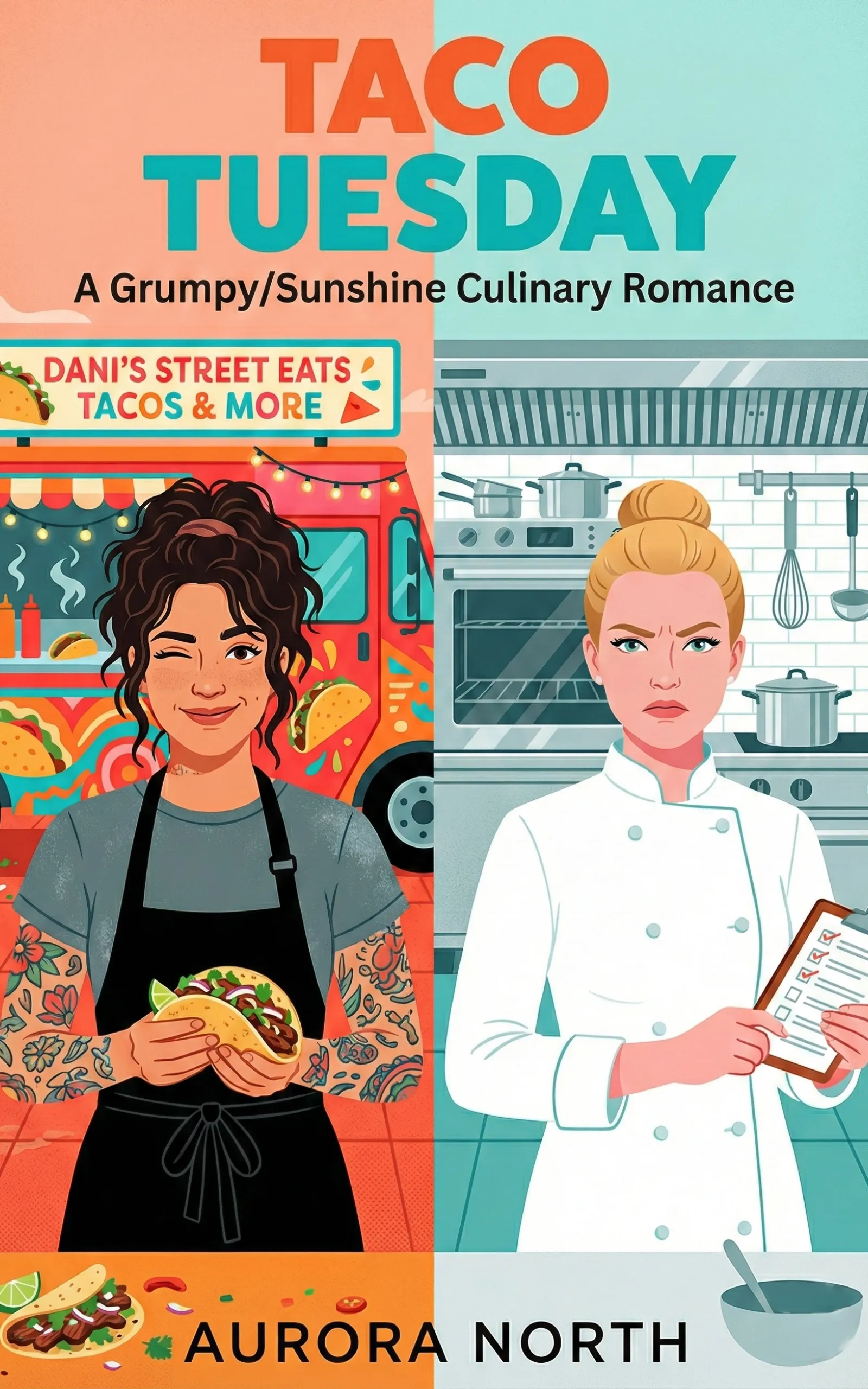
Taco Tuesday — Aurora North (F/F Hurt/Comfort, Inferno Heat)
The restaurant-fire FF grumpy/sunshine hurt/comfort variant. Dani “The Flame” Rivera built her reputation one taco at a time — until a grease fire reduced her food truck to ashes. Desperate, broke, and armed with nothing but her grandmother’s spatula and a chip on her shoulder, she takes a devil’s bargain that forces her into the kitchen of the woman whose perfectionism has been quietly destroying both of them for years. The fire is real. The financial collapse is real. The slow architectural recovery happens in someone else’s kitchen.
Aurora North does the FF sapphic hurt/comfort culinary variant at architectural extreme. The fire is the trauma. The forced-kitchen-cohabitation is the architectural compression device. The slow corruption of rivalry into the recognition that they have been structurally needing each other’s specific competence is the engine. The recipe for passion requires equal parts chaos and control — and the recovery requires both women to admit which one they have been overrepresenting. Inferno-tier. Grumpy/sunshine. Rivals to lovers. Forced proximity. Workplace romance. Found family. Second chances. Hurt/comfort. Read Taco Tuesday free on KU →
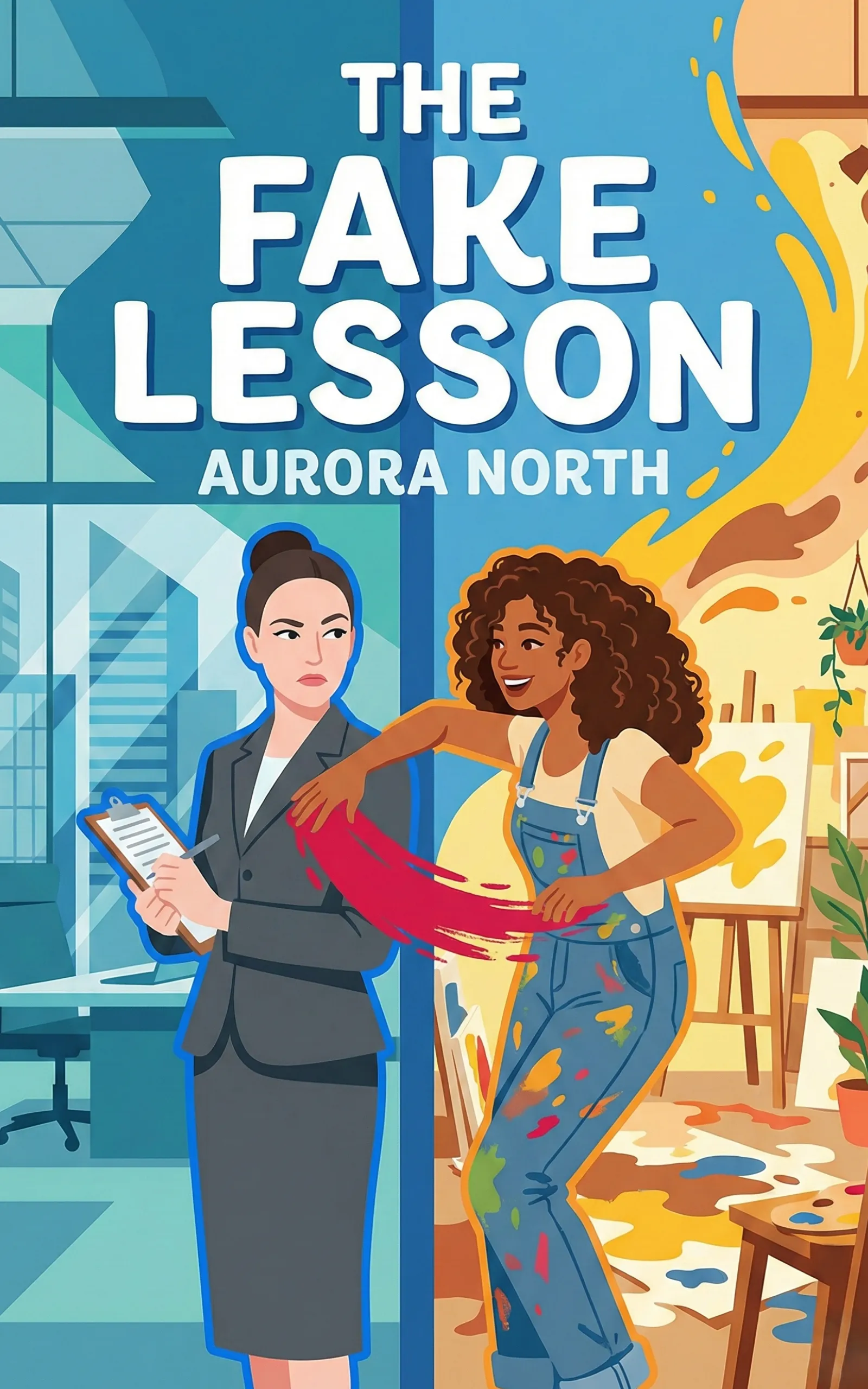
The Fake Lesson — Aurora North (F/F Hurt/Comfort, Inferno Heat)
The Fortune 500 ice-queen seventeen-year-flinch FF hurt/comfort variant. Adeline Fox is thirty-four, a Fortune 500 CEO, and the woman the financial press calls the Ice Queen. She hasn’t cried in seventeen years. She hasn’t drawn since she was seventeen. She flinches when people touch her. She hires a sex-positive intimacy coach to teach her how to fake it convincingly enough to satisfy a board demanding she present a stable personal life. The fake lessons were not supposed to feel real. The seventeen-year flinch is the load-bearing element.
Aurora North layers the touch-starved trauma recovery under the fake-relationship premise with extraordinary precision. Adeline’s careful management of a corporate self-conception that has cost her every form of real intimacy is the engine. The intimacy coach’s role as structurally specific caretaker — the woman who has the professional vocabulary and the personal warmth to navigate the seventeen-year flinch — is the architectural counterpart. The slow corruption of “performance training” into the only real thing in either woman’s life is paced with the patience the trope demands. Inferno-tier. Touch starved. Trauma recovery. Praise kink. Workplace. Fake dating. Read The Fake Lesson free on KU →


The CEO’s Wife — Isla Wilde (F/F Hurt/Comfort, Scorching Heat)
The trophy-wife twelve-year-invisibility FF hurt/comfort variant. Vivienne Vance is a four-billion-dollar man’s most expensive accessory — ornamental, obedient, invisible. She hasn’t been touched in nine months. She hasn’t been seen in twelve years. The woman who shows up to fix her dress zipper at a charity gala is the first person in over a decade to look at Vivienne like she is structurally a person rather than a household object. The twelve-year architectural cost of being a trophy is the load-bearing element. The slow recovery happens in stolen afternoons.
Isla Wilde does the high-stakes sapphic hurt/comfort with structural commitment. The architectural cost of invisibility is real. The careful management of every shared coffee, every borrowed afternoon, every back-staircase hotel meeting is the trope’s signature recovery architecture. The slow recognition that the woman she has been quietly meeting has structurally been the only person Vivienne has been honest with in twelve years is the engine. Scorching-tier. Trophy wife. Billionaire. Forbidden. Hurt/comfort. Secret relationship. Read The CEO’s Wife on all retailers →

Better Late — Milo Hart (M/M Hurt/Comfort, High Heat)
The mature widower MM late-recovery hurt/comfort variant. The 40s widower has spent the last four years being a father, a brother, a friend, a son — every role except the one his late husband used to hold. The younger man who walks onto the front porch at the wrong time and accidentally becomes structurally inevitable is about to undo every careful accommodation the widower has made to the idea that the rest of his life is going to be defined by what he lost. The four-year grief is the architectural foundation.
Milo Hart writes the mature widower MM hurt/comfort at architectural extreme. The careful management of a household that has structurally become smaller without the person it was built around is the engine. The younger man’s role as structurally specific caretaker — not replacing the late husband, but adding to what is left — is treated with the patience the trope demands. The slow architectural recognition that being widowed at 40 does not actually mean being done is the trope’s signature payoff. High heat. Mature MM. Widower. Age gap. Small town. Hurt/comfort. Late-life romance. Read Better Late free on KU →

Why Hurt/Comfort Hits So Hard
The trope persists because it externalizes romance’s deepest emotional architecture into the protagonist’s relationship with their own wound.
Other tropes build emotional stakes through obstacle. Enemies-to-lovers requires hostility to dissolve. Forbidden romance has a rule to break. Forced proximity has a structural container. Hurt/comfort is different — the obstacle is internal, structural, and operates by rules that the caretaker has to learn rather than negotiate. The hurt protagonist’s trauma sets the pace. The caretaker’s job is to structurally show up without trying to fix it. The trope’s signature commitment is to letting the wound run on its own timeline while building the relationship around respecting that timeline, and the books that earn it treat the trauma with the seriousness it actually has in real lives.
That’s why the trope rewards architectural seriousness about the wound. Books that treat trauma as plot decoration underdeliver. Books that treat trauma as the load-bearing element — the eighteen-month silence, the four-year widowhood, the seventeen-year flinch, the twelve-year invisibility, the fourteen-month silent recovery, the grease fire that ended a career — are the books the trope is actually built for. Every title above respects this. Every title above treats the hurt protagonist’s interiority as the structural foundation rather than as obstacle to be cleared.
And it’s why the on-page heat at the moment the caretaking finally becomes intimacy matters so much. The trope’s signature payoff is the embodied confirmation that the structural recovery has been worth the architectural patience — every careful caretaking interaction, every quiet question, every patient navigation of triggers finally collapses into the on-page work the structural commitment has been writing toward. Trad-pub gateway titles tend to handle this beat at moderate heat. Indie KU takes the heat ceiling fully off, and the result is the trope finally cashing the check the entire recovery architecture has been writing.
That’s the gap the six titles above fill. The architectural commitment the gateway titles built the audience for, finally cashing both checks.

Frequently Asked Questions
What’s the spiciest hurt/comfort book on Kindle Unlimited?
Burn Recovery (Jace Wilder, MMM firefighter trauma therapist), Grounded (Isla Wilde, MF disgraced VP blue collar), Taco Tuesday (Aurora North, FF restaurant fire), and The Fake Lesson (Aurora North, FF Fortune 500 17yr flinch) all run Inferno-tier on the indie KU shelf. All featured above. All free with Kindle Unlimited.
Best gateway hurt/comfort romance?
Ugly Love (Colleen Hoover) for the dual-timeline grief architecture. It Ends With Us (Hoover) for darker emotional stakes — note this includes on-page domestic violence. Common Goal (Sarina Bowen) for late-career MM hockey hurt/comfort. Twisted Love (Ana Huang) for the dark possessive caretaking variant. Boyfriend Material (Alexis Hall) for romcom register. Beach Read (Emily Henry) for literary grief hurt/comfort.
Best MM hurt/comfort romance?
Burn Recovery (Jace Wilder, MMM firefighter trauma) and Better Late (Milo Hart, MM mature widower) are the indie KU MM hurt/comfort picks featured above. Both High to Inferno-tier. Both free with Kindle Unlimited. For trad-pub gateway: Common Goal (Sarina Bowen) or Boyfriend Material (Alexis Hall).
Best sapphic hurt/comfort romance?
The FF hurt/comfort shelf is currently doing some of the strongest trauma-recovery work in print. Taco Tuesday (Aurora North, FF restaurant fire), The Fake Lesson (Aurora North, FF Fortune 500 17yr flinch), and The CEO’s Wife (Isla Wilde, FF trophy wife 12yr invisibility) are the indie KU sapphic hurt/comfort picks featured above. All Inferno to Scorching tier. All free with Kindle Unlimited.
Content warnings for hurt/comfort romance?
By definition, hurt/comfort romance deals with trauma. Specific content warnings vary by book — burn injury and PTSD (Burn Recovery), career-loss and false accusations (Grounded), domestic violence on-page (It Ends With Us), childhood trauma (Twisted Love), grief and widowhood (Better Late, Common Goal). Most indie hurt/comfort books list specific content warnings on the product page or in the front matter. Readers sensitive to specific trauma content should check before starting.
Are these books standalone?
Ugly Love, Boyfriend Material, and Beach Read are standalones. It Ends With Us has a sequel (It Starts With Us). Twisted Love kicks off the Twisted series. Common Goal is standalone within Brooklyn Bruisers. Grounded is book two of The Blueprint Series. The Fractal Enigma indie titles featured above are all standalone first reads.
This post contains Amazon affiliate links. As an Amazon Associate, Fractal Enigma earns from qualifying purchases at no extra cost to you.
Never miss a release — join the newsletter for new books, exclusive bonus chapters, and reader-only giveaways. 🔥
The form you have selected does not exist.