

Books Like The Love Hypothesis — 10 STEMinist Romance Reads (2026)

You finished The Love Hypothesis in two sittings. You spent the next week walking around emotionally compromised by Olive Smith and Adam Carlsen — the cancer-research PhD candidate, the six-foot-five tenure-track professor who decided with no warning to play along with a fake-dating lie planted in the middle of his lab, the hotel-room scene in chapter sixteen that the Hazelwood subreddit has been screenshotting for four years. You worked through Love on the Brain. You finished Check & Mate. You read Bride twice. Now the question becomes: what fills the smart-PhD-heroine-meets-grumpy-genius shaped hole in your TBR until Ali Hazelwood publishes again?
What makes The Love Hypothesis land structurally isn’t the academic setting. It’s the specific architecture: a heroine whose intellectual competence is the load-bearing element of her identity, a love interest whose attention is the precise pressure required to crack the careful composure she has built around the fact that competence has not historically translated into being seen, the fake-dating premise as the structural cover for the slow recognition that the relationship is not actually the lie, and Hazelwood’s particular gift for making the architectural patience — weeks of conferences, lab meetings, careful professional distance, the boundary that holds and holds and holds until the moment it doesn’t — land as the structural reason the hotel-room scene works rather than as a delay tactic. The STEMinist shelf has more titles that hit that exact architecture — some Hazelwood-adjacent, some indie KU that lifts the on-page heat past where Hazelwood’s careful upper-mainstream calibration closes the door.
Ten reads below: five trad-pub Ali Hazelwood catalog comps that anchor the BookTok STEMinist shelf, then five indie KU STEMinist and academic-adjacent reads from Fractal Enigma — spread across four pen names hitting the analytics-genius, grad-student, PhD-dropout, and kink-aware-therapist architecture at the indie KU inferno register. The trad-pub picks are priced individually on Amazon; the indie picks are free with a Kindle Unlimited subscription.

What Makes a Great Love Hypothesis Readalike
The structural criteria that separate “book with a scientist heroine” from “actually a great Love Hypothesis readalike”:
- A heroine whose intellectual competence is the load-bearing identity element — not a character with a STEM job tag. Olive’s research is the conflict; Bee’s neuroscience is the structural pressure; the analytics-genius heroine’s data work is the engine. The professional architecture has to actually matter to the story.
- A love interest whose attention is structurally specific to her competence — not generic devotion. Adam Carlsen sees Olive’s work. The trope only lands when the older or more-established character is responding to who the heroine is professionally, not who she happens to be socially.
- A structural reason the relationship cannot happen yet — advisor/advisee, professional rivalry, the academic politics that make the relationship a career risk. Fake dating, forced proximity, professional ethics. The architecture has to enforce the deferral.
- Patient slow burn that earns the on-page payoff — Hazelwood builds the architecture across months of conferences and lab meetings. The trope rewards the kind of patience where the structural professional setup compresses every shared moment until the on-page collision lands with the weight the architectural deferral earned.
- An ending that lets the heroine keep her work — Olive doesn’t quit research for Adam. The HEA has to let the heroine’s professional identity stay intact; the relationship has to fit alongside the work, not replace it. This is the structural feminist element the "STEMinist" label is actually pointing at.
Each pick below hits at least four of those five. The indie KU picks lift the on-page heat ceiling past where the trad-pub mass-market STEMinist shelf calibrates.
5 Trad-Pub Books Like The Love Hypothesis
The Ali Hazelwood catalog, ranked by how directly the comp lands on The Love Hypothesis’s specific smart-professional-heroine-meets-grumpy-genius architecture. Hazelwood built the lane she defines; the five-book core of her catalog covers the structural variations — PhD candidate (Love Hypothesis), neuroscience rivals (Love on the Brain), chess prodigy (Check & Mate), supernatural science crossover (Bride), and the academic-adjacent novella territory (Under One Roof). All five available on Amazon at standard trad-pub pricing.

1. The Love Hypothesis — Ali Hazelwood
The book this list is anchored on, and the BookTok romance title that essentially named the STEMinist subgenre. Olive Smith is a third-year PhD candidate at Stanford with a cancer-research dissertation, a best friend complication that pushes her into planting a fake-relationship lie in the lab, and a six-foot-five professor named Adam Carlsen who decides — with absolutely no warning — to play along when she kisses the wrong man in a hallway. The structural engine of the book is the gap between Olive’s careful imposter-syndrome-shaped graduate-student architecture and the man whose serious professional attention requires her to confront the question of whether the competence she has been performing is something she actually gets to claim.
If you’ve somehow landed on this list without having read The Love Hypothesis yet, you’re in the rare position of having Hazelwood’s foundational STEMinist romance still in front of you. Read this first; the rest of the list waits. Commit to chapter sixteen — that’s the hotel-room scene the Hazelwood subreddit will spoil for you if you don’t get there first. Get The Love Hypothesis on Amazon →
2. Love on the Brain — Ali Hazelwood
Hazelwood’s structural sequel-in-spirit to The Love Hypothesis and the catalog entry that runs the smart-PhD-heroine architecture through neuroscience rivals-to-lovers. Bee Königswasser is a neuroscientist whose dream job at NASA arrives with a structural complication she did not anticipate: she is co-leading the BLINK project with Levi Ward, the grad-school rival whose careful three-year campaign of professional hostility toward her made the first two years of her PhD an architectural ordeal. The structural engine is the gap between Bee’s careful Marie-Curie-quote-Twitter-account adult composure and the man whose presence in her NASA office requires her to confront the question of why he hated her in the first place — and what it costs both of them when the answer turns out to be the opposite of what she has spent eight years assuming.
Where The Love Hypothesis runs the architecture through fake dating, Love on the Brain runs it through professional rivalry with the catfish-Twitter mentor twist as the structural reveal. Same Hazelwood voice, same upper-mainstream heat calibration, the architectural patience the trope rewards across an entirely different STEM lane. Get Love on the Brain on Amazon →
3. Check & Mate — Ali Hazelwood
Hazelwood’s YA pivot and the entry that runs the smart-professional-heroine architecture through competitive chess rather than academia. Mallory Greenleaf was once one of the best junior chess players in the country; she quit at fourteen for reasons that have to do with her father, her family’s finances, and the architecture of a household that needed her to be structurally responsible for things eighteen-year-olds should not have to carry. Then a charity match forces her back to the board across from Nolan Sawyer — the reigning world champion, the boy whose attention she has the structural disadvantage of having been hyper-aware of for three years, the player whose careful five-game analysis of her style suggests he has been paying her exactly the kind of attention she has been refusing to acknowledge wanting.
Check & Mate runs the structural-competence architecture at the YA register — the heat is calibrated lower than the adult catalog (this is a YA book and the on-page work reflects that), but the architectural setup is the same load-bearing element. For Love Hypothesis readers who want the same smart-heroine-with-professional-stakes architecture in a different specific competitive field, with the trade-off of YA-mainstream heat calibration. Get Check & Mate on Amazon →
4. Bride — Ali Hazelwood
Hazelwood’s romantasy crossover and the catalog entry that runs the STEMinist architecture through a supernatural arranged-marriage register. Misery Lark is the daughter of the vampyre Councilman and has spent her structural existence as a political bargaining chip; the most recent arrangement assigns her to Lowe Moreland, the Were Alpha, in a political marriage neither of them was supposed to want. The structural engine is the gap between Misery’s careful weaponised composure — an entire lifetime of being structurally useful to other people’s political ends — and the Were Alpha whose careful attention to her requires her to confront the question of whether she is allowed to have an interior that is not structurally available to anyone else.
Bride runs the STEMinist architecture through romantasy — the heroine’s intellectual competence stays load-bearing (Misery’s strategic mind is the engine), but the structural setup is supernatural political marriage rather than academic STEM. Same Hazelwood voice, same upper-mainstream heat calibration, the BookTok romantasy crossover that pulled Love Hypothesis readers into the fae-court-adjacent shelf. Get Bride on Amazon →
5. Under One Roof — Ali Hazelwood
The novella entry. Mara is an environmental engineer whose great-aunt has died and left her half of a town-house in Washington D.C.; the other half belongs to Liam, a lawyer who works for the oil industry Mara has structurally organised her career around opposing. They cannot stand each other. They live across a shared hallway. The dishwasher is broken. The structural engine of the novella is the architectural impossibility of two people whose professional ethics are organised in direct opposition to each other being structurally forced into the same domestic space.
Under One Roof is the Hazelwood novella entry for Love Hypothesis readers who want the same structural-professional-rivalry architecture in a compressed format. Part of the Loathe to Love You trilogy (with Stuck With You and Below Zero); each runs the STEMinist architecture at novella length with a different specific STEM heroine. Same Hazelwood voice, same upper-mainstream calibration, the catalog’s structural sketchbook. Get Loathe to Love You (the trilogy collection) on Amazon →

Where Indie KU Lifts the STEMinist Heat Ceiling
The trad-pub Hazelwood catalog above is calibrated to the BookTok upper-mainstream STEMinist register. Hazelwood runs the dynamic carefully — the architectural patience is the load-bearing work, and the on-page heat exists to serve the academic setup, not the other way around. The dynamics are real, the professional architecture is intact, the door closes deliberately at the structural pivot points the trad-pub mass-market STEMinist shelf has been calibrated for. The hotel-room scene in chapter sixteen lands because the entire book has been architecturally pointing at it.
The indie Kindle Unlimited STEMinist shelf doesn’t have those constraints. The heroine’s intellectual competence stays load-bearing, the architectural patience stays intact, but the on-page work engages the heat the long professional setup has earned. The grad-student-in-her-mechanic’s-garage architecture. The analytics-genius-meets-failing-prospect dynamic. The PhD-dropout-meets-contractor renovation. The kink-aware-therapist-meets-corporate-VP forbidden architecture. The professional competence is on the page. The heat is on the page.
Five indie KU STEMinist and academic-adjacent reads below, from four different Fractal Enigma pen names, hitting the analytics-genius, grad-student, PhD-dropout, and kink-aware-therapist architecture across MF and MM pairings. All five free with Kindle Unlimited; the individual book page for each title lists current retailers and content warnings.
5 Indie KU STEMinist Reads from Fractal Enigma
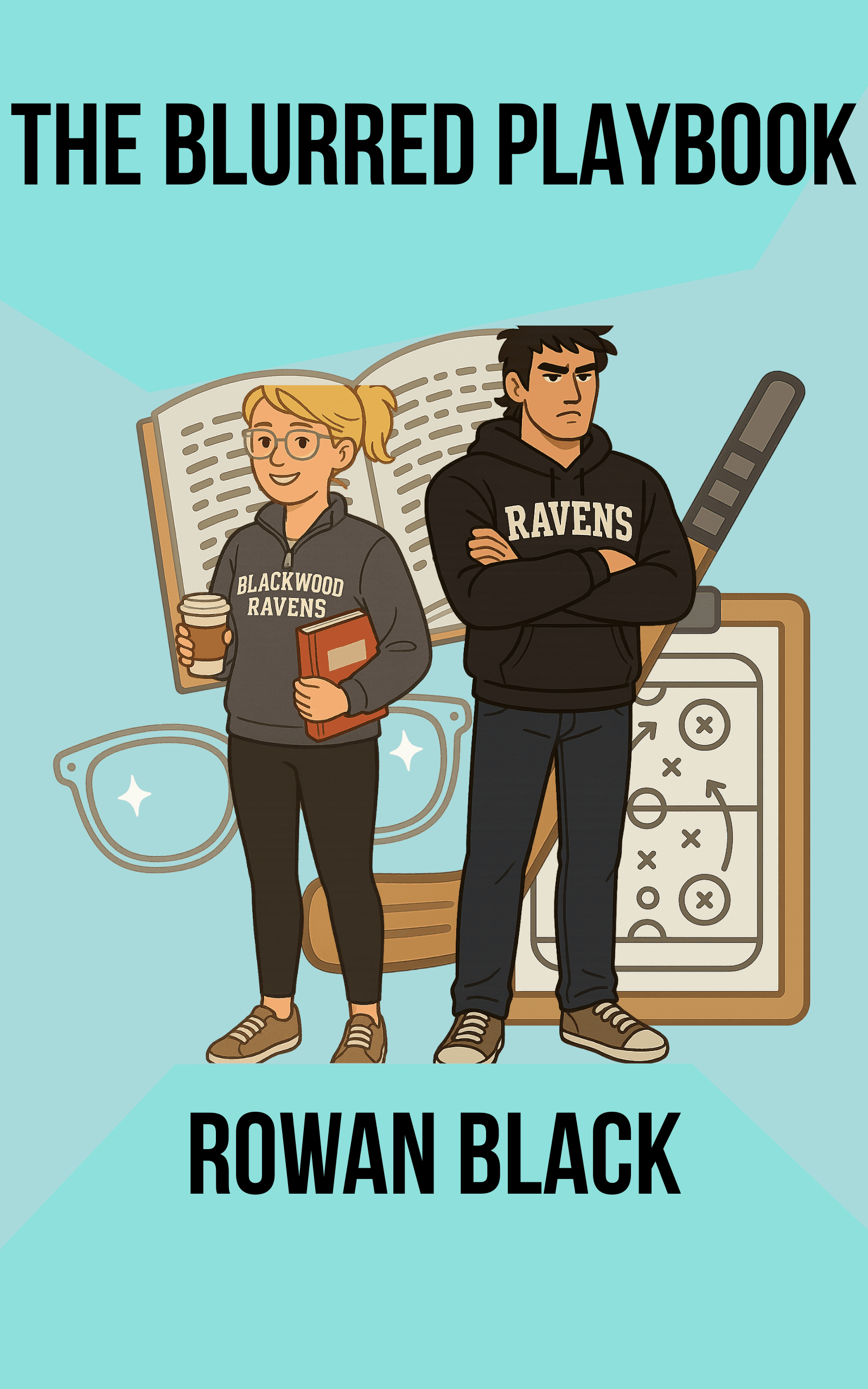
6. The Blurred Playbook — Rowan Black (MF Analytics Genius + NHL Prospect)
The closest direct comp to The Love Hypothesis’s specific smart-professional-heroine-meets-grumpy-genius architecture on this list, rotated into college sports. Sadie is the analytics genius — coach’s niece, undergraduate prodigy whose statistical work has been quietly improving the Blackwood Ravens hockey program for two seasons, the brain the coaching staff has not officially acknowledged depending on. Jax is the NHL prospect failing Econ and structurally certain his draft year is over before it begins. The fake-dating arrangement is supposed to keep his eligibility intact while she gets him through the coursework. The structural engine of the book is the gap between Sadie’s careful invisible competence and the hockey player whose attention requires her to confront the question of whether the analytics work she has been performing as the team’s secret architect is something she is allowed to claim publicly.
Where Hazelwood runs the fake-dating + smart-heroine + grumpy-genius architecture through academia, The Blurred Playbook runs it through college sports analytics with the dyslexia representation handled with care, the neurodivergent rep that the trad-pub STEMinist shelf still rarely ships, and the on-page heat the indie KU register engages. Rowan Black writes the analytics-genius-with-hockey-prospect dynamic at the inferno register the trad-pub Hazelwood calibration restrains. Read chapter one free →

7. The Rebound Rule — Rowan Black (MF STEM Heroine + College Sports)
The Blackwood Ravens follow-up and the catalog entry for readers who finished The Blurred Playbook wanting more of Rowan Black’s STEMinist architecture. Different couple, same series-level commitment to the analytics-genius-and-athlete dynamic the Blackwood Ravens series runs across different sports. The structural engine is the gap between the heroine’s careful academic competence and the athlete whose presence in her structural orbit requires her to confront the question of whether the professional architecture she has been performing is the one she actually wants.
Where The Blurred Playbook runs the analytics + NHL prospect architecture, The Rebound Rule runs the STEM-heroine + second-chance architecture at the same indie KU inferno register. For Love Hypothesis readers who finish The Blurred Playbook and want to stay in the Rowan Black STEMinist lane with a different specific dynamic. Read chapter one free →

8. Mechanic’s Good Girl — Isla Wilde (MF Grad Student + Class Gap)
The class-gap entry and the recommendation for Love Hypothesis readers who came for the structural smart-heroine architecture and want the grad-student variant in a blue-collar setting. The heroine is a broke graduate student whose ancient car has been on the structural verge of expiring for the entire duration of her doctoral coursework; the tattooed mechanic who keeps the car alive refuses to charge her full price for reasons she has spent a year carefully not examining. The structural engine of the book is the gap between her careful academic-competence-shaped self-image and the mechanic whose attention is the precise pressure required to crack the architecture of being told her entire adult life to be smaller.
Where The Love Hypothesis runs the smart-heroine architecture through Stanford lab politics, Mechanic’s Good Girl runs the same architecture through the grad-student-with-mechanical-problems class-gap inversion. Isla Wilde writes the structural-academic-competence + dirty-talk + praise-kink dynamic at the indie KU inferno register — the on-page work the architectural setup earns, with the grumpy/sunshine and competence kink doing the load-bearing work the trad-pub mass-market STEMinist shelf restrains. For Love Hypothesis readers who came for the smart-grad-student architecture and want the indie KU class-gap variant. Read chapter one free →

9. Caulk of Shame — Hazel Green (MF PhD Dropout + Contractor)
The PhD-dropout entry and the recommendation for Love Hypothesis readers who came for the academic-competence architecture but want the structural inversion: what happens when the smart-graduate-student walks away from the academic architecture instead of completing the dissertation. The narrator has a history of running away from things that get hard — her PhD program, her last relationship, both abandoned at the first sign of structural difficulty. She inherits a crumbling Victorian in Oak Creek, Oregon, with the structural intention of fixing it just enough to sell it and leave. Gage Miller is the contractor who refuses to let her run from this one too. The renovation is the structural metaphor: every academic-architecture wall the narrator has been refusing to examine gets exposed when the house gets opened up.
Where The Love Hypothesis runs the heroine-in-the-lab architecture, Caulk of Shame runs the heroine-who-walked-away-from-the-lab architecture with the renovation metaphor doing the load-bearing work alongside the relationship. Hazel Green writes the emotional rebuilding at the indie KU high heat register with the he-falls-first contractor dynamic the trad-pub STEMinist shelf doesn’t ship at the heat ceiling the indie KU lane engages. For Love Hypothesis readers who came for the smart-heroine architecture and want the post-academia recovery variant. Read chapter one free →

10. Good For Me — Milo Hart (MM Kink-Aware Therapist PhD + Finance VP)
The MM soft-sciences entry on this list and the recommendation for Love Hypothesis readers who came for the architectural-patience + intellectual-respect dynamic and want the MM variant with the structural professional-ethics architecture as the load-bearing forbidden element. Marc Rivera is thirty, a finance VP with a forty-seventh-floor view and three panic attacks in a month. HR called it burnout. They referred him to Dr. David Chen — thirty-six, the kink-aware therapist whose psychology practice specialises in exactly the architecture Marc has spent his entire adult life refusing to look at directly. Six sessions are supposed to be a professional engagement. The structural engine of the book is the gap between Marc’s careful corporate composure and the therapist whose forensic clinical attention requires him to confront the architecture of who he has been trying not to be since he was twelve.
Where The Love Hypothesis runs the smart-heroine architecture through advisor-advisee-adjacent academic politics, Good For Me runs the structural-professional-ethics architecture through a therapist-patient relationship at the MM register — same intellectual-respect + professional-cost + careful-clinical-attention architecture, MM pairing, indie KU inferno heat. For Love Hypothesis readers who came for the architectural patience + professional-stakes dynamic and want the MM soft-sciences variant. Read chapter one free →
Frequently Asked Questions
What book is most like The Love Hypothesis?
For trad-pub: Love on the Brain by Ali Hazelwood is the closest direct successor inside Hazelwood’s catalog — same smart-PhD-heroine + grumpy-genius architecture run through neuroscience rivals-to-lovers rather than fake dating. For indie KU at the inferno register: The Blurred Playbook by Rowan Black (MF NHL prospect + analytics-genius coach’s niece with dyslexia rep) runs the closest structural comp at the heat ceiling the trad-pub Hazelwood register restrains.
Are Ali Hazelwood’s books on Kindle Unlimited?
Ali Hazelwood’s catalog (The Love Hypothesis, Love on the Brain, Check & Mate, Bride, Loathe to Love You, plus the rest of her work) is generally NOT on Kindle Unlimited — these are trad-pub releases at standard pricing. The five indie KU picks from Fractal Enigma above (The Blurred Playbook, The Rebound Rule, Mechanic’s Good Girl, Caulk of Shame, Good For Me) are all free with a Kindle Unlimited subscription. The indie KU STEMinist shelf is currently where the lane lives at the inferno register.
What’s the right order to read Ali Hazelwood’s books?
Hazelwood’s adult novels are all standalones with HEA and can be read in any order. Most readers start with The Love Hypothesis (2021) and move chronologically: Love on the Brain (2022), Loathe to Love You (the 2022 novella trilogy), Love, Theoretically (2023), Check & Mate (2023, YA), Bride (2024), Not in Love (2024), Deep End (2025). The Lab Sisters trilogy and the most recent releases continue the catalog. There are no series prerequisites; each book is structurally complete.
Are there spicier books like The Love Hypothesis?
Hazelwood’s heat ceiling sits at upper-mainstream BookTok — the architectural patience is doing the structural work, and the on-page heat is calibrated to let the architecture lead. Readers who want the same smart-heroine + intellectual-respect architecture with the heat ceiling lifted past the trad-pub mass-market level should look indie KU. The Blurred Playbook by Rowan Black (analytics genius + NHL prospect, inferno), Mechanic’s Good Girl by Isla Wilde (grad student + mechanic + class gap, inferno), and Good For Me by Milo Hart (MM therapist/patient + PhD soft-sciences, inferno) all run the STEMinist architecture at on-page registers the trad-pub Hazelwood shelf restrains.
Are there MM STEMinist books like The Love Hypothesis?
The trad-pub MM STEMinist shelf at The Love Hypothesis’s specific architecture is structurally tiny — the lane has been heavily MF-defaulted historically. Indie KU has filled the gap. For MM soft-sciences with therapist/patient forbidden architecture: Good For Me by Milo Hart (kink-aware therapist PhD + finance VP, MM praise kink, indie KU inferno) is the closest direct comp. The wider indie KU MM STEMinist shelf is currently the most active development corner of the genre — if you came for the structural-professional-respect architecture and want it in MM, the indie lane is where to look.
Where do Ali Hazelwood readers go next?
For trad-pub: working through Hazelwood’s catalog (Love Hypothesis, Love on the Brain, Check & Mate, Bride, Loathe to Love You, Love Theoretically, Not in Love, Deep End) covers the STEMinist registers Hazelwood writes. Beyond Hazelwood, The Hating Game by Sally Thorne and Book Lovers by Emily Henry cover the smart-professional-rivalry adjacency. For indie KU at the inferno register: Rowan Black‘s Blackwood Ravens college sports catalog (The Blurred Playbook, The Rebound Rule) is the dedicated STEMinist analytics lane, Isla Wilde‘s grad-student class-gap catalog (Mechanic’s Good Girl), Hazel Green‘s academic-recovery catalog (Caulk of Shame), and Milo Hart‘s MM emotional catalog (Good For Me) are the closest indie comps.
This post contains Amazon affiliate links. As an Amazon Associate, Fractal Enigma earns from qualifying purchases at no extra cost to you. The five Fractal Enigma titles link to their book pages on this site where you can read the first chapter free.
Looking for more STEMinist romance recommendations? The newsletter sends new indie KU STEMinist releases, bonus chapters, and reader-only giveaways straight to your inbox. 🧠
The form you have selected does not exist.