

Books Like When the Moon Hatched — 10 Dragon-Shifter & Romantasy Reads (2026)
You finished When the Moon Hatched in three sittings. You spent the next week emotionally compromised by Raeve and Kaan — the small assassin with no memory of who she structurally is before the Capital, the dragon-shifter king whose architectural certainty about her identity is the precise pressure that keeps cracking the careful four-year amnesia she has been using as her survival architecture, the mate-bond that pre-dates both of their conscious lives by centuries and refuses to be defeated by the structural-political-circumstances that engineered her forgetting. You moved to To Bleed a Crystal Bloom. You finished the Parker catalog. You worked through Fourth Wing twice. Now the question becomes: what fills the dragon-shifter-mate-bond shaped hole in your TBR until Sarah A. Parker drops the next Moonfall volume?
What makes When the Moon Hatched land structurally isn’t the dragon worldbuilding. It’s the specific architecture: a heroine whose structural amnesia is the load-bearing identity element (Raeve does not know who she is, and her not-knowing is the engine of the entire book), a mate-bond that operates with architectural permanence the protagonists themselves are structurally incapable of overriding, a worldbuilding-density that runs across multiple continents and political factions with the architectural ambition the BookTok romantasy mainstream is now committing to, and Parker’s particular gift for letting the slow corruption of “I don’t know you” into “my body knows you and my mind has been structurally engineered to refuse what my body cannot stop telling me” land as architectural inevitability rather than romance shortcut. The dragon-shifter mate-bond romantasy shelf has more titles that hit that exact architecture — some Parker-adjacent, some indie KU that runs the mate-bond architecture at heat ceilings the trad-pub romantasy mainstream restrains.
Ten reads below: five trad-pub Sarah A. Parker, Rebecca Yarros, and Ali Hazelwood romantasy comps that anchor the BookTok dragon-shifter mate-bond shelf, then five indie KU dark fantasy and paranormal reads from Fractal Enigma at the indie KU inferno register — hitting the ancient-entity, cursed-king, mate-bond, dark-protector, and morally-gray-modern architecture. The trad-pub picks are priced individually on Amazon; the indie picks are free with a Kindle Unlimited subscription.
What Makes a Great When the Moon Hatched Readalike
The structural criteria that separate “book with a dragon in it” from “actually a great When the Moon Hatched readalike”:
- A mate-bond architecture with structural permanence — not generic supernatural attraction. The mate-bond has to pre-date the protagonists’ conscious choice and operate as an architectural fact the relationship is built around, not generated by. Raeve and Kaan are mates before Raeve remembers who she is; the architecture holds even when the heroine’s identity does not.
- Heroine whose interior architecture is the load-bearing element — Raeve’s amnesia is the structural engine. The trope only lands when the heroine has an architectural interior wound that the entire plot is engineered to navigate. Books that defer the heroine’s interior to make space for the worldbuilding don’t hit the same way.
- Worldbuilding density with political stakes — Parker runs the Mearcaire continent, the Capital, the assassin guild, the dragon-shifter rin politics, all interlocking. The trope rewards books where the supernatural world has architectural weight beyond the romance — the political faction structure has to be load-bearing.
- A supernatural-protector love interest with structural patience — Kaan has been waiting four years. The architecture only works when the love interest’s careful structural restraint is the architectural cover for an attachment that pre-dates the heroine’s current memory. Insta-protectiveness without architectural backstory doesn’t land.
- Patient slow burn that earns the on-page payoff — Parker takes the entire first volume to deliver the architectural reveal the mate-bond has been pressuring toward. The trope rewards architectural patience; books that rush the mate-bond recognition don’t compress the same structural weight.
Each pick below hits at least four of those five. The indie KU picks lift the on-page heat ceiling past where the trad-pub romantasy mass-market shelf calibrates.
5 Trad-Pub Books Like When the Moon Hatched
The BookTok dragon-shifter mate-bond romantasy shelf, ranked by how directly the comp lands on When the Moon Hatched’s specific architecture. Sarah A. Parker built the Moonfall series she defines; Rebecca Yarros covers the adjacent dragon-rider lane; Ali Hazelwood covers the paranormal supernatural-mate-bond crossover. All five available on Amazon at standard trad-pub pricing.
1. When the Moon Hatched — Sarah A. Parker
The book this list is anchored on, and the BookTok romantasy title that pulled an entire generation of Maas and Yarros readers into the indie-published-then-trad-acquired dragon-shifter lane. Raeve is a small Fae assassin in the Capital whose entire structural existence has been organised around four years of careful professional cover and the architectural fact that she has no memory of who she structurally was before the Capital. Then a mission goes wrong, the Capital’s careful surveillance architecture cracks, and Kaan — the dragon-shifter king of Vateshram, a continent and a political faction and a sovereignty she has never visited — arrives with the architectural certainty that she is his mate and the patient four-year understanding that she does not yet remember why.
If you’ve somehow landed on this list without having read When the Moon Hatched yet, you’re in the rare position of having Parker’s foundational dragon-shifter mate-bond romantasy still in front of you. Read this first; the rest of the list waits. Commit to the entire Moonfall series — the sequel is structurally where the architectural payoff lands. Get When the Moon Hatched on Amazon →
2. To Bleed a Crystal Bloom — Sarah A. Parker
Parker’s earlier dark gothic romantasy and the catalog entry that runs the architectural-mate-bond setup through a different specific supernatural register. Orlaith is the woman who has been kept inside the architectural perimeter of Castle Noir for nineteen years — structurally certain that the wards around the property are protective rather than confining, structurally certain that Baze, her caretaker, is the architectural reason she survived whatever happened in the world before she remembers. Then Rhordyn arrives. The High Master. The architectural fact she has been structurally engineered to want without remembering why. The catalog entry that established Parker’s architectural-patience-into-mate-bond setup before the Moonfall series scaled it.
To Bleed a Crystal Bloom is the Parker catalog entry that established the lane When the Moon Hatched expanded. Same architectural-patience-and-mate-bond-architecture, dark gothic atmosphere, structural worldbuilding density. For When the Moon Hatched readers who want the foundational Parker text. Get To Bleed a Crystal Bloom on Amazon →
3. Fourth Wing — Rebecca Yarros
The Empyrean series opener and the closest cross-author dragon-shifter-adjacent comp for When the Moon Hatched readers. Violet Sorrengail is the twenty-year-old whose body has been structurally engineered for the Scribe Quadrant of Navarre’s military college and whose mother has just structurally re-engineered her future by ordering her into the Rider Quadrant instead — where the dragons decide which cadets are structurally worth bonding with and the cadets who fail the architectural threshold tend not to survive Threshing. Xaden Riorson is the third-year wingleader whose father led a rebellion against Violet’s mother and was executed for it; the structural-political-stakes are the architectural pressure the entire trilogy compresses into.
Where Parker runs the architectural-dragon-shifter mate-bond setup through Raeve and Kaan’s amnesia + king architecture, Yarros runs the dragon-rider variant through Violet and Xaden’s enemies-from-rebellion-architecture + dragon-bond setup. Same architectural-political-stakes register, similar mate-bond architectural patience, the trad-pub mass-market dragon romantasy that pulled the lane into BookTok’s center. Get Fourth Wing on Amazon →
4. Iron Flame — Rebecca Yarros
Empyrean Series Book Two and the catalog entry that delivers on the architectural-political-rebellion setup Fourth Wing has been engineered to defer. The second year at Basgiath War College arrives with structural escalation Violet is structurally unprepared for; the political faction Xaden has been carefully not telling her about runs in architectural parallel with the war-stakes the entire series has been compressing toward. The mate-bond architecture deepens; the worldbuilding scales; the architectural-patience the trilogy has been demanding gets cashed.
For readers who finished Fourth Wing and want the Empyrean series’ structural-political-payoff at full Yarros stakes, Iron Flame is the book. Same Yarros voice, same upper-mainstream BookTok heat calibration, the architectural pressure the first volume’s resolution earned. Get Iron Flame on Amazon →
5. Bride — Ali Hazelwood
Hazelwood’s romantasy crossover and the catalog entry that runs the architectural-mate-bond setup through a paranormal-political-arranged-marriage register. Misery Lark is the daughter of the vampyre Councilman and has spent her structural existence as a political bargaining chip; the most recent arrangement assigns her to Lowe Moreland, the Were Alpha, in a political marriage neither of them was supposed to want. The mate-bond architecture between vampyre and Were is structurally forbidden across both species; the political-faction stakes are the architectural pressure the entire book compresses into; the slow corruption of “this is a political arrangement” into “this is the architectural fact my body has been refusing to recognise” lands at the same Hazelwood patience the STEMinist catalog runs through academic politics.
Where Parker runs the mate-bond architecture through dragon-shifter + amnesia + Capital politics, Bride runs it through vampyre + Were + arranged-marriage politics. Same architectural-mate-bond + supernatural-political-stakes setup, different specific creature register. For When the Moon Hatched readers who came for the architectural-mate-bond + political-pressure engine and want the cross-author paranormal variant. Get Bride on Amazon →

Where Indie KU Lifts the Dragon-Shifter Heat Ceiling
The trad-pub Parker + Yarros + Hazelwood catalog above is calibrated to the BookTok upper-mainstream romantasy register. Parker runs the architectural-mate-bond setup carefully — the worldbuilding is doing the structural work, the amnesia-political-pressure is the engine, and the on-page heat is calibrated to let the architectural patience lead. Yarros runs the dragon-rider variant at the same upper-mainstream BookTok register; Hazelwood calibrates the paranormal-mate-bond at the same patient deferral. The dynamics are real, the dragon-shifter architecture is intact, the door closes deliberately at the structural pivot points the trad-pub mass-market romantasy shelf has been calibrated for.
The indie Kindle Unlimited dark fantasy shelf doesn’t have those constraints. The architectural-mate-bond setup stays load-bearing, the structural patience stays intact, but the on-page work engages the heat the architectural setup has earned. The monster hunter whose contract pulls him into the architecture of an ancient entity older than his Order. The cursed king whose seven-year transformation is the structural cost of having been the Empire’s most-feared witch-hunter. The thousand-life reincarnation whose mate has died in every previous iteration of the curse. The dark protector whose architectural cost of refusing to complete the assassination contract is the structural permanence of an entire wartime career. The modern morally-gray billionaire whose corporate empire is the contemporary urban-fantasy register for everything Parker runs through dragon-shifter political stakes.
Five indie KU dark fantasy and paranormal reads below, from three different Fractal Enigma pen names, hitting the ancient-entity, cursed-king, mate-bond, dark-protector, and morally-gray-modern architecture at the indie KU inferno register. All five free with Kindle Unlimited; the individual book page for each title lists current retailers and content warnings.
5 Indie KU Dark Fantasy Reads from Fractal Enigma
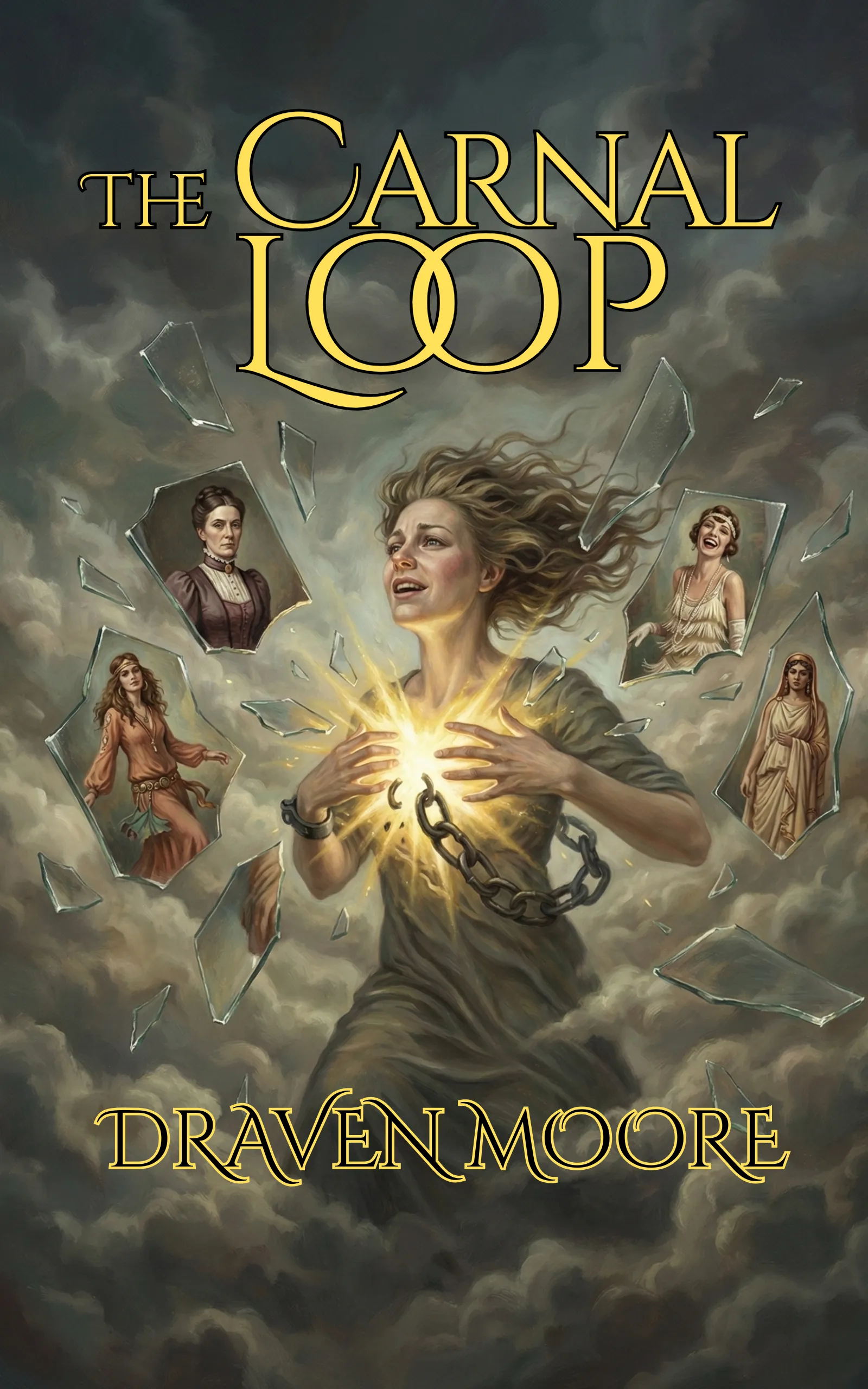
6. The Carnal Loop — Lucian Gray (MF Reincarnation Mate-Bond)
The closest direct comp to When the Moon Hatched’s specific mate-bond + amnesia architecture on this list. Lucian has lived a thousand lives, each one ending the same way — watching the woman he loves die before they can break the curse that binds them. He remembers every touch, every kiss, every heartbreak. She remembers nothing. When Lena Chen walks into his office seeking help for her emotional numbness, he recognises her instantly. This is his last chance. The memories are returning. The curse is closing. He has one lifetime left to do what a thousand attempts have not.
Where When the Moon Hatched runs the architectural-mate-bond + amnesia setup through Raeve and Kaan’s four-year structural deferral, The Carnal Loop runs the same architecture through a thousand-year reincarnation curse with the BDSM power-exchange architecture the trope’s structural patience has earned. Soulmates, dominant hero, praise kink, he-falls-first across a thousand iterations. Inferno heat. For When the Moon Hatched readers who came for the mate-bond’s architectural permanence + heroine-without-memory engine and want the indie KU contemporary paranormal variant. Read chapter one free →
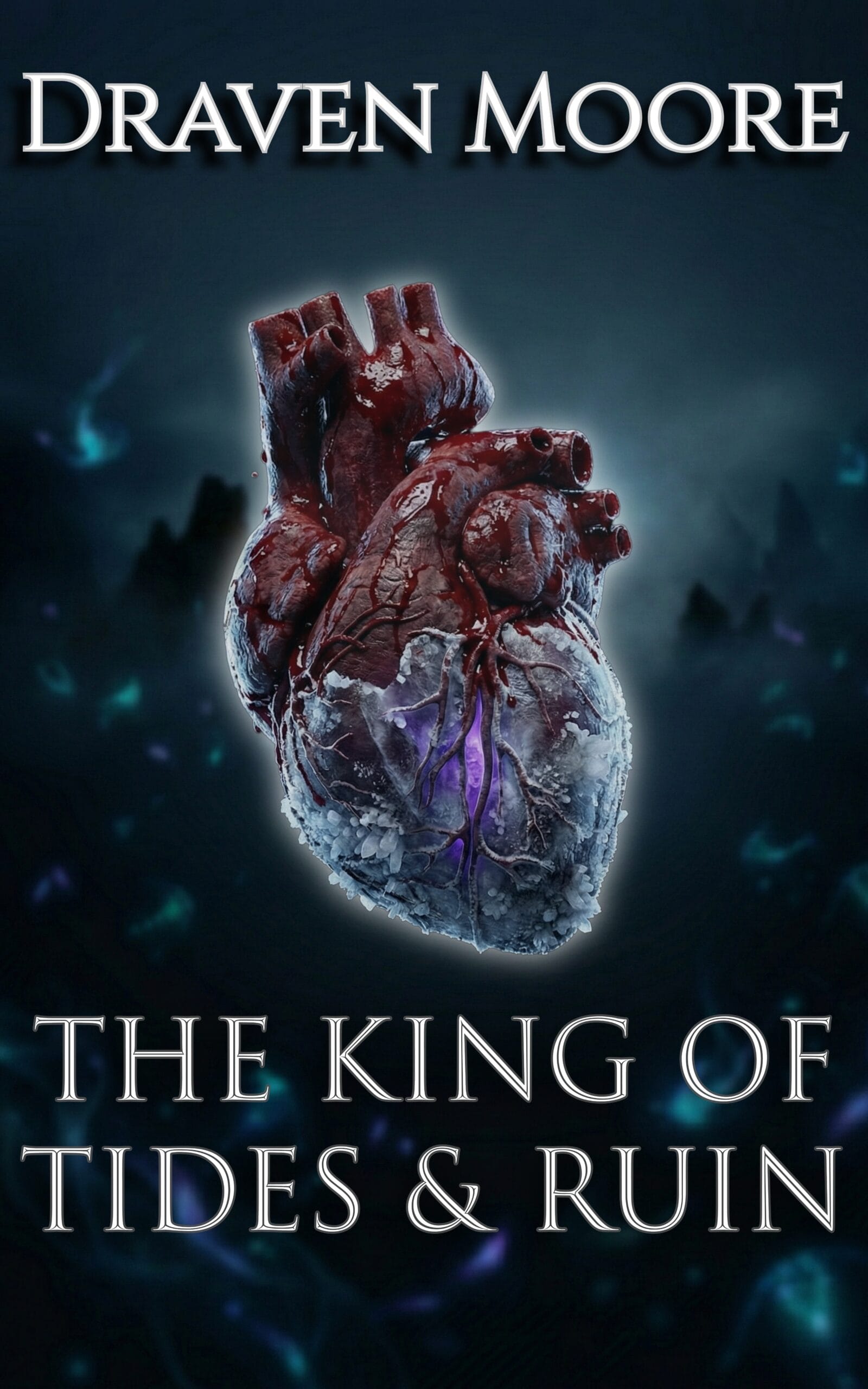
7. The King of Tides & Ruin — Draven Moore (MF Cursed King + Healer)
The cursed-immortal variant and the maritime-fantasy parallel to Kaan’s dragon-shifter-king architecture. Rourke Thorne was once the Empire’s most-feared witch-hunter; now he is the Salted King, a pirate captain slowly turning into a statue of living crystal. For seven years he has felt nothing — no warmth, no pain, no hope. The curse is winning. The architecture of his transformation is the architecture of his death. Then Sera Blackwood, a healer with a dangerous gift — she can cure any curse, but only by taking it into herself — is captured by the Salted King.
Where When the Moon Hatched runs the architectural-king + mate setup through Kaan’s dragon-shifter sovereignty and Raeve’s structural amnesia, The King of Tides & Ruin runs the cursed-king + healer architecture through dark maritime fantasy with the seven-year curse as the structural deferral. Draven Moore writes the morally-grey-cursed-king + healer-captive dynamic at the indie KU scorching register. For When the Moon Hatched readers who came for the architectural-immortal-king + mate-bond engine and want the maritime variant. Read chapter one free →
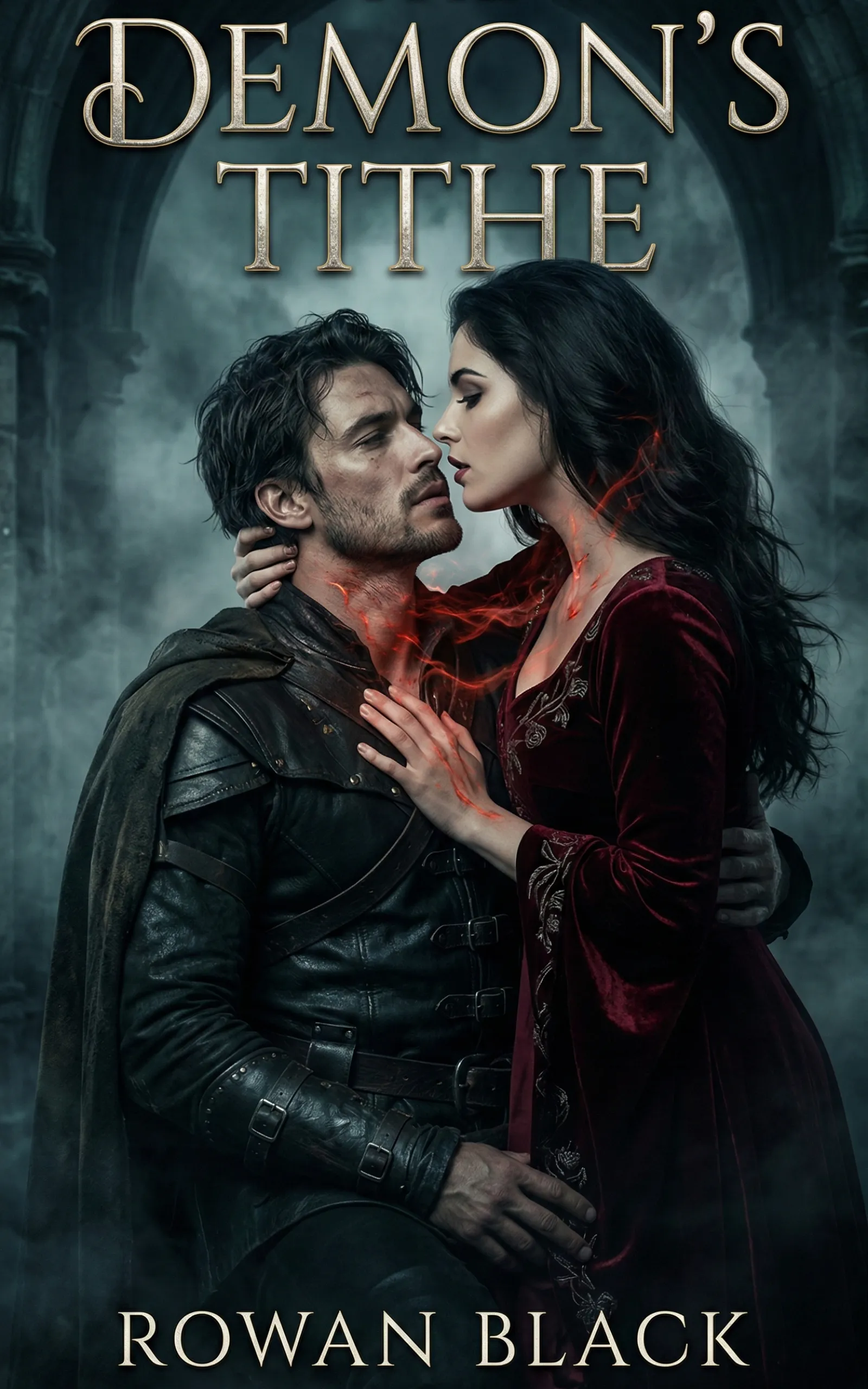
8. The Demon’s Tithe — Rowan Black (MF Ancient Entity)
The 267,000-word dark fantasy entry for When the Moon Hatched readers who came for Parker’s worldbuilding density and want the indie KU equivalent at the inferno heat register. Kaelen Ashward is a demon-blooded monster hunter with silver scars tracing his veins from the ritual that made him what he is — the structural cost of the architecture is on his body, the contract that pays him is the only structure his existence answers to, and he has spent a decade structurally certain that being unattached is the only way to survive what he is. Then a contract brings him to Castle Voss and Lady Seraphine — beautiful, dangerous, ancient, and structurally hungry for something only he can provide.
Where When the Moon Hatched runs the worldbuilding-density + political-faction architecture through Parker’s Mearcaire and Vateshram continents, The Demon’s Tithe runs the worldbuilding-density architecture through 267,000 words of four interconnected storylines spanning werewolf hunts, drowned choirs, and a blind oracle. Morally-grey-protagonist-meets-ancient-entity dynamics, on-page power-exchange work that engages the dynamic the trad-pub Parker register restrains. For When the Moon Hatched readers who came for Parker’s structural-worldbuilding-density engine and want the indie KU equivalent at the heat ceiling lifted past trad-pub. Read chapter one free →
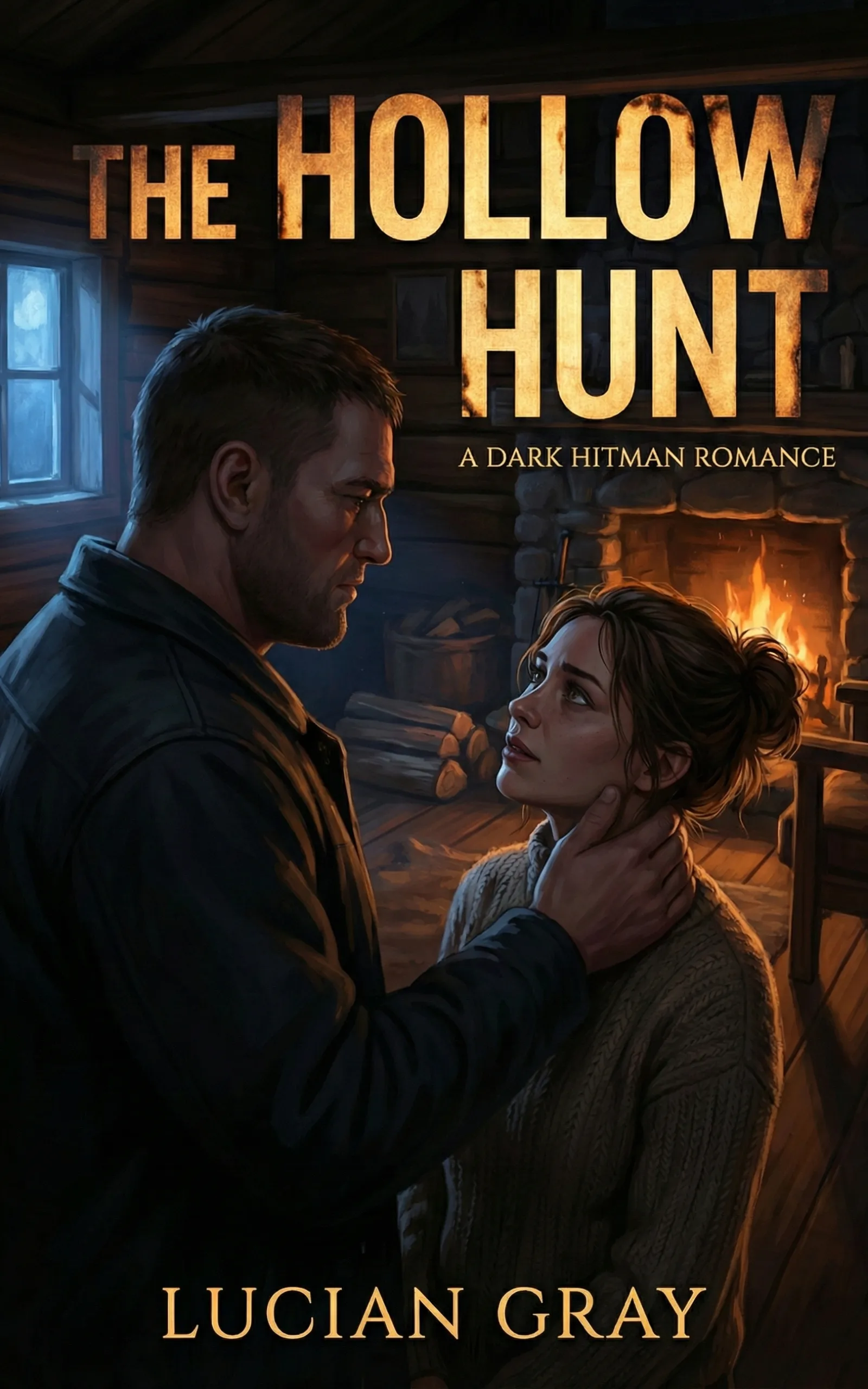
9. The Hollow Hunt — Lucian Gray (MF Dark Protector)
The protector-architecture entry and the closest comp to Kaan’s specific architectural-protector-with-violent-backstory dynamic on this list. He was sent to kill her. He gave her a head start instead. Elara Vance has been invisible for two years, running from the people who burned her life down; the soldier sent to finish the job recognises her at exactly the moment refusing to do it becomes structurally inevitable. The careful, patient on-page work of two people who have both been carrying violence as a structural cost finally encountering the one person whose survival becomes the only thing either of them refuses to surrender.
Where When the Moon Hatched runs the dark-protector architecture through Kaan’s four-year structural commitment to a Raeve who does not remember him, The Hollow Hunt runs the protector-meets-assassin architecture at the indie KU register with the morally-gray-warrior dynamic the trope rewards. Touch-her-and-die, the careful slow corruption of professional violence into the structural loyalty neither of them was supposed to need. For When the Moon Hatched readers who came for Kaan’s architectural cost + patient protector loyalty and want the modern single-volume indie KU read at the inferno heat ceiling. Read chapter one free →

10. The Heir Apparent — Rowan Black (MF Modern Morally-Gray)
The modern-urban variant for When the Moon Hatched readers who came for the architectural-power-differential setup and want the indie KU equivalent in a non-supernatural register. Norah Vane built Caleb Blackwood’s career from the ground up — ghostwrote his speeches, ran his division, kept his father’s empire from noticing his son was a liability. Then she walks into Caleb’s father’s gala and finds Caleb in a coatroom with someone who isn’t her. The father is watching the whole thing. The father is also Vance Blackwood — the patriarch she has spent two years carefully not looking at directly, the man whose attention now turns to her at exactly the moment her structural reason for tolerating Caleb has become null.
Where When the Moon Hatched runs the architectural-king + mate-bond setup through dragon-shifter political stakes, The Heir Apparent runs the architectural-power-differential through modern corporate power with the same morally-grey-protector + structural-patience DNA. Rowan Black writes the modern dark-billionaire architecture at the indie KU inferno register — the breeding kink, age-gap, and power-exchange dynamics the trope’s structural setup invites. For When the Moon Hatched readers who came for the architectural-power-differential engine and want the modern non-supernatural variant. Read chapter one free →
Frequently Asked Questions
What book is most like When the Moon Hatched?
For trad-pub: To Bleed a Crystal Bloom by Sarah A. Parker is the closest direct successor inside Parker’s catalog — same Parker voice, similar architectural-mate-bond + dark-gothic setup, different specific worldbuilding. Outside Parker’s catalog: Fourth Wing by Rebecca Yarros is the closest cross-author dragon-romantasy comp. For indie KU at the inferno register: The Carnal Loop by Lucian Gray (paranormal reincarnation mate-bond) runs the closest structural comp at the heat ceiling the trad-pub Parker register restrains.
Is When the Moon Hatched on Kindle Unlimited?
When the Moon Hatched was originally self-published indie and partially on KU but has since transitioned to trad-pub via Plume / Penguin Random House; current availability on Kindle Unlimited varies by edition and timing. Check the individual Amazon listing for current KU status. Sarah A. Parker’s earlier series To Bleed a Crystal Bloom is also generally not on KU. The five indie KU picks from Fractal Enigma above (The Carnal Loop, The King of Tides & Ruin, The Demon’s Tithe, The Hollow Hunt, The Heir Apparent) are all free with a Kindle Unlimited subscription.
When is the When the Moon Hatched sequel coming out?
The Moonfall series sequel (When the Sun Shatters) is currently in development with publication updates released periodically through Sarah A. Parker’s official channels and the Plume / Penguin Random House publicity machine. Check the author’s social media or her publisher’s page for the latest release information. The architectural-payoff that When the Moon Hatched defers is the structural reason the sequel commitment is worth making.
Are there spicier books like When the Moon Hatched?
Parker’s heat ceiling sits at upper-mainstream BookTok — the architectural worldbuilding is doing the structural work, the mate-bond + amnesia setup is the engine, and the on-page heat is calibrated to let the architectural patience lead. Readers who want the same mate-bond + supernatural-protector architecture with the heat ceiling lifted past the trad-pub mass-market level should look indie KU. The Carnal Loop by Lucian Gray (paranormal reincarnation mate-bond BDSM, inferno), The Demon’s Tithe by Rowan Black (267K-word dark fantasy monster hunter + ancient entity, inferno), and The King of Tides & Ruin by Draven Moore (cursed king + healer captive, scorching) all run the supernatural-protector architecture at on-page registers the trad-pub Parker shelf restrains.
Should I read To Bleed a Crystal Bloom or When the Moon Hatched first?
The two series are structurally separate. New Parker readers can start with either — To Bleed a Crystal Bloom (Crystal Bloom series) for dark gothic romantasy with the architectural-mate-bond setup at a smaller scale, or When the Moon Hatched (Moonfall series) for the dragon-shifter architecture at the BookTok-mainstream scale that broke Parker into trad-pub. Readers who finish one usually move to the other; the catalog overlap is in voice and architectural patience, not plot or characters.
Where do When the Moon Hatched readers go next?
For trad-pub: working through Parker’s catalog (To Bleed a Crystal Bloom + the wider Crystal Bloom series) plus Rebecca Yarros’s Empyrean series (Fourth Wing, Iron Flame, Onyx Storm) plus Hazelwood’s Bride covers the dragon-shifter + mate-bond + romantasy register. Beyond that: Sarah J. Maas’s catalog (ACOTAR, Crescent City, Throne of Glass) is essential romantasy reading. For indie KU at the inferno register: Lucian Gray‘s paranormal mate-bond catalog (The Carnal Loop, The Hollow Hunt), Rowan Black‘s dark fantasy catalog (The Demon’s Tithe, The Heir Apparent), and Draven Moore‘s dark pirate romantasy (The King of Tides & Ruin) are the closest indie comps.
This post contains Amazon affiliate links. As an Amazon Associate, Fractal Enigma earns from qualifying purchases at no extra cost to you. The five Fractal Enigma titles link to their book pages on this site where you can read the first chapter free.
Looking for more dragon-shifter and romantasy recommendations? The newsletter sends new indie KU dark fantasy releases, bonus chapters, and reader-only giveaways straight to your inbox. 🔥
The form you have selected does not exist.