

After the Applause
A Sapphic Why-Choose Rockstar Romance
by Isla Wilde
Shop the ebook · Shop the audiobook
Available at all major retailers
Pairing: FFF (Sapphic Why Choose)
Heat: 🌶️🌶️🌶️🌶️🌶️ Inferno
Tropes: Rockstar Romance, Reunion Tour, Second Chance (Eighteen Years), Age Gap (32 / 38 / 45), Rivals to Lovers, Ice Queen, Why Choose, Closed Triad, Polyamory, Mutual Pining, Secret Relationship, Forced Proximity, Celebrity Romance, Competence Kink, Praise Kink, Control/Surrender, Dirty Talk, Strap-On, Hurt/Comfort, Found Family, Grand Gesture Done Right, Triple POV
Two legends. One reunion tour. One co-headliner who refuses to be anybody’s opener.
Darcy Vale has three records, a van that broke down outside Amarillo, and the biggest break of her career: seven weeks co-headlining the Glass Harbor reunion tour. Same-size name on every marquee. Forty-five minutes a night. And one rule for first days: get in the room before anybody decides who you are.
Vivienne Shaw tunes by ear, eats the same lunch at the same minute every day, and hasn’t said what she wants out loud in eighteen years. Lena Ortiz brings everyone iced coffee with their name on it, sings like she’s confessing something, and walks out of every room where she might have to stay. Ten years ago, in a hotel stairwell in Montreal, one of them asked the other to stay. Neither of them has recovered.
On day one, Darcy corrects Vivienne’s drummer in front of the whole band. By the end of the week she’s kissed Lena in a hotel elevator and told Vivienne to pick one. By Denver she’s naked against a hotel window. By Montreal the three of them have rules, separate rooms in every city, and a ten-year-old unfinished song that Darcy finishes in forty seconds sitting on an amp case.
Then the song gets credited to the band. And when a magazine asks the two legends what Darcy is to them, the answer is an incredible opener.
Three women. Three relationships. One tour that ends in Portland, and one question nobody wants to answer on a bus: what happens in November?
After the Applause is a high-heat, standalone FFF sapphic why-choose rockstar romance with triple POV, an age gap, a second chance eighteen years in the making, a closed triad, no cheating and an HEA guaranteed. Explicit content. 18+.
You’ll love this book if you enjoy:
✅ A reunion tour, a band that broke up ten years ago, and two legends who never said why
✅ A cocky co-headliner who refuses to be anybody’s opener, onstage or in bed
✅ An ice-queen guitarist who has never once said what she wants, until she’s made to say it
✅ A runaway keyboardist who walks out of every room, learning to stay in the kitchen
✅ Three separate relationships first, then all three together, every pairing earning its own heat
✅ A hotel window in Denver, a ghost-lit stage in Minneapolis, a bunk on a moving tour bus, an iron headboard in Logan Square, a garage studio with the talkback on
✅ A bridge written in forty seconds, a credit nobody gave, and a public apology done exactly right
✅ Age gap (32 / 38 / 45), triple POV, no cheating, 🌶️🌶️🌶️🌶️🌶️ heat and an HEA guaranteed
⚠️ Content Warning: This novel contains extremely explicit sexual content (graphic FF and FFF scenes throughout, including masturbation with a toy, oral sex, fingering, scissoring, a strap-on, edging and orgasm denial, hands-held-on-a-headboard restraint, sex in a dressing room, on a stage and in a tour-bus bunk, and group sex), strong language and alcohol. It also includes a songwriter being denied credit for her work, a partner being publicly diminished in a magazine interview, a long estrangement between former bandmates, and an angry argument that turns into consensual rough sex (scratching, biting, a split lip). No cheating. Intended for readers 18+.
📖 Read Chapter One Free
Not sure yet? Read all of Chapter One right here.
Chapter One: Darcy
Darcy Vale had one rule for first days: get in the room before anybody decides who you are.
So at 9:40 on a wet Tuesday in September, she backed Saff’s van up to the loading door of Rosewood Sound, killed the engine, and finished the last third of a breakfast burrito in four bites.
“Twenty minutes early,” Saff said from the passenger seat, not opening her eyes. “You’re gonna make the legends look lazy.”
“That’s the plan.”
“That’s a terrible plan. Legends hold grudges.” Saff cracked one eye. “You have salsa on your chin.”
Darcy wiped it with her thumb, licked the thumb, and got out into the rain.
Rosewood was a converted cannery in Southeast Portland, wedged between a tile wholesaler and a brewery that wouldn’t open until noon. Inside, exposed brick, blankets on the walls, a long hallway that smelled like old coffee and solder.
The big room at the end was already lit.
Darcy stopped in the doorway with her Telecaster case in one hand and her bag over her shoulder, and for a second she forgot she was the one who’d planned to be first.
Vivienne Shaw was sitting on a road case in the middle of the riser with a cherry-red hollow-body across her lap, tuning by ear. Not with a tuner. By ear, head tipped a few degrees toward the headstock, one long finger resting on the string while the other hand turned the peg a hair at a time. Black jeans. A men’s white shirt with the sleeves rolled twice. Silver rings on three fingers. Her hair was dark and pulled back loose, and the gray in it wasn’t a streak so much as a weather system, like she’d stood in a storm once and decided to keep some of it.
She didn’t look up.
Darcy had seen her a hundred times on album covers and festival footage. None of it had prepared her for how still the woman was in person. Like the whole room was waiting for her permission.
The string hit pitch. Vivienne let it ring, then muted it with the side of her palm and finally lifted her eyes.
Gray. Of course they were gray.
“Ms. Vale.”
“Darcy’s fine.”
“You’re early.”
“So are you.”
“I’m always early.” Vivienne set the guitar on its stand with the care of someone laying down a sleeping child. “It’s the only way to be sure nothing was moved.”
“Was anything moved?”
“Your amp. Someone put it on my side.” A small nod toward stage left, where Darcy’s Deluxe Reverb sat under a quilted cover. “I moved it back.”
Darcy looked at the amp. Looked at Vivienne. “You touched my amp.”
“I touched the dolly your amp was on.” A pause, perfectly level. “I didn’t open anything.”
Behind Darcy, Saff came in with the snare case and a sound like a woman trying very hard not to laugh.
“Saff Bell,” Darcy said. “My drummer. My conscience. Mostly my drummer.”
“Ms. Bell.” Vivienne inclined her head. Then, to Darcy: “We run the closer at eleven. Inez has the schedule.”
That was it. That was the hello. Vivienne picked up a notebook, uncapped a pen, and started writing, and Darcy understood she’d been dismissed in the most polite way possible by a woman who’d probably been dismissing people for longer than Darcy had been allowed to drive.
She carried her Tele to stage right and opened the case with more force than it needed.
“Oh, I love her,” Saff whispered.
“Shut up.”
“She moved your amp, babe.”
“She moved the dolly.“
By ten-thirty the room was full of people who all had a job.
Marcus and Juno had come in at ten with the rest of Darcy’s gear crammed into Juno’s hatchback—Marcus on bass, six-foot-four of patience who’d been with Darcy since the first record; Juno on keys and high harmonies, with a thermos of peppermint tea she carried like a sidearm. They took one look at Vivienne Shaw on her road case and set up in total silence, like kids who’d wandered into a church.
Inez Park ran the tour like a woman defusing a bomb she’d built herself: headset around her neck, phone in each hand, a laminated schedule clipped to her belt. She found Darcy within ninety seconds, shook her hand once, hard, and talked at the speed of a cattle auction.
“Call’s ten today. Nine every day after this, and I mean nine. Co-headline billing, your name the same size as theirs on every poster, every ticket, every marquee. Your set, forty-five. Interval, twenty. Glass Harbor, seventy-five. Then the three of you close together, three songs, twelve minutes, done, everybody out by eleven so the unions don’t kill me. Separate dressing rooms every venue. Separate hotel rooms every city. The rider is sacred. Theo March, their manager, is in LA until Seattle, so if he calls you, he’s lying, it’s me. Owen’s recording everything from day one for the live album, so don’t say anything into a hot mic you wouldn’t want your mother to hear.”
“My mother’s heard worse.”
“Mine hasn’t.” Inez was already turning. “Owen! She’s here!”
Owen Pike waved from behind the board without looking up, a lanky guy with a beard and a cardigan and the hollow eyes of a man who’d mixed too many live records. “Hey, Darcy. Big fan. I’ll be the voice in your monitors telling you you’re flat.”
“I won’t be flat.”
“That’s what everyone says on day one.”
Forty-five. Seventy-five.
Darcy knew the math. Renata had won everything else—equal billing, her own dressing room, a seat inside the closer instead of a wave from the wings—and lost the clock. Glass Harbor had ten years of songs people had gotten married to. Darcy had three records and a van that broke down outside Amarillo.
She’d signed anyway. Two thousand seats a night for seven weeks, the biggest rooms of her life, after ten years of turning down opening slots because the girl who opens for somebody is the girl who opens for somebody forever. If this went wrong, that’s who she’d be. The girl who opened for Glass Harbor, in every bio and every review for the rest of her life.
Her phone buzzed. Renata, her manager, three time zones and one very expensive contract away: Remember. You’re co-headlining. Not opening. If anyone says opening, text me and I’ll set them on fire.
Then, a second later: Play nice. Not too nice.
Darcy pocketed the phone and looked across the riser at Vivienne, who was still writing in her notebook as if nobody else in the building existed.
No danger of too nice.
At eleven they ran the closer.
The three-song finale had been built over six weeks of emails and voice memos and one very tense video call. It opened with “Porchlight,” the single off Darcy’s new record, rearranged so Glass Harbor’s band could sit under it. Then a Glass Harbor song with Darcy on harmony. Then a slow, simple cover to send everybody home crying.
Glass Harbor’s touring band was solid session guys who’d been hired because they didn’t make mistakes. Hollis on drums had played with half of Nashville.
Darcy stepped up to the center mic. No Lena yet. Lena, Inez had said at ten-fifteen with a face like she was reporting the weather, was running late.
“Lena is always running late,” Vivienne had said, without any heat at all, which somehow made it worse.
Hollis counted in.
Darcy hit the first chord, opened her mouth on the first line, and got exactly two bars before Vivienne lifted one hand off her guitar.
The band stopped. Stopped the way a good band stops, instantly, like a car that respects its brakes.
“You’re pushing the downbeat,” Vivienne said.
It was not said unkindly. It was said the way you’d tell someone their shoe was untied. Which was worse.
Darcy took her hand off the strings. “I’m not.”
The room changed temperature. Somebody’s pick hit the floor.
“You’re arriving early on one,” Vivienne said. “Consistently. By a hair.”
“I’m arriving on time. Your drummer’s dragging.” Darcy turned. “No offense, Hollis.”
“Some taken,” said Hollis.
“Play it back,” Darcy said. Not to Vivienne. To the board.
Owen looked at Vivienne. Vivienne looked at Darcy. Darcy didn’t look away, because she’d been doing this since she was nineteen and a sound guy in Milwaukee had told her she’d sing better if she smiled more. You either let the room decide who you were or you didn’t.
“Owen,” Vivienne said. “Play it back.”
He did. Two bars, through the mains, loud enough to rattle the blankets on the walls.
Everyone in that room had ears. That was the beautiful and terrible thing about musicians. You could lie to a crowd but you couldn’t lie to a rehearsal room, and by the second bar it was obvious to every single person present that the kick drum was sitting just behind the beat like a dog that didn’t want to go for a walk, and Darcy’s guitar was dead center.
Owen stopped the playback.
Hollis rubbed the back of his neck. “Yeah. That’s me. I’m used to sitting behind Viv. She lays back.”
Darcy waited.
Vivienne looked at her. There was nothing on her face. Not embarrassment, not irritation, not the defensive little smile people wore when they’d been caught. Just attention, absolute and unhurried, like Darcy was a problem in an arrangement she hadn’t solved yet.
“Fine,” Vivienne said.
One word. Flat as a tabletop. And the whole room learned something: that Darcy Vale wasn’t going to fold, and that Vivienne Shaw didn’t apologize. She adjusted.
“From the top,” Vivienne said. “Hollis, push.”
Hollis pushed. They ran it, and it was good. They ran it again, and it was better, and halfway through the second chorus Vivienne slid a guitar line under Darcy’s vocal that wasn’t on any chart Darcy had seen. A slow, falling figure, four notes stretched across two bars, so understated it was almost an afterthought. It made the whole song ache. It made “Porchlight” sound like the song Darcy had been trying to write for two years.
Darcy turned her head on instinct.
Vivienne’s eyes were half shut. Her left hand moved up the neck in long, unhurried reaches, the tendons in her wrist standing out and relaxing. Those fingers were absurd. Long and pale and precise, a ring catching the light on every shift, pressing each note down exactly as hard as it needed and not one ounce more.
Darcy missed a lyric.
Not by much. Half a syllable. Nobody but the people who’d been doing this for twenty years would have caught it.
Vivienne opened her eyes.
She didn’t say a word. She didn’t have to. One eyebrow lifted maybe a millimeter, and then she looked back down at her fretboard, and Darcy sang the rest of the song with her face hot and her jaw tight and a very clear thought in her head, which was: Oh, fuck you.
Which was not, she was aware, the only thought in her head.
Lena Ortiz arrived at 12:08 carrying a cardboard tray of iced coffees in each hand and a third tray balanced on her forearm, and the room tilted toward her like a ship taking on water.
“I know,” she said before anyone could speak. “I know, I know. There was a bridge. Not a song bridge, a real bridge, it went up, there was a boat. Portland has boats, did anyone tell you that? Inez, I love you, don’t look at me like that, I got you oat milk.”
Inez did not take the oat milk. She looked at her watch, and then at Lena, and the room got very interested in its cables.
“Call was ten,” Inez said. “That’s two hours of eleven crew on the clock, watching two singers run a closer written for three. Tomorrow you’re late, it comes out of your per diem. I’m not joking.”
“You never joke,” Lena said, and some of the shine went out of her grin. “Okay. Fair. That’s fair. I’m sorry, Inez.”
Inez took the oat milk then. “Accepted. Don’t make me like you.”
She was shorter than Darcy expected, and softer. Dark wavy hair half falling out of a clip, gold hoops, a thrifted silk blouse in a green that should have clashed with everything and somehow didn’t. A wide, expressive mouth painted a dark berry color. Rain on her shoulders. She smelled, when she came close, like coffee and something warm and spiced, like an orange someone had stuck cloves into.
Every cup had a name on it in Sharpie. Inez. Owen. Hollis. Even Darcy’s band. Marcus. Juno. She had looked them up.
“Which one of you is Saff?”
Saff, who was not a hugger, raised a hand. Lena set down the tray and hugged her anyway, a full-body, rocking, best-friend hug.
“I’ve watched your drum-cam videos like fifty times,” Lena said into Saff’s shoulder. “That fill on ‘Kitchen Floor.’ The ghost notes. I wanted to die.”
Saff, over Lena’s shoulder, made a face at Darcy that said help and marry her in equal measure.
Then Lena turned, and Darcy got the full force of her.
“And you’re Darcy.” Lena held out a cup. DARCY, with a little star drawn next to it. “Black, two shots, because I asked your drummer’s Instagram. Is that creepy? That’s a little creepy. I’m sorry. I’m really glad you’re here.”
“It’s not creepy,” Darcy said, which was a lie, and took the coffee, which was perfect.
Lena’s eyes went past her.
It wasn’t a big moment. If Darcy hadn’t been standing right there she wouldn’t have seen it. But she was, and she did. Lena’s whole face did something small and complicated, a flinch and a reach at the same time, like someone touching a stove they already knew was hot.
“Viv.”
Vivienne hadn’t moved from her road case. “Lena.”
A name each. Ten years in them. Darcy had read the stories. Everybody had. Creative differences. The last show in Montreal and then nothing. Not a single interview where either of them would say more than three sentences about the other. Then Undertow turned ten, a streaming show put the title track in its final scene, and the song climbed the charts all over again. Theo March spent a year on the phone. The story in the business was that neither of them would sign until the other had, that both signatures came in the same afternoon, and that nobody, not even Theo, knew who blinked first.
And here they were, ten feet apart in a room that smelled like old coffee, and the air between them had gone so thick Darcy could practically hear it hum.
Lena set Vivienne’s cup on the edge of the riser. No name on it. She didn’t need one.
“Black,” Lena said. “Like your soul.”
“Thank you.”
“You’re welcome.”
“We’ve run the closer four times without you,” Vivienne said. Not unkindly. Not kindly either. “Your harmony on the second song changed. It’s written on Ms. Vale’s chart. Learn it over lunch. We run it again at one-thirty, and I’d like it right the first time.”
Lena’s grin held. Something underneath it went still.
“Sure,” she said. “One-thirty.”
Then Lena walked past her, across the riser, to an old Wurlitzer electric piano with a cracked lid and duct tape on one leg, and she sat down and pressed a key, and the warm wobbling tone of it filled the room.
She didn’t warm up. She didn’t ask. She just started playing, left hand rolling a slow figure under a right-hand melody Darcy knew, everyone knew, a melody that had been in a thousand breakup playlists and a hundred movie trailers and one very specific night in Darcy’s car in a Walgreens parking lot when she was twenty-three.
“Undertow.”
Lena sang the first line.
Tell me where the water goes when it leaves you.
Her voice was lower than on the records. Rougher, warmer, worn soft at the edges like a T-shirt you’d slept in for a decade. It didn’t fill the room. It slipped under the door of it.
Darcy felt it in her back teeth.
And across the riser, Vivienne Shaw, who had been reaching to adjust a tuning peg, stopped.
Not dramatically. Her hand just stopped, fingers on the peg, mid-turn. The peg didn’t move. Her face didn’t move. Nothing about her moved except her chest, once, a breath going in and not quite coming out again.
The whole room watched Lena. Inez had stopped talking into her phone. Owen had both hands flat on the board. Hollis was holding his sticks like he’d forgotten what they were for. Even Saff, who’d played behind a Grammy winner and never once looked impressed, was staring.
But Darcy wasn’t watching Lena.
She was watching Vivienne watch Lena. Watching that long, precise hand stay frozen on the headstock while a woman she hadn’t spoken to in ten years sang the first verse of the saddest song they’d ever written together. Watching Vivienne’s eyes not move from the side of Lena’s face.
Oh, Darcy thought.
Oh.
So that was the creative difference.
Lena stopped at the end of the verse, let the last chord hang, and looked over her shoulder, grinning like nothing had happened. “Still works.”
“It was never the problem,” Vivienne said quietly.
Lena’s grin held, but something behind it flickered.
Then Vivienne turned the peg, the string came to pitch, and she said, in a completely different voice, “Lunch. Lena, the chart. Ms. Vale has already corrected our drummer, so I’d listen to her.”
“Ms. Vale,” Lena repeated, delighted, and looked at Darcy. “Oh no. She likes you.”
Darcy put her coffee down so she wouldn’t crush it. “I’m fine with Darcy.”
“I know,” said Vivienne, and went back to her notebook.
Darcy filed it all away. The frozen hand. The never the problem. The look. She filed it the way she filed lyrics she’d steal later, very carefully, in the back of her head where nobody could see.
They worked until six. Lena had the harmony right at one-thirty, the first time, and didn’t look at Vivienne once while she sang it. It went better than it had any right to.
By the time Darcy dragged herself out to the loading dock with a beer from the green-room fridge, the rain had stopped and the sky over the brewery was going orange and pink, the kind of ridiculous Pacific Northwest sunset that made people move here and then complain about the weather for the rest of their lives. She sat on the edge of the dock with her boots dangling and her guitar hand aching in the good way.
The door banged behind her.
“Oh thank God. Is that a beer?”
Lena dropped onto the dock next to her without asking, close enough that their shoulders touched, and held out her hand.
Darcy gave her the bottle. Lena drank from it, a long pull, head back, throat moving, and handed it back with a ring of berry lipstick around the neck.
“I’m not going to get you a new one,” Lena said. “I’m just going to share yours. That’s a thing I do. It’s not a great thing.”
“I noticed.”
“You notice a lot.” Lena leaned back on her hands and squinted at the sunset. “So. Bad Weather Friends.“
Darcy turned her head. “What?”
“Your new record. I’ve had it on repeat for a month.” Lena said it the way other people said nice weather. “Track six. ‘Everybody’s Ex.’ That bridge where you drop the band out and it’s just you and the room mic and you can hear your chair creak? Who decided to leave the chair in?”
Darcy stared at her.
People asked about her records. Fans, journalists, the occasional uncle at a wedding. But in the last six weeks of planning this tour, every single conversation Darcy had had with anyone attached to Glass Harbor had been about Glass Harbor. The reunion. The legacy. The honor, as Theo March had put it on that first call, of sharing a stage with a band that had meant so much to so many people.
Nobody had asked about the chair.
“Me,” Darcy said. “I decided. The engineer wanted to edit it out. I said if he touched it I’d fire him.”
“Good.” Lena tipped her head back, eyes closed, sunset on her face. “It’s the best part. It sounds like you’re in the room. Like you’re about to stand up and leave and you’re deciding not to.”
Something in Darcy’s chest did a stupid, sliding thing. She drank to cover it, and tasted Lena’s lipstick on the glass. Wax and berries and something sweeter underneath.
“You really listened to it.”
“I listen to everything.” Lena opened one eye. “I wanted to know who I was going to be standing next to for seven weeks. And then I listened again because I liked it. And then a third time because I was in the bath and I didn’t want to get out to change it.”
“That’s a hell of an endorsement.”
“It was a long bath.” Lena smiled slow. “I’m very thorough.”
Darcy laughed. She didn’t mean to. It came out loud and surprised and it bounced off the brewery wall, and Lena looked enormously pleased with herself.
They sat for a while. Lena went inside once and came back with two more bottles, handed one to Darcy, and kept drinking out of Darcy’s anyway. She asked about the record, really asked: who played the pedal steel, why the third track faded instead of ending, whether Darcy wrote at night or in the morning. Darcy answered, and kept answering, and realized somewhere into her second beer that she’d been talking for twenty minutes and Lena hadn’t once steered it back to herself, and hadn’t once said the words Glass Harbor.
Lena’s knee was against hers now. Darcy hadn’t noticed it happen.
“Can I ask you something?” Darcy said.
“You can ask me anything. I won’t necessarily answer.”
“Vivienne.”
Lena laughed, a short huff through her nose, and looked at the sky. “Not even a question. Just her name. That’s fair. That’s how I usually say it too.”
“She stopped,” Darcy said. “When you sang. Her hand stopped.”
“Did it?” Lena’s voice stayed light. Too light. “I didn’t see.”
Darcy watched her profile. Lena was smiling, but she’d put it on like a coat, quick, and it didn’t quite fit.
“Okay,” Darcy said.
“She’s going to hate you, you know.” Lena turned her head. Her eyes were very dark this close, and amused, and something else. “Just so you’re warned. You corrected her drummer in front of her band on day one. Nobody does that. She’s going to sit up at five-thirty tomorrow morning drinking black coffee and thinking about how much she hates you.”
“She already does.”
Lena’s smile changed. Went softer and sharper at once. She looked at Darcy for long enough that Darcy felt it on her skin, a slow drag over her mouth and back up.
“No,” Lena said. “That’s not what that was.”
Then she stood, brushed off the seat of her jeans, and took one more swallow from Darcy’s beer before handing it back.
“I’m going to walk,” she said. “I walk. Don’t let anybody tell you it’s a whole thing. It’s not a whole thing.”
“Is it a whole thing?”
“It’s a whole thing.” Lena was already backing toward the street. “Night, Darcy Vale. Nice chair.”
Darcy watched her go, all the way down the block, hips swinging, hair coming loose, until she turned the corner by the tile place and was gone.
She looked down at the bottle in her hand. The ring of berry lipstick on the neck.
“Fuck,” she said to the sunset.
The Alder Hotel was all reclaimed wood and Edison bulbs and a desk clerk who called her friend. Darcy showered too hot, ate half a room-service burger in a towel, ignored a text from her mother, and lay on top of the covers in a T-shirt and underwear with her phone on her chest, staring at the ceiling.
She was not going to think about it.
She’d been the hot girl in the van and the temporary girl in the bed and the girl who was so fun until she had to leave for six weeks. She was thirty-two and very good at her job, and this tour was the biggest shot she’d ever been handed, and she did not get tangled up with the people she shared a stage with.
She lasted eleven minutes.
The wand was in the side pocket of her suitcase, where it always was. Purple, travel-sized, quieter than it had any right to be. She didn’t let herself think about it too hard. Just reached over, dug it out, clicked it on low, and pushed her underwear down to her knees with one hand.
Lena first. That was the easy one. That made sense.
Lena on the loading dock, head back, throat working as she drank from Darcy’s bottle. That mouth. Dark berry, wide and wicked and laughing. Darcy let herself imagine it, really imagine it: Lena on her knees on that dock, sunset on her hair, pushing Darcy’s thighs apart with both hands and looking up at her with that slow, thorough smile. I’m very thorough. That lipstick smearing across the inside of Darcy’s thigh. Her tongue, warm and flat and patient, dragging all the way up through her.
Darcy pressed the wand against her clit and hissed through her teeth.
She was already wet. Embarrassingly wet. She dragged two fingers down through it, slipped them inside herself, curled them, and the toy buzzed against her and her hips came up off the bed.
Lena’s mouth. Lena humming against her, that low, worn voice vibrating right into her. Lena’s hand flat on her stomach to hold her down. Still works.
Good. Good, that was good, that was fine, that was a perfectly reasonable woman to think about while you got yourself off in a Portland hotel room.
And then her brain, the traitor, served up a hand.
Long. Pale. Silver rings. Tendons standing out in the wrist as it reached up a fretboard, pressing down exactly as hard as it needed and not one ounce more.
No.
Darcy squeezed her eyes shut and pushed the image away and tried to get back to Lena’s mouth.
It didn’t go.
That hand was on her now, in her head, sliding up the inside of her thigh at the speed of that four-note guitar line. Taking its time. Not asking. Just knowing. A voice at her ear, low and level and not one bit impressed: You’re pushing.
Darcy made a sound she would never in her life admit to.
She clicked the wand up a setting and worked her fingers harder, deeper, the heel of her hand grinding, and the two of them tangled up behind her eyelids into something she had no business imagining. Lena’s mouth on her and those long fingers inside her, both at once. Lena laughing against her clit. Vivienne watching from the end of the bed, still dressed, completely composed, gray eyes on Darcy’s face, telling her exactly when.
Again.
The orgasm hit her like a door slamming. Her back bowed, her thighs clamped down on her own hand, and she came so hard she saw white at the edges, gasping, the toy buzzing against oversensitive skin until she fumbled it off and lay there shaking with her fingers still inside herself and her heart going like Hollis on a fill he finally didn’t drag.
“Fuck,” she told the ceiling. “Fuck. Fuck.“
The ceiling didn’t have an opinion.
She lay there for a full minute, breathing, sticky and wrecked and furious with herself, before she pulled her hand free, wiped it on the sheet like an animal, and picked up her phone.
Saff answered on the second ring, because Saff always answered. There was a TV going in the background, some hotel-room cop show, and the sound of it dropping as Saff found the remote.
“You okay?”
Darcy stared at the ceiling.
“I’m so fucked,” she said.
There was a pause. The TV went quiet. Saff had been her best friend for nine years and her drummer for seven, and she had seen Darcy through two bad breakups, one record-label meltdown, and a very bad night in Tulsa involving tequila and a mechanical bull.
“Which one?” Saff asked.
Darcy opened her mouth to answer.
And didn’t.
The silence stretched. Down the line, Saff let out a long, slow breath, the sound of a woman settling in for a very long tour.
“Yeah,” Saff said. “That’s what I thought.”
Want to keep reading? The full novel is available now.
🔥 Want an EXCLUSIVE Bonus Chapter?
The Encore — A scene TOO HOT for the bookstore
Closing night of the Revival residency. Twenty-four hundred empty seats, one ghost light, a Hammond B-3 and the keys to a locked theater. Darcy has spent three nights watching from the balcony under her own rule: nothing onstage. Tonight she suspends it.
More from Isla Wilde
Browse all Isla Wilde books.
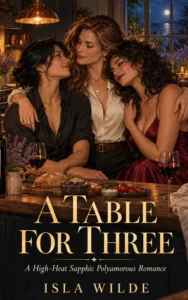
A Table for Three
One kitchen. Two best friends. One pastry chef who asks before she touches anything.

After the Applause
Two legends. One reunion tour. One co-headliner who refuses to be anybody's opener.
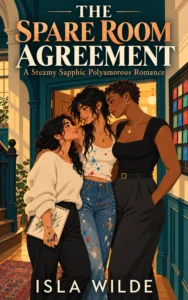
The Spare Room Agreement
One spare room. Two roommates in love with each other. A house agreement that was never going to hold.

The Third Key
She married one of them. She hired the other. Nobody planned on the third key.

The Witness He Kept
He was hired to erase her. He kept her instead.

The Honeymoon Wasn’t Cancelled
A Why Choose FMF Vacation Romance
Never Miss a Release
Get new release alerts, exclusive bonus content, and reader-only giveaways.