

The Best Man Needs Practice
Steamy MM Destination Wedding Romance
by Jace Wilder
See available purchase options
Pairing: MM
Heat: 🌶️🌶️🌶️🌶️🌶️ Inferno
Tropes: Bi-Awakening, Forced Proximity, Only One Bed, Size Difference, Praise Kink, He Falls First, Co-Best Men, Destination Wedding, Kissing Lessons, Age Gap, Secret Arrangement
He asked me to teach him how to kiss a man. He forgot to mention he already knew exactly which man he wanted.
Two hundred weddings. I know how this goes: eight days in Portugal, one gorgeous mistake, a flight home, no hard feelings.
Then Theo makes me co-best man with his brother.
Abram Hollis is six foot five, built like a door, and has spent six years looking at me like I’m a problem he hasn’t been cleared to solve. He doesn’t flirt. He doesn’t joke. He doesn’t blink.
And when I ask him — laughing, because I’m always laughing — whether he’s ever kissed a man, he says no, and then he says teach me, and he isn’t laughing at all.
So we make rules. Lessons only. It ends when the wedding does. I don’t become his secret.
That last one was his idea.
Here’s what I didn’t plan for: a man that size being that careful. A man that quiet asking that many questions. A man who’s been to three of my gallery openings and never once told me.
By Lesson Four I’m not teaching him anything. By the rehearsal dinner I’m the one asking to be shown.
And on the morning of the wedding, I find out Bram signed a fourteen-month contract to leave the country — three weeks before he ever asked me for a single thing.
You’ll love this book if you enjoy:
✅ Bi-awakening MM with an ex-Marine who asks permission in the filthiest flat voice
✅ Destination wedding forced proximity with only one bed
✅ A size difference you could file paperwork about
✅ A praise kink neither of them saw coming
✅ A man who has never once said something he didn’t mean
✅ He falls first / he falls harder dual POV
✅ Explicit, graphic, deeply emotional heat (🌶️🌶️🌶️🌶️🌶️)
✅ HEA guaranteed. No cheating, no cliffhanger.
⚠️ Content Warning: This novel contains explicit sexual content (graphic MM scenes including penetrative sex, oral sex, and praise-driven intimacy), strong language, depictions of emotional avoidance and past relationship trauma, military service references, and alcohol use. Intended for readers 18+.
📖 Read Chapter One Free
Not sure yet? Read the full first chapter right here.
Chapter One: Two Best Men, One Clipboard
The florist had used peonies where the order said ranunculus, and I was already shooting the evidence before my suitcase hit the courtyard tiles.
“Don’t move them.” I crouched beside the nearest arrangement, angled my phone for the late-afternoon light, and fired off three frames. Creamy petals, fat and overblown, crowding the terra-cotta pots that lined the stone walkway. Beautiful flowers. Wrong beautiful flowers. A distinction that had cost me exactly one client in 2019 and would never cost me another. “These are gorgeous, but they’re not what we ordered. Can you get Mariana on the phone?”
The concierge — mid-twenties, tanned, immaculate linen shirt — blinked at me like I’d appeared from a wall crack. Fair enough. I’d stepped off a connecting flight from Lisbon forty minutes ago, my hair was doing its post-airplane impression of a copper Brillo pad, and I was crouching in the middle of a five-star courtyard talking to a potted plant.
“You are a guest, sir?”
“Camden Royce. I’m with the Hollis-Navarro wedding.” I stood, brushed off my knees, and gave him the smile that had never once failed to upgrade a hotel room. “And I’m the photographer, and the co-best man, and apparently the guy who noticed the peonies. Which makes me three kinds of problem before I’ve even checked in.”
He smiled back. Good. Smiles were my native currency. I collected them the way other people collected stamps — compulsively, indiscriminately, and with no intention of ever committing to a single one.
“Mr. Royce, yes. Welcome to Casa Maré Alta. Your room—” He hesitated, and something shifted behind his eyes that I recognized instantly. The specific expression of a hospitality professional about to deliver news he wished belonged to someone else’s shift. “There has been a small adjustment to your accommodation. I will explain at check-in. But first, Mr. Hollis is waiting for you in the courtyard restaurant.”
“Which Mr. Hollis?”
“The groom.”
“Which groom?”
Another hesitation, shorter this time. “The one who has been calling the front desk every twenty minutes since noon.”
Theo. Of course.
I left my bag with the concierge, pocketed my phone, and followed the sound of agitated laughter through an arched passageway that opened onto a courtyard straight out of a tile catalog. Orange trees in mathematically precise rows. A cracked stone fountain that had been repurposed as a planter. Bougainvillea climbing the white walls like it was trying to escape the building’s good taste. The light was absurd — late July on the Portuguese coast, everything gilded and heavy and one filter away from a lifestyle ad.
I was already composing shots. The fountain against the far wall would anchor the rehearsal portraits. The archway framed like a cathedral entrance if I dropped to one knee and tilted wide. The orange trees cast shadows across the flagstones that would read as lace in black and white.
This was the part of my job I loved past the point of professional obligation. Every wedding venue was a series of problems the light hadn’t solved yet, and I’d been solving them for seven years with a hit rate that kept me booked fourteen months out. I was very, very good at seeing beautiful things and capturing them at their best angle.
I was significantly less good at keeping them.
“Cam!” Theo materialized from behind a menu the size of a road atlas and nearly knocked over a carafe of water getting to me. He was golden-brown and grinning, his dark hair still damp, his entire body vibrating with the pre-wedding frequency I’d seen on a hundred grooms and exactly zero who wore it this well. “You’re here. Thank God. Gabriel’s architect brain has gone into overdrive and he’s redesigning the seating chart for the fourth time and I need someone who speaks Normal.”
I caught him in a hug that lifted his feet off the ground, because Theo Hollis had been my closest friend for nine years and there was no version of this week where I didn’t pick him up at least once.
“I’m here. The flowers are wrong and I’ve already documented it. You look disgustingly happy. Where’s Gabriel?”
“Measuring the ceremony platform with a laser level.”
“Of course he is.”
Theo pulled back, held me at arm’s length, and studied my face with the particular scrutiny of a man who’d done a doctorate in reading people’s bodies for a living. Pediatric physical therapist. The most emotionally perceptive human I’d ever met, and he used it the way a surgeon uses a scalpel — precisely, and usually right before you realized you were bleeding.
“You look tired,” he said.
“I look incredible and you know it.”
“You look incredible and tired. Long flight?”
“Layover in Lisbon. Some guy in business class asked if I was a model and I said no and then he asked if I wanted to be and I said still no and then I slept for forty-five minutes against a window that smelled like antiseptic.” I dropped into the chair across from him and stole his water. “Tell me everything. What’s the status? What’s on fire? What am I fixing?”
Theo’s grin turned into something more calculated. I’d seen this expression before — usually right before he told me something I wouldn’t enjoy and expected me to be charming about it.
“So,” he said. “About the co-best-man situation.”
“What co-best-man situation?”
“The one where you have one.”
I set the water down. “You said I was your best man. Singular. You said it in a text with fourteen exclamation points. I screenshotted it. It’s framed in my apartment next to my diploma.”
“You don’t have a diploma.”
“I have the screenshot, Theo. Singular. Best. Man.”
“Right.” He leaned back. The grin was fully tactical now. “The thing is, Gabriel’s side of the wedding party is handled — Iker’s his man of honour, the bridesmaids are sorted — but my side needed someone who could actually, you know, organize. You’re brilliant at vibes. You’re catastrophic at logistics.”
“I resent that.”
“You showed up to my engagement party on the wrong day.”
“That was a calendar sync issue.”
“It was a Wednesday, Cam. The party was Saturday.”
I waved a hand. The details were immaterial. “Fine. So you’ve got a logistics person. Who? Priya? Your dad?”
Theo took a very deliberate sip of water.
“Bram,” he said. “Bram’s your co-best man.”
The courtyard didn’t actually go silent. The fountain was still trickling. A waiter was still clearing plates two tables over. Somewhere above us a shutter banged in the coastal wind. But in the specific, enclosed space inside my chest where I processed information before deciding how to perform a reaction to it, everything went extremely, unhelpfully quiet.
Bram.
Abram Hollis. Theo’s older brother. Six foot five. Chest like a loading dock. Hands that could palm a basketball or, more relevantly, my entire skull. Former Marine, current humanitarian, permanent exercise in emotional unavailability. Steel-grey eyes that had tracked me across rooms and dinner tables and one very memorable New Year’s Eve party for the better part of six years without ever — not once, not a single time — responding to any of the approximately four hundred invitations I had extended through eye contact, body language, and one genuinely outstanding double entendre about load-bearing walls.
I had flirted with Bram Hollis the way I’d flirt with a monument. Persistently, recreationally, and with absolutely no expectation that the monument would flirt back.
I had a working theory about him. Several, actually, because Bram Hollis was the kind of man who generated theories the way a black hole generates gravity — by being massive and silent and giving you nothing useful to measure against.
Theory one: he was straight, uninterested, and my radar was broken.
Theory two: he was straight, mildly interested in the way straight men sometimes were around me, and too disciplined to let it become a conversation.
Theory three: he hated me, specifically and personally, for reasons he would never articulate and I would never understand, and every long look across a room was just him cataloguing my flaws.
I’d been leaning toward theory three since Theo’s thirtieth birthday, when I’d spent twenty minutes doing my absolute best material and Bram had responded by finishing his drink, nodding once, and walking out of the bar without saying goodnight to anyone.
“Cam?” Theo was watching me with the careful neutrality of a man who knew exactly what he’d done. “You okay?”
“I’m great.” My voice came out perfectly steady because my voice always came out perfectly steady; that was the entire premise of my personality. “I’m fantastic. I’m co-best-manning a destination wedding with a man who’s made direct eye contact with me maybe six times in six years and smiled during none of them. This is going to be a beautiful week.”
“He doesn’t hate you.”
“He once left a room I walked into.”
“He left a room you danced into. There’s a distinction.”
“The distinction is that dancing is delightful and he left.”
Theo leaned forward and caught my wrist, the way he did when he was about to be sincere in a way that made me uncomfortable. “He’s good at this, Cam. He runs logistics for disaster zones. He can handle caterers and transport and the seventeen things you’d forget because you were chasing the light. And you can handle — the rest. The beauty. The people. The parts that make it feel like something instead of just working.”
“You’re describing a marriage.”
“I’m describing a professional partnership lasting eight days.”
“Same difference. One of us will end up resentful and the other will end up drinking.”
He squeezed my wrist and let go. “Be nice to him. He’s my brother.”
“I’m always nice.”
“You’re always charming. Those are not the same thing and we both know it.”
He had me there.
I was still formulating a defense when the courtyard light shifted — not because of the sun, but because something very large had stepped into the archway behind me and altered the geometry of the available shade.
I felt him before I turned around. Not in some mystical, romance-novel, the-air-changed way. In a practical, physical, architectural way: the man displaced enough space to register in my peripheral vision like a weather event.
I turned.
Bram Hollis stood in the archway in a plain black T-shirt and dark jeans, a leather duffel over one shoulder, and the expression of a man who had been informed of a building code violation and was already calculating the remediation timeline. He was bigger than the last time I’d seen him. Or maybe the T-shirt was smaller. Either way, the fabric across his shoulders looked like it was filing a grievance, and his arms — Christ, his arms — strained the sleeves in a way that suggested the shirt had been designed for a different species.
Short dark beard. Cropped hair. The scar through his right eyebrow catching the late light. Grey eyes that landed on Theo first, softened briefly, and then moved to me with the careful precision of a man sighting a rifle.
“Camden,” he said.
One word. My name. Spoken in a low, flat register that contained no warmth, no hostility, and absolutely no information I could use.
“Hollis.” I stood, because I had manners, and because sitting down while Bram Hollis looked down at me was an experience I preferred to limit. Standing didn’t help much. I was five-eleven in good shoes and he made me feel like a decorative accent piece. “I hear we’re co-parenting this wedding.”
“Theo mentioned it.”
“Did he mention it before or after he told you I was the other option?”
Something moved behind his eyes — not quite a reaction, but the ghost of one, like a curtain shifting in a closed room. “Before.”
“And you said yes anyway.”
“I said I could work with anyone for eight days.”
“Generous.”
“Practical.” He set his bag down, and I watched the muscles in his forearm reorganize themselves around the motion. Watched his hand — God, that hand, wide enough to dwarf the duffel’s strap — release and flex. “Theo says we need to finalize the bachelor itinerary today.”
“We do,” Theo said brightly, sliding a clipboard across the table. An actual clipboard. Aluminum. Possibly military surplus. “I’ve put the options on a shared list. You two sort it out. I have a fiancé to stop from laser-levelling the Atlantic.”
He kissed my cheek, clapped Bram on the shoulder — reaching up to do it, because the Hollis gene pool had apparently allocated all available height to the firstborn and left Theo pleasantly normal — and vanished through the archway with the specific haste of a man who had lit a fuse and wanted to be elsewhere when it went off.
Bram sat down across from me. The iron chair creaked under him. He picked up the clipboard, scanned it, and set it down between us with the list facing me, because even his spatial awareness was courteous and infuriating.
“The bachelor celebration,” he said. “I’ve outlined options.”
“You’ve outlined—” I pulled the clipboard toward me. He had, in fact, outlined options. In neat block handwriting on a grid-lined page, with bullet points and subheadings and what appeared to be a contingency column. “Bram. This is a bachelor party, not a supply-chain audit.”
“The catamaran company requires forty-eight hours’ notice for groups over ten. If we’re sailing, we confirm today or we lose the slot.”
“Fine, we’ll sail. See? Decision made. What else?”
“Dinner reservation. I’ve held three options at different price points. The club at the resort has a private room available until midnight but requires a noise-deposit—”
“A noise deposit.”
“If decibels exceed a threshold—”
“I know what a noise deposit is, I’m marvelling that you investigated one.” I leaned back and studied him across the table. This close, in this light, with no party to disappear into and no bar to exit, there was nowhere for either of us to redirect. His face was all geometry — the hard jaw, the straight nose, the brow that the scar interrupted like a pencil line through a blueprint. Not handsome in the way I usually registered it, which involved angles and bone structure and the kind of face that photographed well from multiple positions. Bram’s face photographed well from exactly one position: dead-on, with the light hitting the grey of his eyes and the rest of him receding into shadow. I knew this because I’d shot him at two family events and reviewed the results with more attention than the situation warranted.
He was looking at me with that steady, unblinking patience that I’d mistaken for disapproval for half a decade. Waiting for me to finish being amused so the meeting could continue.
“Okay.” I pulled my chair closer to the table and put on what Theo called my real-photographer voice — calm, organized, the version of me that showed up when I was working and couldn’t afford to be merely decorative. “Here’s what I’m thinking. The catamaran, yes, confirmed, do it. Sunset sailing, two hours, open bar, nothing structured. Then dinner — not the most expensive one, the one with the terrace, because the light at that hour will make everyone look twenty percent more attractive and drunk people love a view. Then the club, private room, and I’ll handle the music and the vibe and you can handle the, what, evacuation routes?”
“Transportation.” He didn’t blink. “I want confirmed return vehicles so nobody walks the coast road drunk at 1 a.m.”
“That’s… actually reasonable.”
“I’m occasionally reasonable.”
“The jury’s still out.”
I could have sworn — could have sworn — something shifted at the corner of his mouth. Not a smile. Bram Hollis didn’t smile, not around me, not ever. But a softening of the line, a momentary lapse in whatever structural engineering held his expression in place.
It disappeared before I could photograph it. Metaphorically.
We worked through the list. It took forty-five minutes, during which I learned several things: Bram Hollis had contacted every vendor, confirmed every time slot, verified every allergy in the wedding party including two I hadn’t known about, and cross-referenced the weather forecast for every proposed outdoor activity. He was, in the most irritating possible way, spectacularly competent.
I also learned that his forearms did something specific when he wrote — the tendons shifting under his skin in a pattern I found myself tracking like a time-lapse. And that when he was concentrating, the tip of his tongue pressed against his lower lip. And that his hands made the clipboard look like it had been manufactured for a child.
I picked up my phone to check the time. That was the excuse. The actual reason was that my hands needed something to do that wasn’t noticing things about his hands.
The camera app was still open from the flower evidence. I didn’t decide to take the photograph. It was reflex — the same reflex that had produced sixty percent of my best work and a hundred percent of the shots I’d never shown anyone. I saw the light, and the composition, and I pressed the shutter before the conscious part of my brain could intervene.
His right hand, wrapped around a water glass. The pale scar across the back, catching the low sun. Knuckles wide and blunt. His wrist disappearing into the dark sleeve. The glass — normal sized, hotel standard — looking like a prop from a doll’s kitchen.
I took three frames in two seconds and pocketed the phone before he looked up.
“Is the itinerary settled?” he asked.
“Settled.”
“Good.” He capped his pen — a plain black pen, government-issue, the man had zero aesthetic instincts — and squared the clipboard’s edges against the table. “Then I’ll confirm the catamaran and the transport. You handle the dinner booking and the club.”
“I can do that.”
“I know you can.” He stood, and the chair scraped, and the full reality of him reasserted itself against the courtyard the way a cliff reasserts itself against a wave. “You’re good at the parts that need people to feel something.”
I opened my mouth. Closed it. Opened it again.
“Was that a compliment, Hollis?”
“It was an observation.”
“From you, those might be the same thing.”
He picked up his bag. The duffel strap crossed his chest, bisecting the black T-shirt, and for one unguarded second I let myself look at the full scope of him — the height, the shoulders, the careful way he moved through a space too small for his body, adjusting without adjusting, contained without being constrained. He moved like a man who had learned a long time ago that the world was not built to his dimensions and had quietly decided to fit anyway.
Then he looked back at me over his shoulder, and his grey eyes held mine, and he didn’t look away.
He always looked away. That was the rule. Six years of rules. Bram Hollis looked at me and then stopped looking at me before I could determine what the looking meant, and I’d built an entire interpretation of his character on the assumption that what he was hiding was indifference.
This time he held. Two seconds. Three. Long enough for the air between us to acquire a texture I could almost photograph — heavy, granular, sun-warmed and ridiculous.
Then he turned and walked through the archway and the light closed behind him like a door.
I sat down. Picked up my phone. Opened the camera roll.
Three frames. His hand on the glass. The scar. The impossible proportions. In the best of the three, the angle of light turned the water in the glass to gold, and his fingers were slightly blurred because he’d been about to move, and the whole image had the quality of something stolen — urgent and private and not meant for anyone’s collection.
I stared at it for longer than a professional assessment required.
Then I swiped to a different album, dropped the phone face-down on the table, and went to find the concierge about those peonies. I had flowers to fix, a dinner to book, and a week to survive with a man who had just looked at me for four seconds like I was the only problem in Portugal he didn’t have a contingency plan for.
I was still thinking about his hands when the concierge delivered the news about the honeymoon cottage, and everything got significantly worse.
Want to keep reading? The full novel is available now.
🔥 Want an EXCLUSIVE Bonus Chapter?
Lesson Eight — A scene TOO HOT for retailers
One year later. Casa Maré Alta. The honeymoon cottage. The syllabus is framed on the wall — and Bram has written one new line at the bottom.
More from Jace Wilder
Browse all Jace Wilder books.
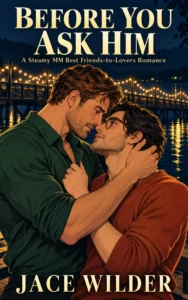
Before You Ask Him
He wrote the proposal for his best friend. Every word was about the man holding the ring.
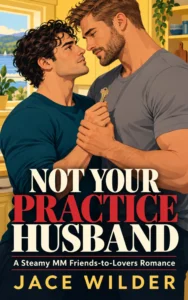
Not Your Practice Husband
Fifteen years of being his practice husband. Six rules. One day he finally knows.

Still Here, Still Yours
He promised to call. Twenty-three years later, he's standing on my ball field.
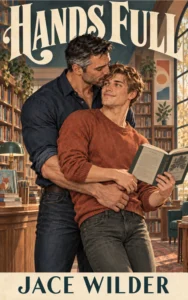
Hands Full
One good hand. One thin wall. His best friend's little brother on the other side of it.
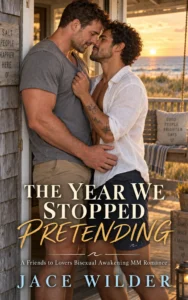
The Year We Stopped Pretending
They’ve been best friends for twenty-five years. It took one bed to ruin everything.
Two’s Company, Three’s Coming
A Steamy MMM Roommates-to-Lovers Romance
Never Miss a Release
Get new release alerts, exclusive bonus content, and reader-only giveaways.