

Best Roommates to Lovers Romance Books 2026 — One Apartment, One Bed, Zero Willpower
Roommates-to-lovers is the trope BookTok refuses to let go of, and there’s a structural reason for it. Two adults who don’t choose each other end up sharing four hundred square feet, one bathroom, one kitchen, one couch, and — because the universe of romance fiction respects the architecture — frequently one bed. The chore chart was supposed to keep things professional. The lease said nothing about feelings. By chapter ten, every accidental hallway encounter is a war zone, and by chapter twenty, neither of them can remember why they were pretending the rent was the only reason they signed.
The trope works because it does forced proximity at its purest. There’s no fae court politics, no royal subterfuge, no fake-dating cover story. Just two people stuck in a small apartment, navigating the architecturally inevitable collision of physical proximity and emotional distance. The trope’s payoff isn’t “they figured it out” — it’s “they realized the apartment was the relationship the whole time.”
Below: four trad-pub gateway comps that built the modern roommates-to-lovers shelf, two more recent additions worth knowing, and six indie Kindle Unlimited titles across MM, FF, and bi-awakening where the slow burn actually combusts on-page. All featured below run Inferno-tier on-page heat. All free with Kindle Unlimited.
The Hating Game — Sally Thorne

The architectural cousin. The Hating Game isn’t strictly roommates — Lucy and Joshua share a desk, not an apartment — but the trope’s structural DNA is identical: two people stuck in a four-walled space too small to ignore each other, performing professional distance over a tension that has nowhere to go. Thorne’s book is the one most roommates-to-lovers writers cite as their architectural reference. The shared cubicle, the staring game, the elevator scene, the inevitable surrender — all of it maps directly onto the apartment-shared dynamic the trope rides on.
For roommates-to-lovers readers who haven’t read it: this is the architectural foundation. Lucy’s first-person voice is precise. Joshua’s slow-revealed competence is the entire engine. The hate-driven proximity finally collapsing into the elevator kiss is the trope’s modern signature payoff. The roommates books below are operating on the same chassis with the apartment instead of the office.
Heat is mainstream-romcom — moderate on-page — but the slow-burn architecture is the masterclass. Standalone, no series commitment.
Get The Hating Game on Amazon →
The Spanish Love Deception — Elena Armas
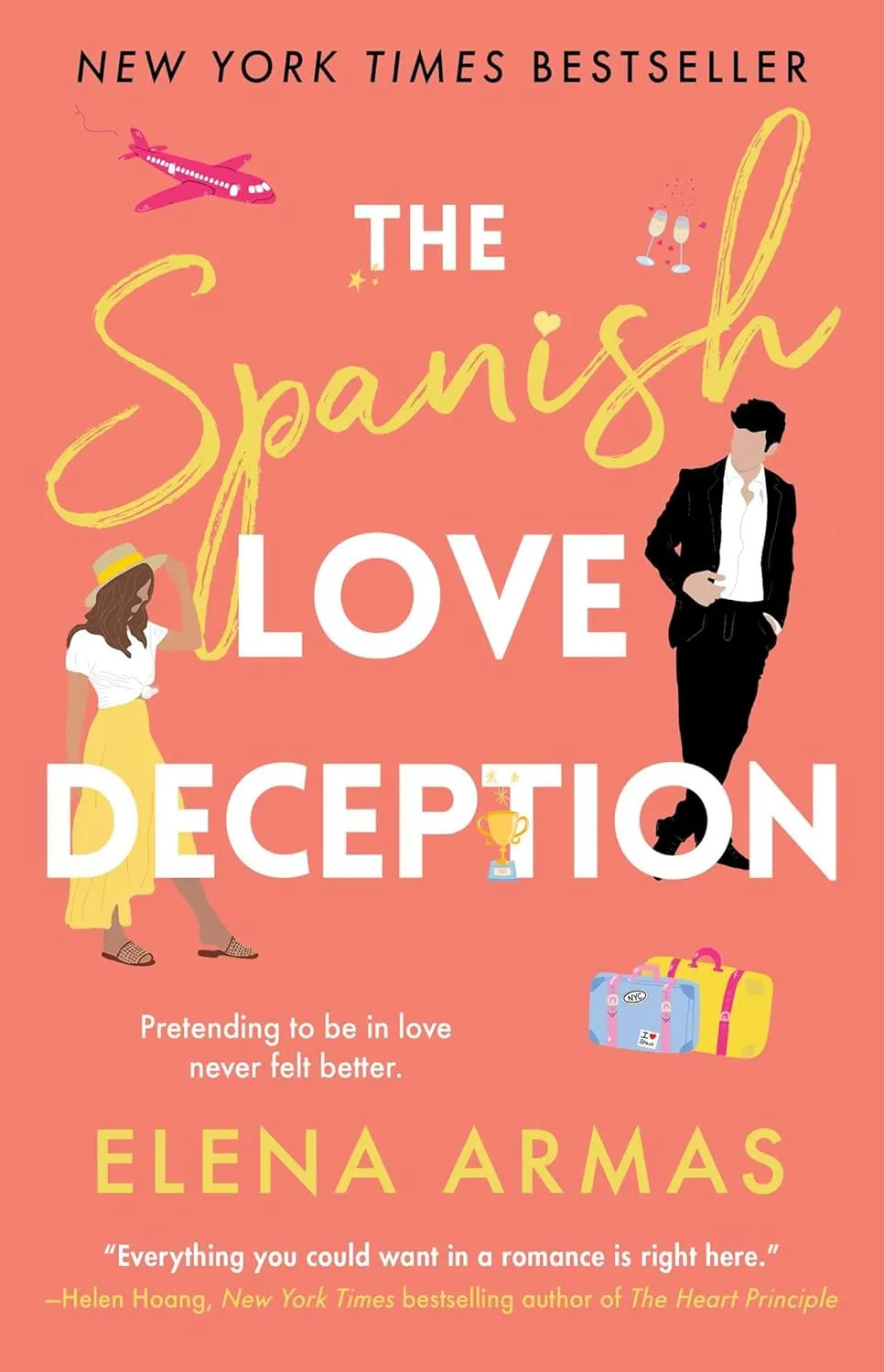
The fake-fiancé-as-roommate hybrid. Catalina needs a date for her sister’s wedding in Spain. Aaron Blackford volunteers, and the four-day wedding trip becomes a forced-cohabitation pressure cooker that compresses an entire roommates-to-lovers arc into a long weekend. The hotel suite is the apartment. The shared bed is the shared bed. The cousin’s relentless commentary is the chore chart. Armas does the trope at architectural compression — every meal, every shared bathroom, every accidental hallway encounter has the structural weight a typical roommates novel spreads across three months.
SLD belongs on the roommates-to-lovers shelf because the architecture is the same: two people who didn’t choose each other forced into a shared domestic space, navigating the slow corruption of professional distance into something neither of them is ready to label. The fake-dating cover story is the device that locks them into the proximity. The actual book is two adults learning each other’s actual selves through a series of meals neither of them was supposed to share.
Heat is moderate-to-high — the door eventually opens — with the slow-burn architecture handled at the highest tier. Standalone, kicks off a connected world.
Get The Spanish Love Deception on Amazon →
Beach Read — Emily Henry
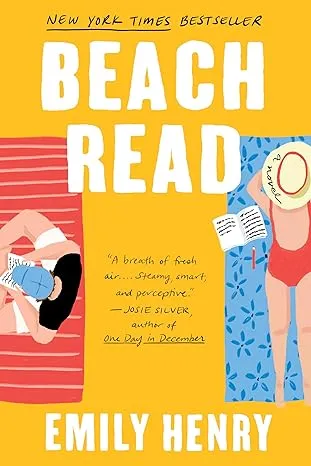
The next-door-neighbors variant. January and Augustus aren’t strict roommates — they’re occupying separate beach houses next door to each other on Lake Michigan — but Henry uses the wall-thin proximity exactly the way roommates novels use the shared apartment. Every porch encounter, every overheard typing session, every shared coffee on the deck is the same architectural beat as the shared kitchen in a roommates novel. The grief plot, the writer’s block, the genre-swap experiment they cook up to break their respective dry spells — all of it lives in the architectural space the roommates trope opens up.
For roommates-to-lovers readers who want literary register, this is the gateway. Henry’s interiority is the masterclass, and the slow recognition that what started as antagonistic neighbors has become something neither of them is ready to call by its name is paced with the patience the trope rewards.
Heat ceiling is mainstream — closed-door, mostly — but the trope’s emotional payoff is the structural masterclass. Standalone.
The Cheat Sheet — Sarah Adams
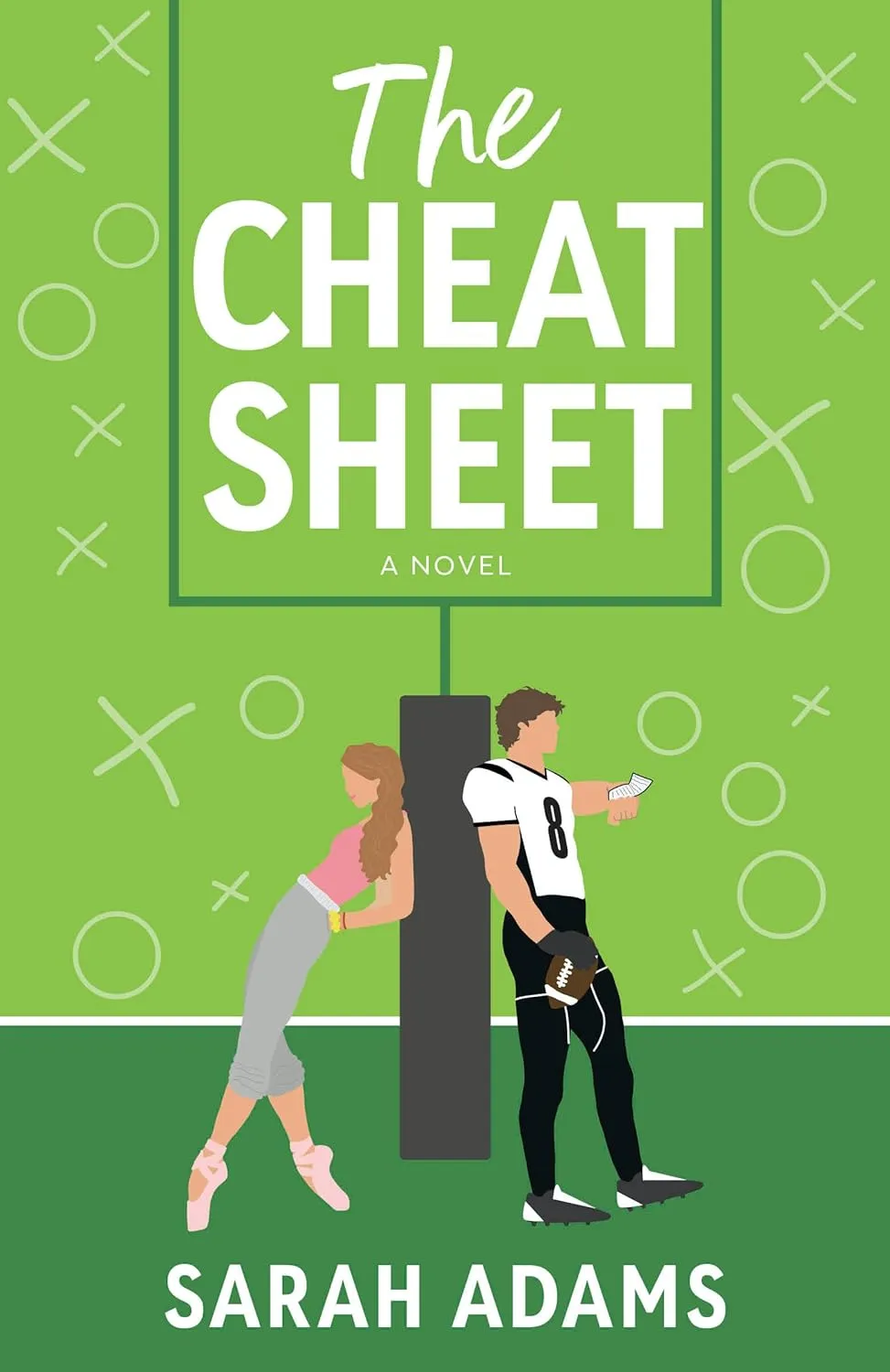
The friend-group-roommate variant. Bree and Nathan have been platonic best friends since middle school, with shared roommates, shared rentals, and a shared friend group that has been politely waiting for them to admit the obvious for fifteen years. The Cheat Sheet builds its trope architecture on the accumulated proximity of two people who have shared too many couches, too many road-trip rentals, too many “can I crash on your floor” weekends to pretend they don’t know each other’s coffee orders.
Adams writes the friend-roommate-blurry slow burn with the texture the trope rewards. The fake-dating B-plot kicks in late. The real engine is the fifteen years of shared spaces that have made it impossible for Bree and Nathan to navigate any actual proximity without acknowledging the want they’ve been outsourcing to other partners for a decade. The hometown setting reinforces the architecture — the friend group, the family pressure, the small-town inevitability.
Heat is mainstream-romcom. Standalone. For readers who want roommates-to-lovers in the platonic-friends-becoming-something-else register.
Get The Cheat Sheet on Amazon →
The Roommate — Rosie Danan & The Flatshare — Beth O’Leary
Two more recent additions to the trad-pub roommates-to-lovers shelf worth knowing. The Roommate (Rosie Danan, 2020) does the strangers-to-roommates premise as MF contemporary with a sex-positive twist — Clara moves to LA to room with her childhood crush, who has, in her absence, become a porn star, and the slow-burn architecture builds from there. The Flatshare (Beth O’Leary, 2019) does the trope with a structural device almost no one else has tried: Tiffy and Leon share the same one-bedroom flat on opposite shifts, never seeing each other, communicating only through Post-it notes for the first half of the book. Both are mainstream-heat, both are standalone, both are excellent gateway picks for readers who want trad-pub roommates-to-lovers craft before exploring the indie KU shelf.
Get The Roommate on Amazon → · Get The Flatshare on Amazon →

Indie KU Roommates-to-Lovers — Where the Lease Becomes the Love Story
Here’s what the trad-pub roommates-to-lovers shelf does well: the architectural setup, the slow-burn deferral, the shared-space texture that makes every accidental hallway encounter feel structurally weighted. Here’s what it doesn’t do: MM roommates-to-lovers, FF sapphic roommates, bi-awakening roommates, and on-page heat at the architectural moment the trope finally cashes the check.
The indie KU shelf is currently the strongest place in romance for those exact gaps. The six titles below are roommates-to-lovers at architectural extremity — MM bi-awakening with thin walls and ceiling collapses, FF sapphic dorm-room slow burn, MM hockey rookie with the veteran defenseman, MM duplex second-chance — with Inferno-tier on-page work that earns the slow build of every shared meal at the kitchen counter. All free with Kindle Unlimited.
The Roommate Bet — Aurora North (F/F Sapphic, Inferno Heat)
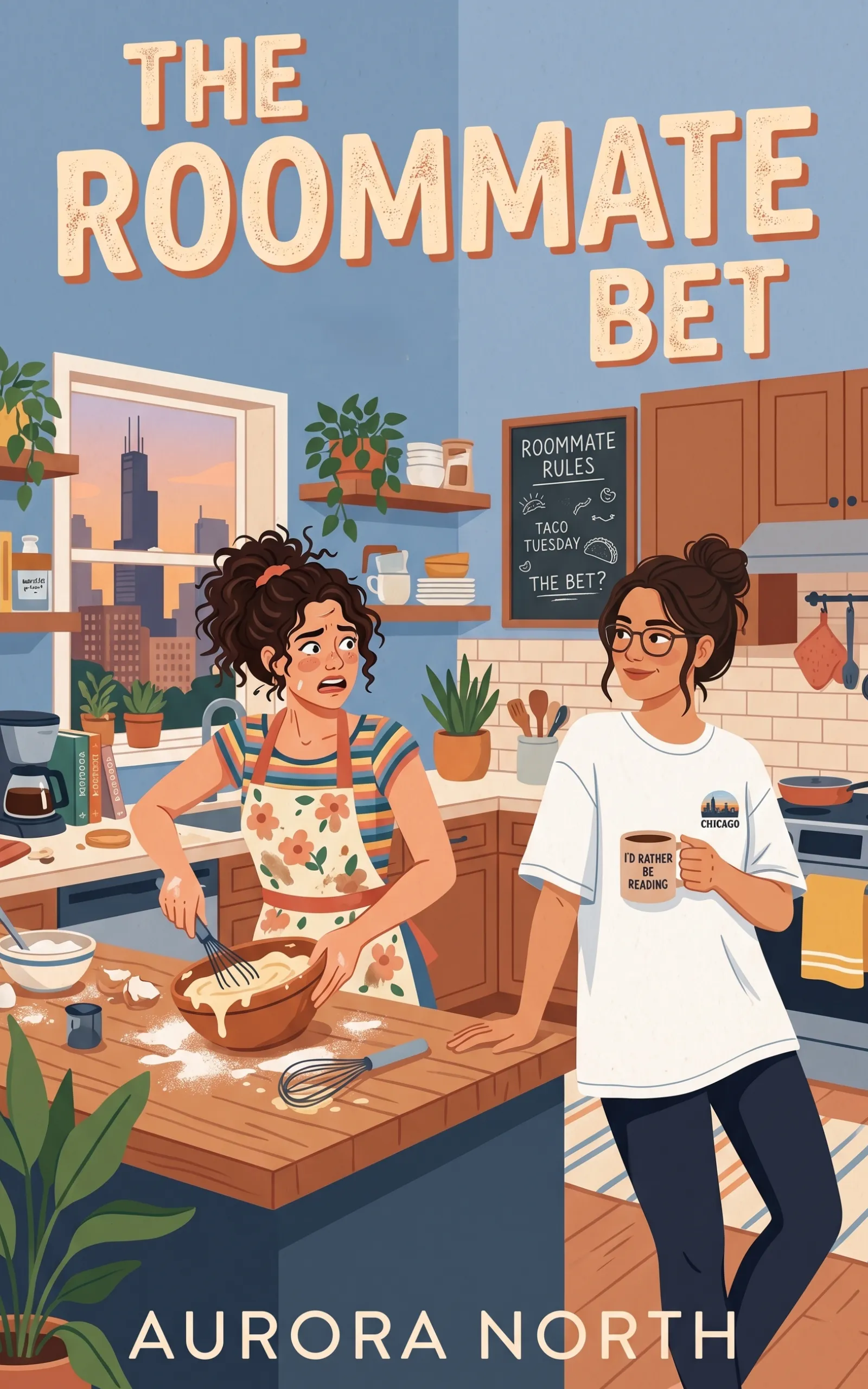
Chloe Vance has been Jade Miller’s roommate for eighteen months, her best friend for two years, and her audience for every drunken near-disaster in between. They make a bet at the bar one night: whoever takes home a girl first, wins. Loser writes the essay. Loser reads it at the bar. The problem is Chloe has been quietly losing her mind every time Jade laughs at one of her jokes, and the bet is now structurally requiring her to watch her best friend pursue other women. The compromise both of them propose two weeks in is, by every reasonable definition, a worse idea than the original bet.
Aurora North does the practice-turns-real sapphic roommates-to-lovers slow burn at architectural extremity. The eighteen-month roommate baseline is the load-bearing element — Chloe and Jade have already accumulated the shared-space intimacy that makes the bi-awakening recognition land harder. The bet device is the structural lock-in. The on-page heat is Inferno-tier and earns the slow build of every “this is just for practice” lie.
Inferno-tier. Bi awakening. Only one bed. Mutual pining. College romance. Read The Roommate Bet free on KU →
Roomie Roulette — Aurora North (F/F Sapphic Bi Awakening, Inferno Heat)
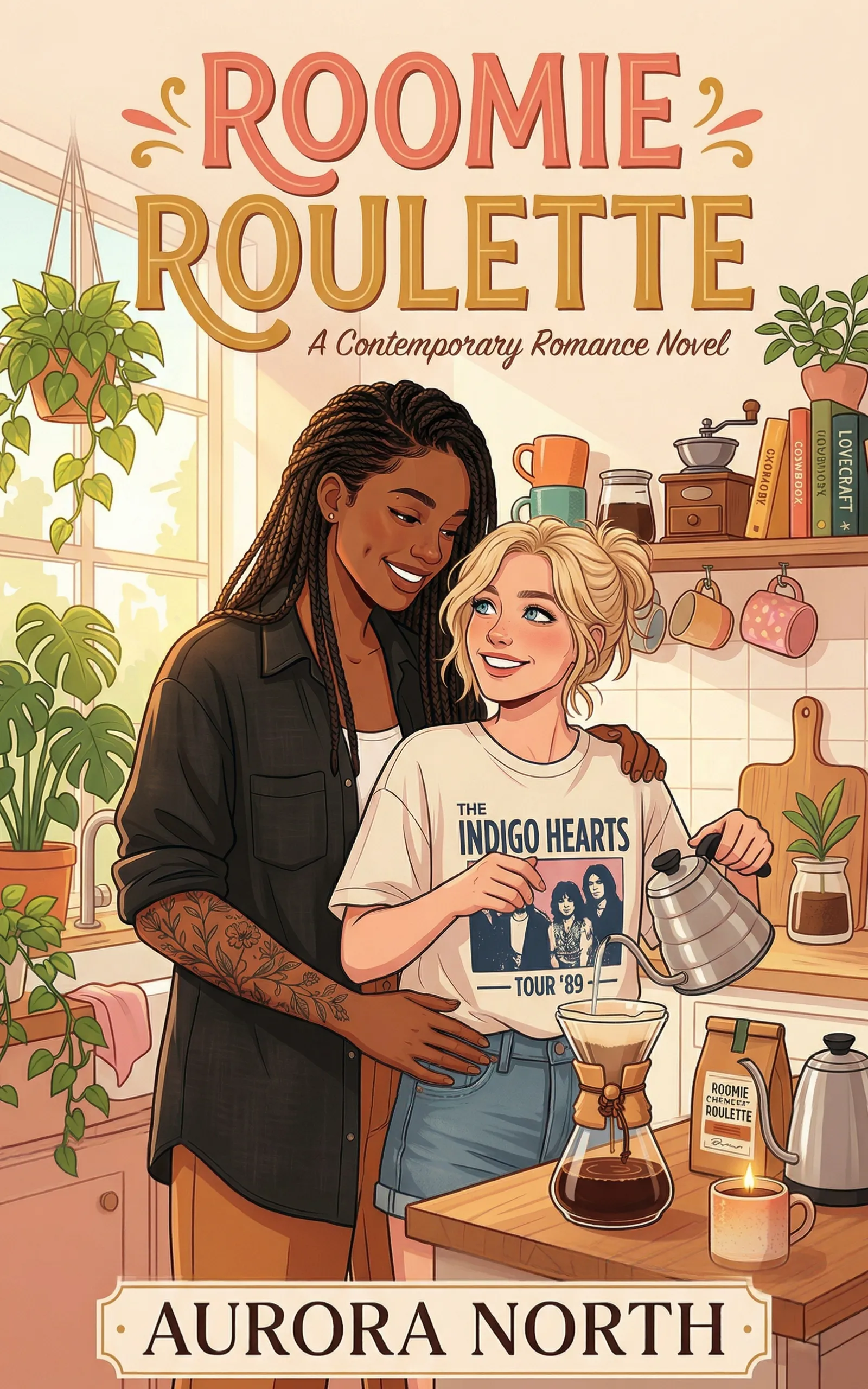
Kylie Bennett is twenty-seven, freshly dumped, and sleeping in her best friend’s spare room. The plan: crash for a month, get her life together, move out. The problem: her best friend is Jordan Reyes — tattooed, braided, devastatingly gorgeous graphic artist who walks around the apartment in a state of casual undress that is rapidly compromising every assumption Kylie has ever made about her own sexuality. The thin walls don’t help. The shared bathroom doesn’t help. The thirty-day timeline keeps getting renegotiated for reasons neither of them is going to say out loud.
Roomie Roulette is the bi-awakening sapphic roommates-to-lovers book at architectural extremity. Aurora North does the trope’s full structural work — Kylie’s careful navigation of attraction she has never permitted herself to acknowledge, Jordan’s patient seven-year wait, the apartment as the pressure cooker that finally produces the recognition both of them have been deferring — with the precision the genre demands. The voyeurism arc is handled with care. The slow burn earns the combustion.
Inferno-tier. Bi awakening. Touch starved. Best friends to lovers. Voyeurism. Read Roomie Roulette free on KU →

Roommates with Benefits — Jace Wilder (M/M Contemporary, Inferno Heat)
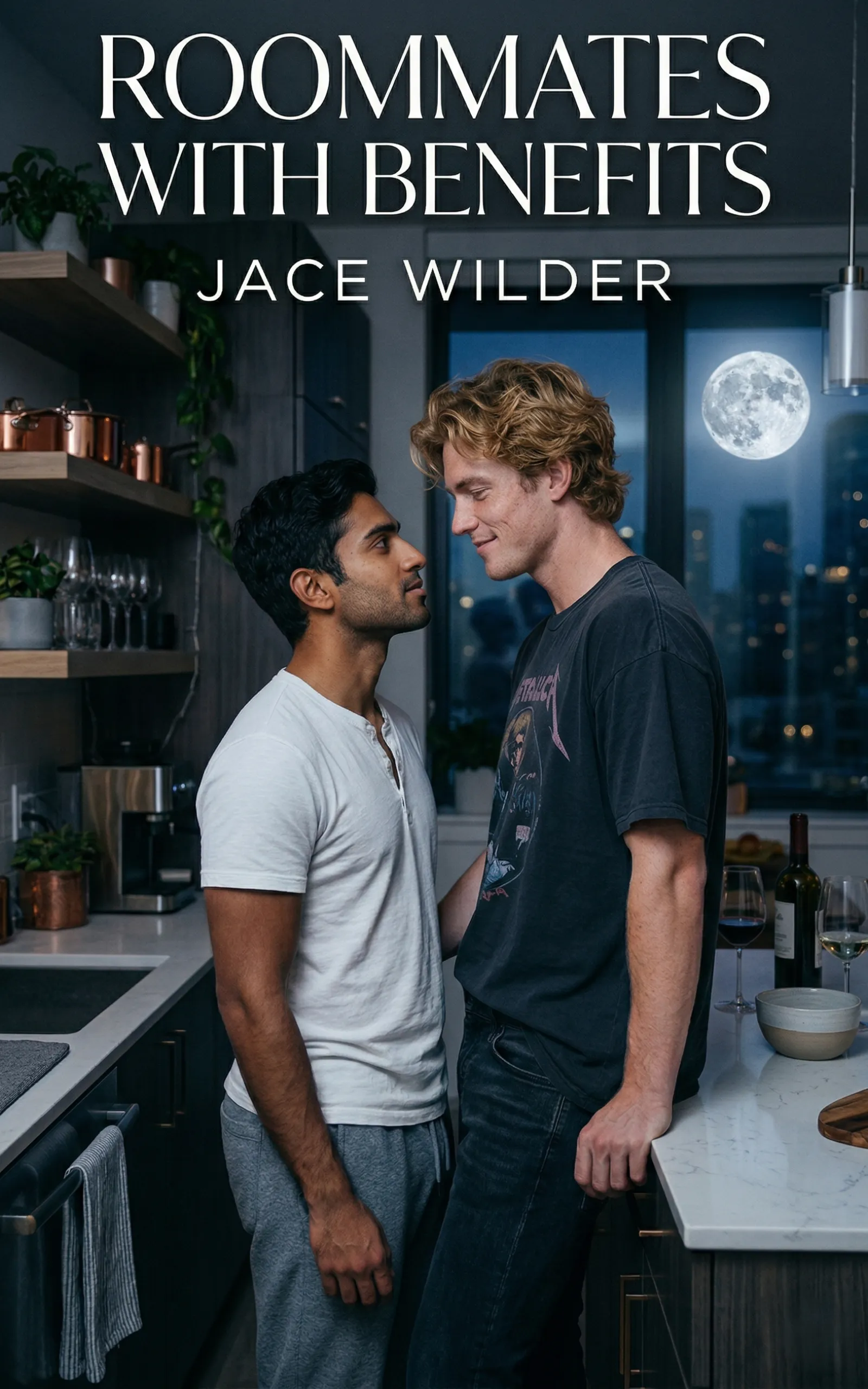
Rule #1: No feelings. Rule #2: See Rule #1. Ryan Patel is a meticulous IT infrastructure specialist who runs his life the way he runs his servers — with absolute control, zero downtime, and a label maker for every surface. When his rent skyrockets, he posts a roommate ad so precisely worded it could double as a systems specification document. The man who shows up to view the apartment is, by every metric Ryan can quantify, exactly wrong for him. The man stays. The rules get written. The rules get violated by chapter eleven.
Wilder does the MM roommates-to-lovers FwB-with-rules architecture at the structural extreme. Ryan’s controlled exterior is the load-bearing element — the entire apartment is calibrated to keep him untouchable, and the slow corruption of his label-making rule system into the relationship he’s not letting himself have is the engine of the whole book. The competence kink, the praise kink, the workplace-proximity overlap (they both work in tech) — every architectural lever the trope rewards.
Inferno-tier. Opposites attract. Praise kink. Competence kink. He falls first. Read Roommates with Benefits free on KU →
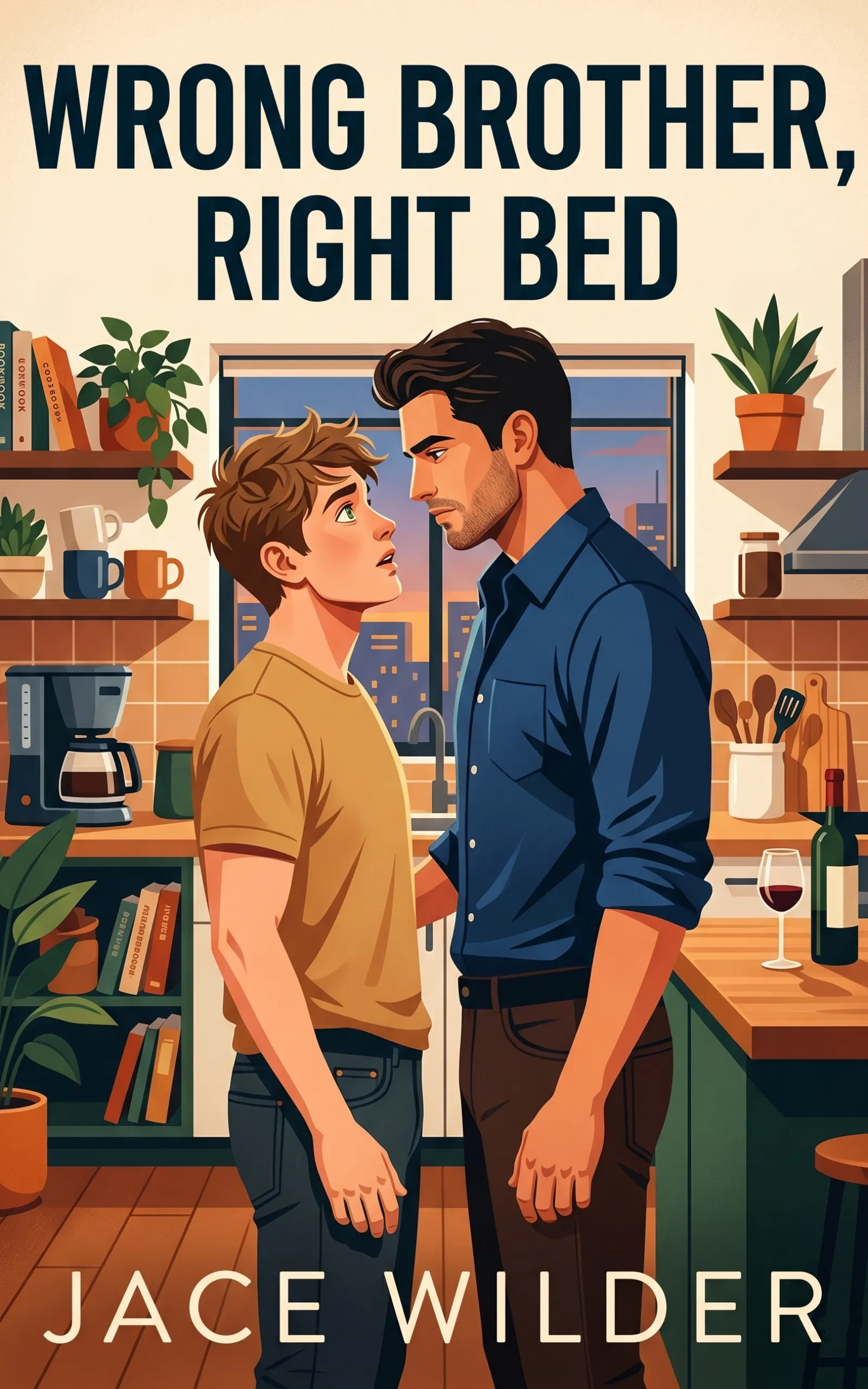
Wrong Brother Right Bed — Jace Wilder (M/M Bi Awakening, Inferno Heat)
The best-friend’s-brother roommates variant. Jamie Sullivan’s six-year engagement just imploded two months before the wedding. He needs a place to crash. His best friend Connor offers up the spare room at his older brother’s apartment — and Jamie, who has known Marc Donovan for ten years without ever looking at him, is about to spend three months sharing a wall with the man he should never have agreed to live with.
Wilder does the MM bi-awakening roommates-to-lovers with the precision the trope demands. The forbidden architecture is real — Connor is Jamie’s best friend, Marc is Connor’s older brother, and the entire family network would implode if anyone found out. The age gap (Marc is forty-one, Jamie is thirty-three) adds structural weight. The shared wall, the late-night hallway encounters, the slow accumulation of small concessions that add up to something neither of them can walk back from — every architectural lever the trope rewards.
Inferno-tier. Best friend’s brother. Forbidden. Praise kink. Hurt/comfort. Coming out. Read Wrong Brother Right Bed free on KU →

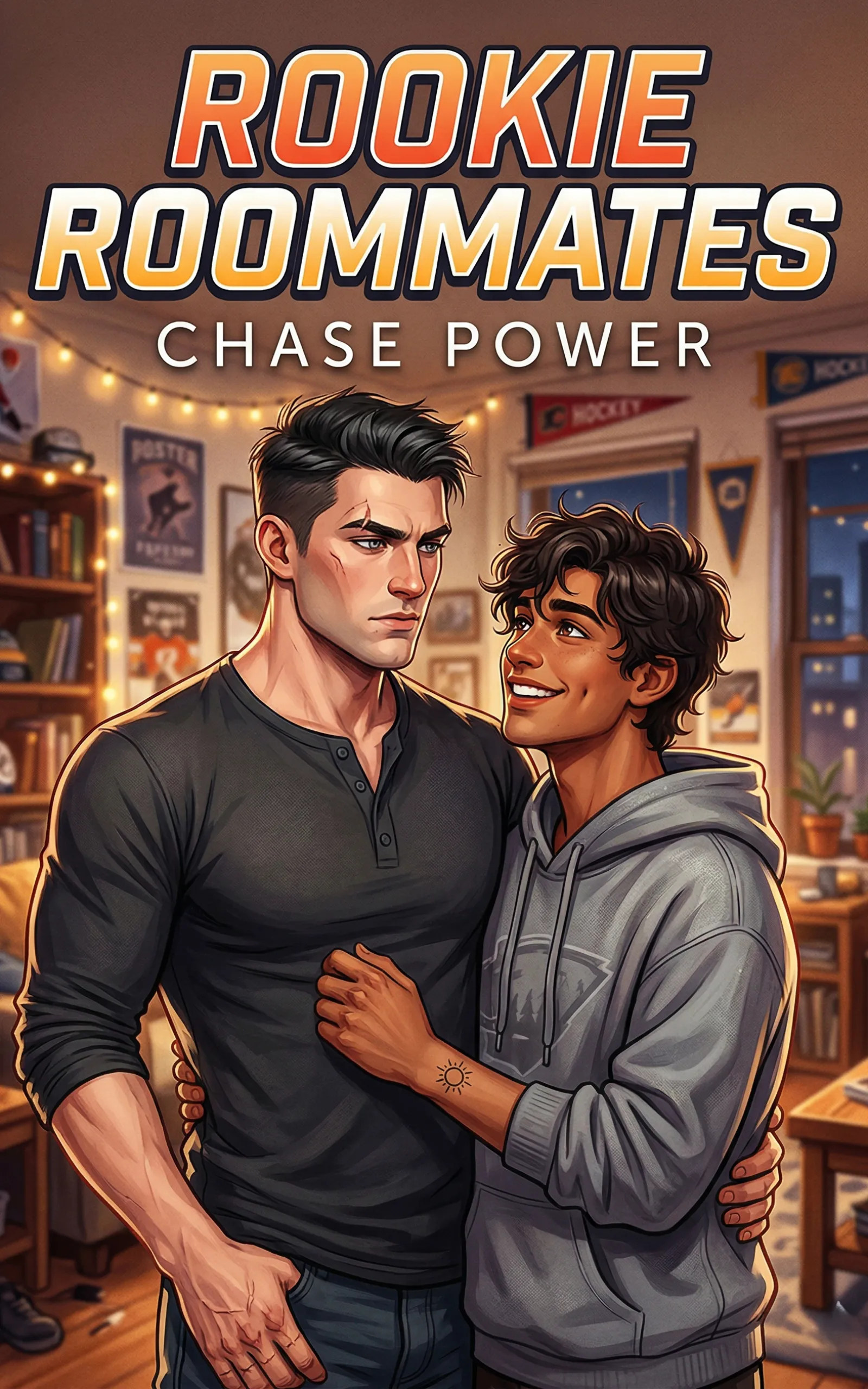
Rookie Roommates — Chase Power (M/M Hockey, Inferno Heat)
The hockey roommates variant. Liam Hart is a wall — on the ice and off it. The veteran defenseman has spent his entire college career being tough, disciplined, and alone. His last season is his last shot at a pro contract, and he doesn’t need distractions. Especially not a loudmouth rookie with a smile that could power a city block. Noah Reyes is sunshine in human form. The team housing assignment puts them in the same apartment for the season. The walls are thin. The rookie has zero filter. The veteran has a closet door that is suddenly very difficult to keep closed.
Chase Power does the MM hockey roommates-to-lovers with the architectural rigor the trope demands. The closeted-veteran-meets-out-rookie dynamic is structurally specific — Liam’s last-shot career stakes are real, Noah’s openness is the slow erosion device, and the team housing arrangement is the structural lock-in that compresses three months of accumulated proximity into the recognition both of them have been pretending isn’t happening. The hurt/comfort architecture is well-handled. The praise kink lands.
Inferno-tier. Grumpy/sunshine. Closeted. Coming out. Slow burn. Found family. Read Rookie Roommates free on KU →
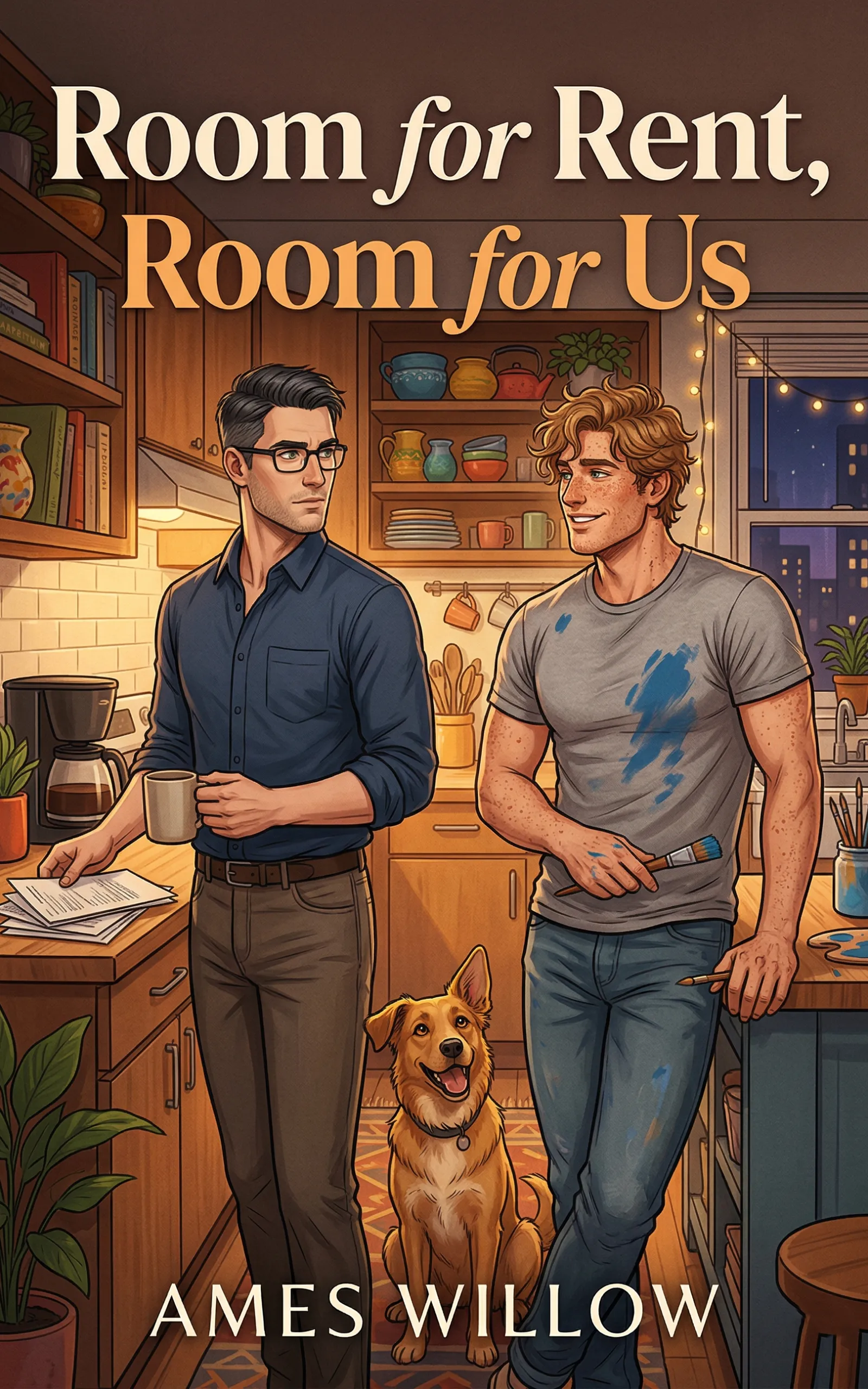
Room for Rent, Room for Us — Ames Willow (M/M Contemporary, Inferno Heat)
Micah Calloway controls his life by controlling his space. Freelance editor, chronic insomniac, laminator of bathroom schedules. He hasn’t let anyone past his front door — or his defenses — in three years. Then a delayed payment forces him to post a room-for-rent ad so tightly worded it should have screened out every human alive. Riley Reed shows up forty minutes late, signs the lease without reading it, and proceeds to undo every careful boundary Micah has spent three years constructing.
Ames Willow does the MM grumpy/sunshine roommates-to-lovers at the structural extreme. Micah’s three-year isolation is the load-bearing element — the laminator, the bathroom schedules, the careful management of every surface in the apartment is the architectural cover Riley walks through without noticing it was a wall. The touch-starved arc is paced with extraordinary precision. The slow recognition that the man Micah hired to share his rent has been the answer to a question he has been avoiding for years lands with the weight the trope rewards.
Inferno-tier. Grumpy/sunshine. Only one bed. Touch starved. Slow burn. Praise kink. Read Room for Rent, Room for Us free on KU →

Why Roommates-to-Lovers Hits So Hard
The trope persists because it strips the genre’s forced-proximity architecture down to its most domestic form.
Office romance has the structural lock-in of professional consequences. Snowed-in cabin has the structural lock-in of weather. Fake-dating has the structural lock-in of the performance contract. Roommates-to-lovers has the structural lock-in of a lease — a piece of paper that says these two people, who didn’t choose each other and don’t have a romantic stake yet, are going to share four hundred square feet for the next twelve months. There is nowhere to escape. There is no professional wall to hide behind. There is just the apartment, the bathroom, the kitchen, the couch, the wall they share, the bed they sometimes have to share, the chore chart that was supposed to keep things professional and is now structurally requiring them to negotiate every shared surface in their lives.
That’s why the trope works in every configuration. MM roommates-to-lovers does the bi-awakening arc the way trad-pub MM still struggles to handle, because the apartment is the device that compresses the protagonist’s slow self-recognition into a daily encounter. FF sapphic roommates-to-lovers does the bi-awakening arc with even more precision, because the question of “is this attraction or just intense friendship” is structurally native to the genre, and the shared-apartment proximity is the device that finally forces the answer. MF roommates does the slow-burn romcom architecture the trad-pub gateway titles built the audience for. Every configuration of the trope rides on the same architectural foundation: the lease is the love story.
The other architectural feature the trope rewards is the on-page heat at the moment the apartment finally collapses into the relationship. Roommates-to-lovers books that fade past the door at the moment the chore chart finally fails are operating on half-power — the scene where the wall between the bedrooms finally goes is structurally the trope’s signature payoff, and the books that handle it on-page earn the architectural commitment they’ve been making for two hundred pages. The indie KU shelf is the strongest place in romance for that exact moment to land without flinching.

Frequently Asked Questions
What’s the spiciest roommates-to-lovers book on Kindle Unlimited?
Roommates with Benefits (Jace Wilder, MM with rules), The Roommate Bet (Aurora North, FF practice-turns-real college bet), and Wrong Brother Right Bed (Jace Wilder, MM bi-awakening best-friend’s-brother) all run Inferno-tier on the indie KU shelf. All three featured above. All three free with Kindle Unlimited.
Best gateway roommates-to-lovers book?
The Hating Game by Sally Thorne (architectural cousin — office not apartment, but identical DNA) is the most-cited gateway. The Roommate (Rosie Danan) for strangers-to-roommates MF. The Flatshare (Beth O’Leary) for the structural-device variant where they never see each other for the first half. All three are mainstream-heat gateways before the indie KU shelf.
Are there sapphic roommates-to-lovers books?
Yes — the FF roommates-to-lovers shelf is currently doing some of the strongest bi-awakening work in print. The Roommate Bet (Aurora North, college practice-turns-real bet) and Roomie Roulette (Aurora North, freshly-dumped crashes with tattooed graphic artist best friend) are the indie KU sapphic roommates picks. Both featured above. Both free with Kindle Unlimited.
Best MM roommates-to-lovers?
For grumpy/sunshine: Room for Rent, Room for Us (Ames Willow). For bi-awakening best-friend’s-brother: Wrong Brother Right Bed (Jace Wilder). For hockey closeted-veteran/out-rookie: Rookie Roommates (Chase Power). For opposites-attract IT-specialist with rules: Roommates with Benefits (Jace Wilder). All featured above, all Inferno-tier, all free with Kindle Unlimited.
What makes roommates-to-lovers different from forced proximity?
Roommates-to-lovers is a subset of forced proximity with a specific structural device: the lease. Forced proximity is the genre umbrella (snowed-in cabin, work retreat, road trip, hotel-room mixup). Roommates-to-lovers is the long-form variant where the proximity is contractually committed for months — which means the architecture has more time to build, the slow burn deepens, and the eventual collapse of the lease’s professional cover into the relationship has structural weight a snowed-in weekend can’t match.
Are these books standalone?
Mostly yes. The Hating Game, The Roommate, The Flatshare, The Cheat Sheet, Beach Read, and The Spanish Love Deception are all standalones. The Fractal Enigma indie titles featured above are all standalone first reads.
This post contains Amazon affiliate links. As an Amazon Associate, Fractal Enigma earns from qualifying purchases at no extra cost to you.
Never miss a release — join the newsletter for new books, exclusive bonus chapters, and reader-only giveaways. 🔥
The form you have selected does not exist.