

Mother of the Groom
A Sapphic Age-Gap Romance
by Blair Lennox
Free with Kindle Unlimited
Pairing: FF (Sapphic)
Heat: 🌶️🌶️🌶️🌶️🌶️ Inferno
Tropes: Ex’s Mother, Age Gap (19 Years), Bisexual Awakening, First Time with a Woman, Forbidden Romance, Secret Relationship, Older Heroine, Competence Kink, Blue-Collar Heroine, Praise Kink, Control/Surrender, Switch Dynamic, Instruction Kink, Dirty Talk, Coming Out, Grovel, Two Homes HEA
She came to return a brooch. She stayed for the woman who should have been her mother-in-law.
Lena Brooks ended her engagement in January.
Thirty-one, a bike mechanic who builds adaptive trikes in a shoebox shop behind a laundromat, she gave back the ring, the keys and the good knives, and believed the account was closed. Then, in September, she finds one last thing at the bottom of a box: her ex-fiancé’s grandmother’s sapphire brooch.
Vivian Mercer is fifty, divorced, and running a crumbling 1926 theatre she’s bringing back from the dead. She is also the mother of the groom. When Lena turns up at her door to hand the brooch back and flee, Vivian opens a bottle she has no business drinking alone, tells her she doesn’t owe this family a wedding, and asks her to fix the catch.
Lena kneels beside her chair with two fingers inside her blouse. Vivian stops breathing.
Nothing happened while Lena was engaged. Nothing. But Daniel still thinks his mother is on his side — and Vivian has never once in her life said no to her son.
There are rules. There’s a date written on a kitchen calendar. There’s a gala, a balcony rail that won’t hold, and a woman who has steered every room she’s ever walked into learning, on a rag rug in front of a fire, what it costs to let go of the wheel.
The hard part was never wanting her. It was saying it out loud.
Mother of the Groom is a scorching ~75,000-word sapphic age-gap romance with dual POV, an ex’s mother, a first-time-with-a-woman bisexual awakening, a dark moment with real consequences, and an HEA guaranteed.
You’ll love this book if you enjoy:
✅ A 31-year-old bike mechanic and her ex-fiancé’s 50-year-old mother, one sapphire brooch apart
✅ A grease-black thumbprint on cream silk that nobody will let the dry cleaner fix
✅ A woman who has never said no to her son, saying it over crème brûlée
✅ Firsts done right: a list said out loud, “quarter turn,” and a lot of very good instruction
✅ A dressing-room mirror, a workbench in an empty trolley barn, a cabin on a lake, and a ghost light
✅ Control and surrender that switches both ways — she steers everything, until she doesn’t
✅ A grovel with dates on it, a seat held empty, and “This is Vivian. My partner.”
✅ No cheating, 🌶️🌶️🌶️🌶️🌶️ heat and an HEA guaranteed
⚠️ Content Warning: This novel contains extremely explicit sexual content (graphic FF scenes throughout, including solo scenes, thigh-riding, oral, fingering, a strap-on, a vibrator, control and surrender play, and risk-of-discovery sex), strong language, and alcohol. Also includes a relationship with an ex-fiancé’s mother, a 19-year age gap, a broken engagement (ended before the romance begins), family estrangement and fallout, coming out to a disapproving parent, and one scene in which a character uses sex to end an argument, which the story treats as a wrong that must be answered for. No cheating. Intended for readers 18+.
📖 Read Chapter One Free
Not sure yet? Read all of Chapter One right here.
Chapter One
LENA
The last box had been in the hall closet since January, labeled in Nisha’s handwriting: MISC — DEAL WITH LATER.
Later turned out to be a Tuesday night in September, because the closet door had stopped latching and Lena Brooks had run out of other things in the apartment to fix.
There wasn’t much apartment to begin with. One bedroom, white walls, a couch she’d bought off a grad student, and nothing in any room that somebody else had picked. She sat down on the bare floorboards with a utility knife and split the tape.
A charger for a phone she no longer owned. Three paperbacks. One wool sock. A colander, which explained eight months of draining pasta against a pot lid. A bridal magazine with a sticky flag still marking page forty, which she set face-down without checking what the flag was for.
Under the magazine, a slim velvet case the color of ink.
She knew what it was before her thumb found the hinge. She opened it anyway.
Five sapphires in a row on a platinum bar. Old stones, cut by hand and not quite matched, each one a slightly different idea of blue. Vivian’s mother’s brooch. Something borrowed and something blue, Vivian had said last October, setting it in Lena’s palm across a table covered in florist’s samples. Two birds. My mother would have admired the efficiency.
“Oh, no,” Lena said, to nobody.
She had ended the engagement in January and signed the last of the lease paperwork in April. She had given back the ring, the keys, the good knives and one man’s entire picture of his future, and she had believed — she had badly needed to believe — that the account was closed.
Her hand went to the back of her neck, where the hair stopped now. It did that when she owed somebody.
So. One thing left. A hundred-year-old pin that belonged to a dead woman’s daughter, and it had spent the year in a box with a sock.
She got her phone.
Hi Vivian, it’s Lena.
Vivian had her number. Vivian had, at one point, had her shoe size. Delete.
Hi Vivian. I hope you’re well. I know it’s been a long time and I completely understand if you’d rather not hear from me, but I was finally going through some boxes tonight and
Too long. By the third line it sounded like she wanted something. Delete.
I found your mother’s brooch. I’m so sorry. I’m so, so sorry. I don’t know how I
Two sorries too many, and the wrong apology besides. Delete.
Found your mother’s brooch in a box. I can leave it in your mailbox so you don’t have to
Have to what. See her. A sapphire brooch, in a mailbox. Delete, delete.
She put the phone on the floor and looked at the pin instead. It had weight. That was what she remembered from the one time she’d held it: how heavy it sat for something so narrow, and how Vivian had folded Lena’s fingers shut over it with her own and said don’t be precious with it, it’s survived worse than a wedding.
Fifth try. She typed it standing up, which sometimes helped.
Hi Vivian. I found your mother’s brooch in a box I should have unpacked months ago. I’m sorry it took me this long. I can send it insured or drop it at the house, whichever is easier for you.
She read it four times. It was accurate. It asked for nothing. She hit send before she could find the flaw, then carried the colander to the kitchen and washed it so her hands would have a job.
She was braced for a few days of silence and then something courteous and short. Mail is fine. Thank you. A door closing softly, the way that family closed doors.
The phone buzzed while the tap was still running.
Bring it Friday. I’ll open a bottle.
Lena read it with water running off her wrists onto the screen.
No hello. No how are you. No opinion on mailboxes. Some instinct made her scroll up to check she had the right person, and there was the message before it, dated last December: a photo of a seating chart, and under it, Tell me if I’ve put your mother too near the band.
She dried her hands on her shirt.
What time? she typed. She didn’t draft it.
Seven. You know the house.
She did. That was the trouble.
She had ten words ready by the time she locked her bike to Vivian Mercer’s front railing. Hello, Vivian. Here it is. I’m sorry. Thank you. Goodbye. She’d built them over two miles of river path and tested them at every light. They would take under a minute. She could deliver them from the top step with one foot still pointed at the street.
The door opened before she’d finished knocking.
“You’re on time,” Vivian said. “Nobody’s on time. I’d forgotten that about you.”
All ten words left the building.
In three years of Sunday dinners, Lena had never once seen this woman’s feet. Vivian Mercer, as issued, came in heels and a linen apron and a cloud of rosemary, topping up glasses before they were half empty and never, at any point, sitting down.
This one stood barefoot on the hall tile. Charcoal trousers, tailored. A cream silk blouse with the sleeves shoved past her elbows and a smear of pencil lead on one forearm. Her hair — dark auburn, shot through with more silver than Lena remembered — was twisted up and losing an argument with its pins, and a pair of reading glasses sat pushed into it like an afterthought.
No rings. That part wasn’t new.
“I — hi.” Lena held out the velvet case like a subpoena. “Here it is.”
Three of the ten. It was a start.
Vivian looked at the case. Then at Lena’s other hand, still wrapped around her helmet strap, and at the boot aimed toward the street.
“Ah,” she said. “You were going to hand it over on the step and flee.”
“I wasn’t going to flee.“
“Walk briskly, then.” The corner of her mouth moved. “Lena, I’ve opened a Barolo I have no business drinking alone, and I have a donor breakfast at eight tomorrow. If you leave me by myself with that bottle, you’ll be responsible for whatever I say to the man paying for the chandelier. Come in. You’d be doing me a favor.”
She turned and went down the hall without waiting to see whether it had worked.
It had worked. Lena wiped her boots twice on the mat, hung her helmet on the newel post and followed.
The dining room stopped her.
The table was still the table. Long, walnut, with a water ring at the far end that Vivian had never managed to lift. Last October a florist’s binder had lain open across it, peonies in a mason jar beside it, Vivian turning the laminated pages with one finger.
Now it was buried. Architectural drawings a yard wide, pinned at the corners by a stapler, a mug, a white hard hat and a brass doorknob. Fabric swatches fanned out like a hand of cards, forty kinds of red.
“Forgive the table,” Vivian said from the sideboard, already pouring. “It’s been a disaster since March, and I’ve stopped apologizing for it to anyone who doesn’t sign my paychecks.”
“What is it?”
“The Halcyon.”
Lena looked up. “The theatre? The boarded-up one off the canal?”
“Boarded up six years. Built in 1926, nine hundred seats, and a plaster ceiling currently held in place by pigeon droppings and optimism.” She brought two glasses over and put one in Lena’s hand. “I’m the managing director. We reopen in November, God and the fire marshal willing.”
“You’re running it.”
“I’m running it.” She seemed to enjoy the sound of that. “My son calls it ‘a lot to take on.’ He uses the tone you’d use about someone adopting a puppy.”
It was the first time either of them had brought Daniel into the room. Lena waited for the floor to tilt. It held.
“Is it? A lot?”
“It’s enormous.” Vivian pulled out a chair, sat, and tucked one bare foot up underneath her like a girl on a porch swing. “That’s rather why I wanted it. Sit, please. You’re making the drawings nervous.”
Lena sat, and parked the case and her glass on a clear inch of walnut. She tried to imagine wanting something that size and saying so out loud at a dinner table, and couldn’t get the picture to hold still.
The doorknob was within reach. She picked it up, because it was a mechanical object and she was a person who needed one. It rattled on its spindle.
“That’s from the star dressing room,” Vivian said. “Original brass. It came off in my hand on Tuesday and I’ve been taking it personally.”
“Set screw’s backed out.” Lena already had her keys in her other hand, the little folding hex set open. Four seconds. She gave the knob a turn, felt it bite, and set it back on the corner of the drawing. “It’ll hold now.”
Vivian was not looking at the doorknob. She was looking at Lena’s hands, and she took her time about looking somewhere else.
“You brought tools to a social call.”
“It’s a keyring.”
Lena slid the velvet case across the vellum between them.
Vivian didn’t open it right away. She rested two fingers on the lid.
“I’m sorry,” Lena said. “I should have gone through everything in January. I thought I had. It was under a magazine in a box Nisha packed, which isn’t an excuse, I’m the one who never opened it, and I know what it is, I know it was your mother’s, and if anything had happened to it —”
“Lena.”
She stopped.
“It was in a box,” Vivian said. “With, I’m guessing, some other things. It wasn’t being held for ransom.”
“There was a colander.”
“Then she was in good company. My mother loved a kitchen.” Her thumb found the hinge.
The sapphires took the light over the table and gave it back blue. For a moment Vivian only looked. Something crossed her face and was put away again, fast, by a woman with long practice at putting things away.
“There you are, you old thing,” she said softly. Not to Lena.
“It would have been three weeks ago,” Lena heard herself say. “The twenty-third.”
She hadn’t rehearsed that.
“I know.” Vivian set the open case down. “It sat in my calendar until June. Every time I opened August, there it was. Wedding, 4 p.m. In the end I deleted it, drove to the theatre and spoke very clearly to an electrician.”
“You yelled at an electrician.”
“I spoke clearly. He’d earned it on other grounds.” Her eyes came up, gray-green and steadier than Lena had planned for. “I’m going to say one thing, and then you and I never have to do this part again. All right?”
Lena’s shoulders had climbed toward her ears. She made them come down. “All right.”
“You don’t owe this family a wedding.”
Lena felt it go in clean, the way a key goes into a lock it was cut for. Eight months of people telling her it’s fine in a voice that meant how could you, and here was the one person with the most right to that voice, declining to use it.
“You don’t owe us one,” Vivian went on, “and between ourselves, you spared two hundred people my sister’s toast. She had index cards. There was a passage on the sanctity of the shared surname. If anything, Alderhaven is in your debt.”
The laugh went off like a dropped tray.
It came out of Lena too loud, cracked down the middle, and it kept going. She had to put the glass down. She pressed the back of her wrist to her mouth and laughed into it until her eyes stung, and when she surfaced Vivian was watching her with her chin on her hand, looking thoroughly pleased with herself.
“There,” Vivian said. “That’s the first honest noise anyone’s made at this table all year.”
“Index cards.”
“Color-coded.”
“I haven’t —” Lena wiped one eye with the heel of her hand. “I don’t think I’ve done that since winter.”
“Then it was overdue.” Vivian lifted her glass an inch. “He’s all right, since you’re too polite to ask. I won’t carry reports between the two of you in either direction, so you can stop bracing for one. That’s the whole of the subject.”
She didn’t ask why.
Everyone asked why. Lena’s mother had asked it eleven different ways over eleven different casseroles. Vivian Mercer tipped her head at the table instead.
“We sat right here with that florist. You said ‘they’re fine’ about the peonies four times.”
“They were fine.”
“I counted, Lena.” She let it sit for exactly one second, then pulled a drawing around to face the other way. “Now. You’re a mechanic. Tell me whether this looks insane.”
It was a section through the auditorium: orchestra floor, balcony, the long rake of the seats. Lena dragged it closer, grateful. Drawings she could do. Drawings had no feelings about her.
“Where do the chairs go?”
“Nine hundred of them, everywhere, that’s rather the —”
“Wheelchairs.”
Vivian stopped. Then she leaned across, close enough that silk brushed the inside of Lena’s wrist, and put a fingertip on the plan. “The architect had them here. Back row, under the balcony overhang. A sightline like watching a play through a letterbox.”
“That’s where they always go.”
“So I’ve learned. I moved them.” The finger slid forward to the middle of the orchestra. “Six positions, row H, a companion seat beside each. Best view in the house. It cost me fourteen regular seats and one extremely long meeting.”
“You won, though.”
“I did. I’ve discovered I like winning.” She sat back and considered Lena over the rim of her glass. “How’s the shop? Still in the shoebox behind the laundromat?”
“Still in the shoebox. I fitted a nine-year-old for a trike on Wednesday. She told me the place smells like a tire.”
“Was that a complaint?”
“Highest praise she had. She wants hers purple.”
Somewhere in there Lena noticed she’d stopped counting. She had walked in with ten words, had no idea how many she’d spent, and nothing bad had happened to any of them.
“I should put her on,” Vivian said, “before she vanishes into the upholstery samples.”
She meant the brooch. She lifted it out of the velvet, flicked the pin open with a practiced thumbnail and laid the bar against her blouse, just under the left point of the collar, where the silk fell open over her collarbone.
The pin went through. The catch didn’t take.
“Oh, for —” She tried again. Pulled the glasses down out of her hair, put them on, tucked her chin, and found out what everybody finds out, which is that nobody can see her own collarbone. “My mother did this one-handed with a cigarette in the other. I’ve never understood it. It’s been sticking for forty years.”
“It’s a tube catch,” Lena said. “The little sleeve’s turned the wrong way, so the pin can’t seat.”
“It probably just needs —” She was already up. Show her a thing that wouldn’t close and she was halfway across the room. “Can I?”
Vivian took her hands away from her own chest and set them on the arms of the chair. “Please.”
Lena came around the corner of the table. Standing over a seated woman felt wrong, so she went down on one knee beside the chair instead, which put her eyes level with a row of sapphires and a pulse.
She had not thought that through.
“My hands are clean,” she said. “They don’t look it. The grease gets down in the creases and stays there, there’s nothing I can —”
“I know what your hands look like, Lena.”
Low. Unhurried. A report on something she had, evidently, studied.
Lena kept her eyes on the catch.
To turn the sleeve she needed something behind the fabric, or she’d drag the silk. There was only one way to arrange that. She slipped two fingers inside the open edge of the blouse.
Skin. Warm, and startlingly soft, and the small hard ridge of collarbone against the backs of her knuckles.
At this range the scent came off Vivian like heat off a road in August: fig, something green and crushed, and a snap of black pepper underneath. A single freckle sat in the hollow of her throat. The silver in her hair ran clear to the root at her temple, fine as wire.
Lena got a thumbnail under the sleeve. It was stiff. She worked it around a degree at a time, and with every push her knuckles shifted a fraction against the slope of Vivian’s chest.
Vivian had stopped breathing.
That wasn’t a guess. Lena’s fingers were lying on the evidence. The silk had been lifting and settling against the back of her hand, slow, regular — and then it wasn’t. The whole warm front of the woman had gone motionless, the way a person goes motionless carrying a full glass through a moving train.
Don’t look up.
She looked up.
Vivian’s eyes were already on her. The reading glasses made them enormous. Her lips had come apart. On the arms of the chair, both her hands had closed.
The sleeve turned. The pin dropped into the catch with a click Lena felt in her back teeth.
Neither of them moved.
“There,” Lena said. It came out rough, pitched for a much smaller room.
Vivian let the breath go. Lena felt that too, a long uneven fall under her fingers — and then she remembered she had fingers inside this woman’s shirt, and took them back.
“Thank you.” Vivian touched the brooch without looking at it. Her voice had a grain in it that hadn’t been there a minute ago. “You’re very quick with small parts.”
“It’s the job.”
“Is it.”
Lena stood. Her knee cracked. She shoved both hands into her back pockets, where they could be supervised, and found that her mouth had gone completely dry.
The wine, probably. It was a big wine.
Vivian saw her out barefoot, which seemed reckless for September.
The streetlight had come on. Lena crouched at the railing and got the key into the U-lock on the second attempt.
“You cut your hair.”
She looked up. Vivian stood on the top step with her arms folded loosely under her breasts and one shoulder against the doorframe, five small blue lights burning at her collar.
“In January. The week I moved out.” Her hand went to the back of her neck before she could stop it. “I’d grown it out for the — for the photos. And then I didn’t need it for anything, so. There’s a barber on Canal who doesn’t ask questions. It’s easier under a helmet, and at the shop it was always getting into the —”
“Lena.”
“Sorry.”
“It looks like you.”
Four words. She had nothing prepared for them. She went looking and the drawer was empty.
For three years she had walked into this house with hair past her shoulder blades, in dresses she’d bought for the purpose, and been told she looked lovely. People had meant it. She’d said thank you. Not one of them had ever suggested she looked like herself.
“Thanks,” she managed. “I think it — yeah. It does.”
“Good.” Vivian’s gaze traveled over the cropped sides, the canvas jacket, the helmet in her fist, and came back to her face in no hurry at all. “Thank you for bringing her home. You’ve saved me a great deal of insurance paperwork.”
“That’s why I did it. The paperwork.”
“I assumed.” Almost a smile. “Mind the old tram rails on Canal. They eat front wheels.”
“I know. I’m who people bring the wheels to.”
“So you are.”
Lena swung a leg over. At the corner she looked back, which she hadn’t planned on. The door was still open, a tall slot of yellow light, and the figure standing in it hadn’t moved.
She took the river path hard, up out of the saddle, and blamed her pulse on that.
The light at the bridge caught her. She sat up, put a foot down, and lifted a hand to shove the hair off her forehead. There wasn’t any. Eight months, and the arm still hadn’t gotten the news.
Her fingers stopped an inch from her face.
Fig. Pepper. Something green and bruised beneath that, and under all of it, faint, warm skin.
It was on the first two fingers of her right hand. The two that had been —
She breathed in again. On purpose this time, slowly, with her eyes shut, straddling her bike at a red light like someone who had forgotten how intersections worked.
A horn went off behind her. The light had been green for a while.
At home she hung the bike on its hook and ate cereal standing at the counter. She brushed her teeth left-handed, badly, got toothpaste on her chin, and stood looking at her reflection: short dark hair, a mouthful of foam, and her right hand held out to the side like wet paint.
It looks like you.
She did not wash it.
She noted that the way she’d note a tick in a bottom bracket. Not a problem. Not yet. Only a sound that hadn’t been there yesterday, and worth keeping an ear on.
She got into bed. She put the hand under the pillow, then on top of the blanket, then gave up and let it lie on the mattress beside her face.
At four minutes past midnight the phone lit the ceiling.
There’s a bicycle in my garage that hasn’t moved since 2019. Is that a crime in your profession?
Lena read it three times in the dark, grinning at nothing like a fool.
Felony, she typed, one-handed, with the hand that still smelled like someone else’s skin. I make house calls. Sunday?
She sent it without a single draft.
Want to keep reading? The full novel is available now, free with Kindle Unlimited.
🔥 Want an EXCLUSIVE Bonus Chapter?
Ghost Light — A scene TOO HOT for the bookstore
The following September, opening night of the Halcyon’s second season. One a.m., nine hundred empty seats, one bare bulb center stage. Vivian has had something in the pocket of her black dress since six o’clock, and Lena is still wearing the green suit.
More from Blair Lennox
Browse all Blair Lennox books.

Internal Affairs
The investigator assigned to take her badge had her wrists tied to a headboard twelve hours ago.

Mother of the Groom
She came to return a brooch. She stayed for the woman who should have been her mother-in-law.

Her Mother’s Type
She took the job to fix her ex's mother's courtyard. She didn't plan on wanting the woman who owned it.
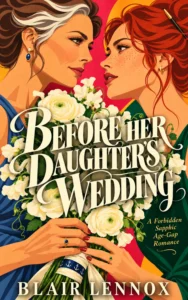
Before Her Daughter’s Wedding
Ten days at her best friend's wedding. One door between their rooms. Twenty-two buttons she sewed knowing she'd be the one to undo them.

The Guest Room Rule
Six weeks in her best friend's mother's guest room. Five rules chalked inside a chair. Every one of them is about to break.

My Ex-Husband’s Sister Wants Me
Port Sorrel After Dark
The divorce ended her marriage. It did nothing about his sister.
Never Miss a Release
Get new release alerts, exclusive bonus content, and reader-only giveaways.