

Books Like ACOTAR — 9 Romantasy Reads Beyond Sarah J. Maas (2026)
You finished ACOTAR. You finished A Court of Mist and Fury two days later. You read the Chapter 55 scene three times in a row and then you read it a fourth time. You stayed up until 4 a.m. memorising the seven Inner Circle members and which High Lord rules which court and the precise architecture of the bargain Rhysand made with Amarantha. You closed the fifth book and discovered the structural problem with becoming a Sarah J. Maas reader: she does not publish often enough.
What makes ACOTAR land structurally isn’t just the fae courts. It’s the specific architecture: a heroine underestimated by the entire fae realm including herself, a morally grey High Lord whose actual loyalties refuse to clarify for an entire book, the slow patient mate-bond architecture that takes 500+ pages to register and another 300 to land on the page, and the Velaris-style found-family Inner Circle that turns out to be the structural counterweight to the rest of the worldbuilding’s brutality. The romantasy shelf has more titles that hit that exact architecture — some fae, some demon-prince, some dragon-rider, some indie KU dark fantasy that runs the on-page work past where Maas’s mass-market calibration closes the door.
Nine reads below: five trad-pub fae-court and dark fantasy comps that anchor the BookTok romantasy shelf, then four indie KU dark fantasy reads from Fractal Enigma — spread across three pen names hitting the morally-gray-hero and curse-bound-mate-bond architecture from MF angles at heat ceilings the trad-pub romantasy shelf restrains. The trad-pub picks are priced individually on Amazon; the indie picks are free with a Kindle Unlimited subscription.
What Makes a Great ACOTAR Readalike
The structural criteria that separate “book set in a fantasy realm with romance” from “actually a great ACOTAR readalike”:
- A morally grey love interest whose loyalties stay ambiguous for at least half the book — not brooding for the sake of brooding, but actual structural ambiguity that the heroine and the reader have to work through together.
- Fae courts, dark immortals, or supernatural hierarchies as the political architecture — not generic fantasy kingdoms, but specific power structures with their own internal logic, factions, and historical grievances.
- Mate-bond, curse-bound, or fated architecture that the protagonists have to negotiate rather than accept — the bond isn’t a shortcut to romance, it’s the structural pressure that forces both characters to confront what the bond actually requires.
- Patient slow burn into earned on-page payoff — Chapter 55 didn’t land because Maas rushed to it; it landed because she built 500 pages of structural tension underneath it. The trope rewards patience.
- Found-family Inner Circle architecture as the structural counterweight to the brutality — ACOTAR’s Velaris isn’t decoration, it’s the load-bearing wall that makes the rest of the worldbuilding’s darkness bearable.
Each pick below hits at least four of those five. The indie KU picks lift the on-page heat ceiling past where the trad-pub romantasy shelf calibrates.
5 Trad-Pub Books Like ACOTAR
The BookTok romantasy shelf, ranked by how directly the comp lands on ACOTAR’s specific fae-court and mate-bond architecture. Sarah J. Maas anchors the lane she created; Jennifer Armentrout and Kerri Maniscalco cover the chosen-one-meets-immortal and demon-prince adjacencies; Carissa Broadbent runs the literary-romantasy register; Rebecca Yarros runs the war-college variant. All five available on Amazon at standard trad-pub pricing.
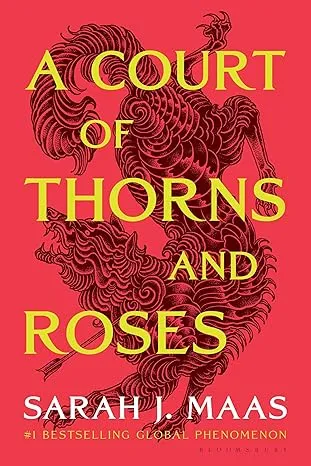
1. A Court of Thorns and Roses — Sarah J. Maas
The book this list is anchored on. Feyre Archeron is a mortal huntress whose family has been starving in the human territories for years; one winter she kills a wolf in the woods and discovers it was a fae in disguise. Tamlin, High Lord of the Spring Court, drags her across the wall as punishment under the terms of an ancient Treaty. Book one is the structural setup — a Beauty and the Beast retelling with fae politics, the slow recognition that the masked High Lord who took her is not what he appears to be, and the trap Amarantha has built underneath all of it.
If you’ve somehow landed on this list without having read ACOTAR yet, you’re in the rare position of having Maas’s foundational romantasy in front of you. Read this first; the rest of the list waits. Commit to at least the first two books — ACOTAR’s real architectural payoff lands in A Court of Mist and Fury, where Velaris, the Inner Circle, the mate-bond, and Chapter 55 all arrive. Get A Court of Thorns and Roses on Amazon →
2. From Blood and Ash — Jennifer L. Armentrout
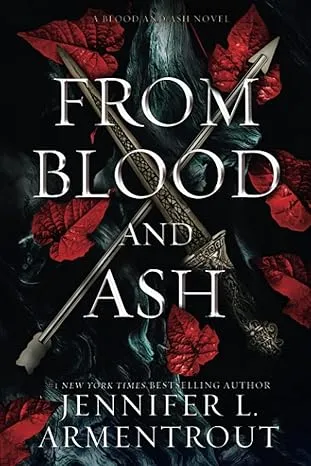
The most-recommended ACOTAR cross-comp from outside Maas’s catalog and the entry point into Armentrout’s eight-book Blood and Ash series. Poppy Balfour is the Maiden — sheltered since childhood, ritually prohibited from being touched, raised to fulfill a Choosing ceremony she did not consent to. Hawke is the new guard assigned to her protection detail. The structural engine of book one is the gap between Poppy’s careful eighteen-year obedience and the man whose presence forces her to recognise she has wanted things she was never permitted to name.
Armentrout runs the chosen-one-meets-immortal-bodyguard architecture at the heat ceiling Maas restrains — Chapter-55-energy distributed across multiple scenes per book rather than reserved for one structural climax. If you finished ACOMAF and want the same morally-grey-hero-with-secret-loyalties dynamic at a higher on-page register, From Blood and Ash is the eight-book commitment that pays back the most pages. Get From Blood and Ash on Amazon →
3. Kingdom of the Wicked — Kerri Maniscalco
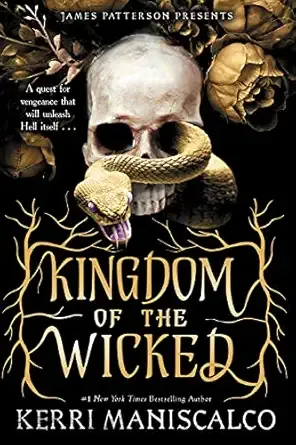
The demon-prince variant. Emilia di Carlo is a witch in nineteenth-century Sicily whose twin sister Vittoria has been brutally murdered. Wrath — one of the seven Princes of Hell — arrives in the wake of the murder claiming the killing is part of a larger architecture only he can help her unravel. He is structurally older than the city, older than the witches’ covens, older than the Catholic Church’s eight-century war against both. He is also, by the structural logic of the trilogy, the one Prince whose interest in Emilia might not be entirely about the investigation.
Maniscalco runs the morally-grey-immortal-love-interest architecture at the structural extreme — Wrath is literally a demon, the loyalties stay ambiguous through the first book and beyond, and the Italian Catholic setting gives the dark fantasy a specific atmospheric depth other romantasy doesn’t reach. Heat lands at the upper-mainstream calibration; the trilogy’s structural escalation pays off across three books. If you finished ACOTAR for Rhysand’s morally grey loyalties and want the variant pushed past the High Lord register into actual demon-prince territory, this is the comp. Get Kingdom of the Wicked on Amazon →
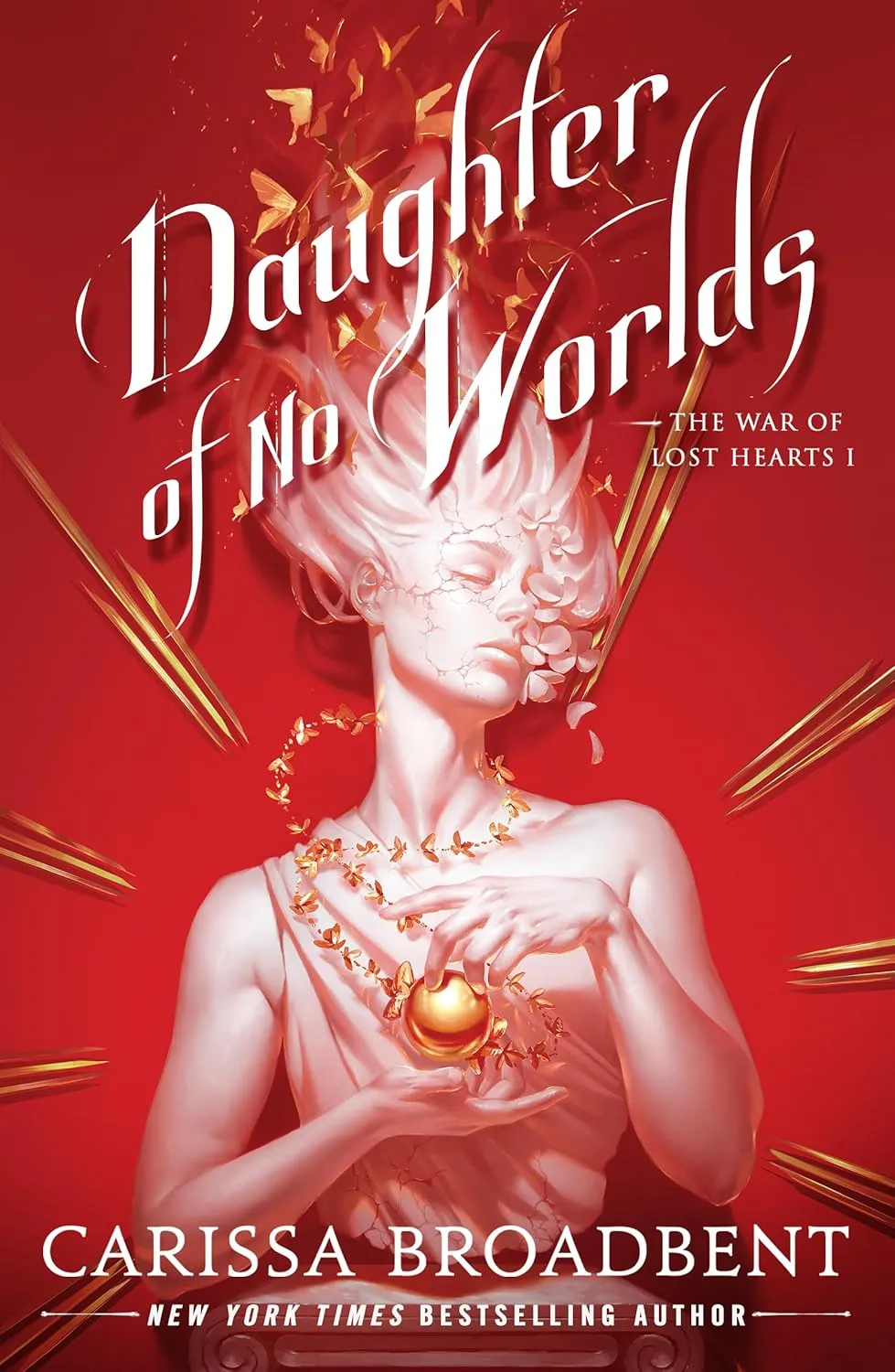
4. Daughter of No Worlds — Carissa Broadbent
The literary-romantasy entry. Tisaanah has spent her entire life owned by other people, sold from one master to another, beaten into compliance and then beaten into dueling-ring competence in the Mikov empire’s pit-fighting circuit. Maxantarius Farlione is a war wizard whose retirement from the Order has not protected him from being drawn back in. The structural engine of the novel is the gap between Tisaanah’s slow self-recognition that she has options and Maxantarius’s careful, grief-shaped reluctance to be the person who teaches her what those options cost.
Broadbent runs the romantasy register at its literary extreme — the prose is dense, the worldbuilding is precise, the slow burn is genuinely slow, and the eventual on-page payoff lands with the kind of emotional weight only earned patience produces. The War of Lost Hearts trilogy completes across three books; Broadbent’s Crowns of Nyaxia series picks up adjacent. For readers who want romantasy that respects them and runs at the upper register of the literary side of the shelf. Get Daughter of No Worlds on Amazon →

5. Fourth Wing — Rebecca Yarros
The war-college variant. Violet Sorrengail was supposed to enter the Scribes’ Quadrant; her general mother orders her into the Riders’ Quadrant instead, where the survival rate for first-years is below sixty percent and Violet’s chronic illness makes her the most underestimated cadet of her class. Xaden Riorson is the upper-year rider whose father led the rebellion her mother put down, whose loyalties refuse to clarify for an entire book, and whose structural reasons for paying attention to Violet are exactly as ambiguous as ACOTAR readers will recognise from Rhysand’s setup arc.
Yarros runs the morally-grey-love-interest architecture through dragon-riding war-college institutional pressure rather than fae-court politics — different specific setting, identical structural DNA. Heat at the upper-mainstream calibration; the Empyrean series escalates across the books currently published. For ACOTAR readers who want the same architecture relocated into a different specific fantasy setting, Fourth Wing is the most-recommended 2026 cross-comp. Get Fourth Wing on Amazon →

Where Indie KU Lifts the Chapter-55 Heat Ceiling
The trad-pub romantasy shelf above is calibrated to the BookTok mass-market heat ceiling — Maas reserves Chapter 55 for the structural climax of an entire book, Armentrout distributes the equivalent heat across more scenes per volume, Yarros calibrates Fourth Wing slightly higher than ACOTAR but still inside trad-pub mainstream registers, and Broadbent and Maniscalco run more restrained on-page work in exchange for higher literary craft. The dynamics are real, the architecture is intact, and the door closes deliberately at the structural pivot points the mass-market romantasy shelf has been calibrated for.
The indie Kindle Unlimited dark fantasy shelf doesn’t have those constraints. The morally grey love interest’s actual on-page work runs at the register the architectural ambiguity has been promising. The curse-bound mate-bond dynamic engages the explicit content the trope’s structural setup has earned. The Inner-Circle found-family architecture stays — but the on-page heat runs at the inferno register the trad-pub romantasy shelf restrains.
Four indie KU dark fantasy and romantasy reads below, from three Fractal Enigma pen names, hitting the morally-gray-hero and curse-bound architecture at MF inferno heat. All four free with Kindle Unlimited; the individual book page for each title lists current retailers and content warnings.
4 Indie KU Dark Fantasy Reads from Fractal Enigma
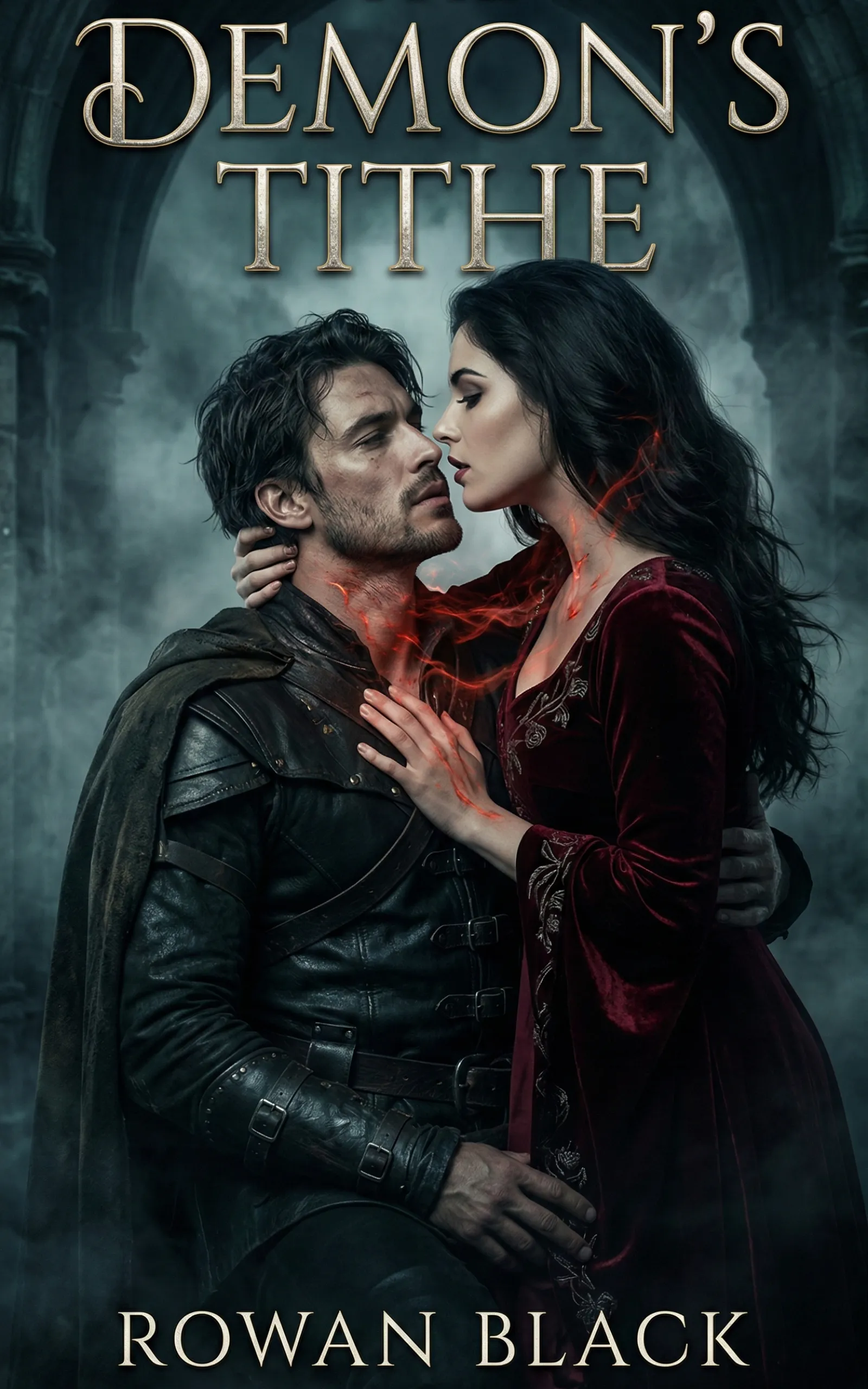
6. The Demon’s Tithe — Rowan Black (MF Dark Fantasy Monster Hunter)
The 267,000-word indie KU dark fantasy that ACOTAR readers most consistently move to when they want the same fae-court-immortal-love-interest architecture at the inferno heat ceiling. Kaelen Ashward is a demon-blooded monster hunter with silver scars tracing his veins, raised from childhood by the Order that taught him to kill creatures like him for coin. He doesn’t get attached. He doesn’t trust the men who pay him. He has spent a decade structurally certain that his existence is the architecture for ending other monsters, not for being recognised by one.
Then a contract brings him to Castle Voss and Lady Seraphine — beautiful, dangerous, ancient, and structurally hungry for something only he can provide. Rowan Black runs the dark-fantasy romance at the architectural extreme: 267,000 words of immersive worldbuilding (four interconnected storylines spanning werewolf hunts, drowned choirs, and a blind oracle), morally-grey-protagonist-meets-morally-grey-ancient-entity dynamics, and on-page power-exchange work that engages the dynamic the trad-pub romantasy shelf restrains. Where Maas gives you Chapter 55, Rowan Black builds an entire mythology around desire, sacrifice, and the question of what you’re willing to surrender to someone who is not fully human — and neither are you. Read chapter one free →
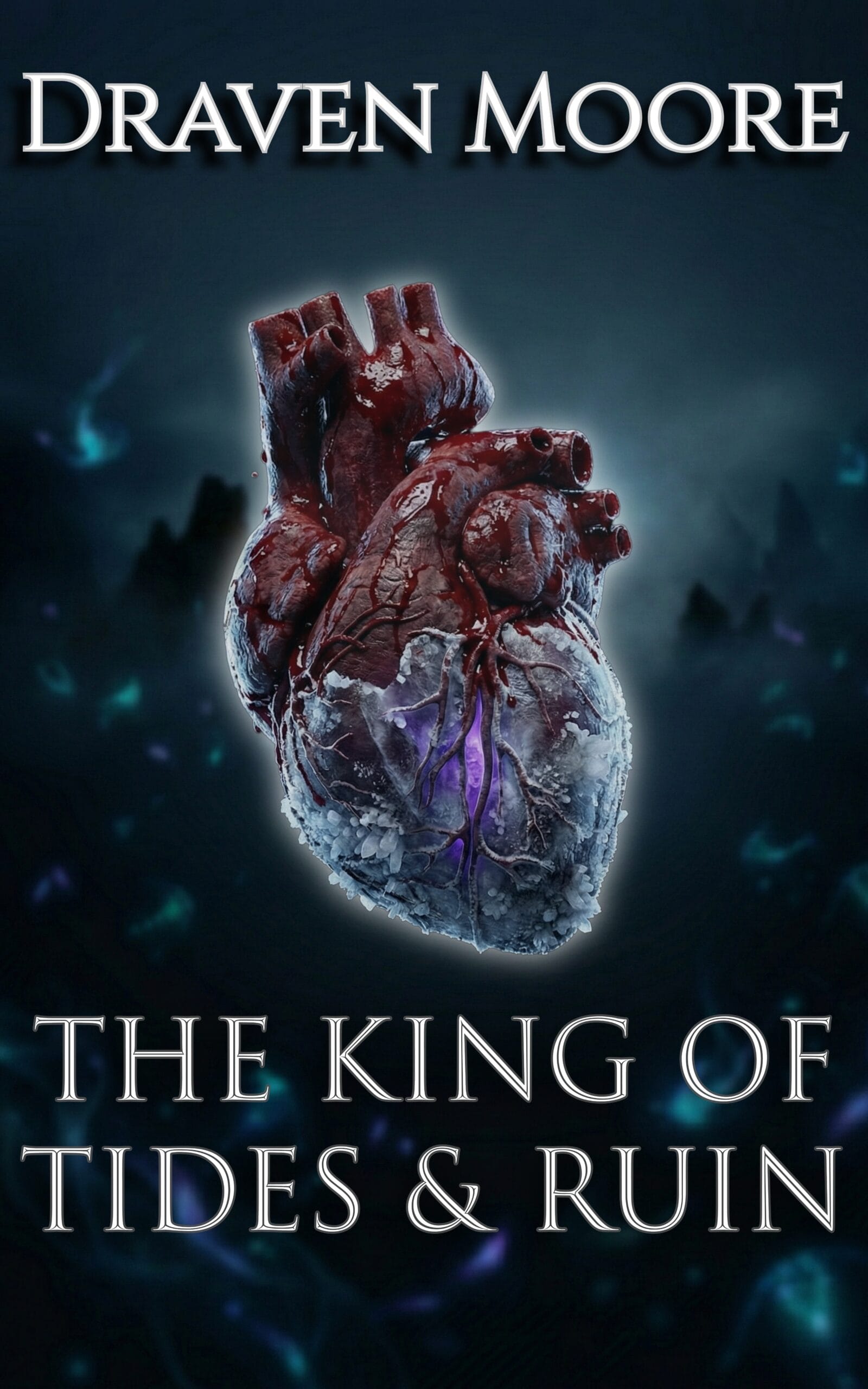
7. The King of Tides & Ruin — Draven Moore (MF Dark Pirate Romantasy)
The pirate-romantasy entry and the entry point for the Draven Moore catalog — dark maritime fantasy with the morally-grey-cursed-prince architecture ACOTAR readers will recognise structurally. Rourke Thorne was once the Empire’s most-feared witch-hunter; now he is the Salted King, a pirate captain slowly turning into a statue of living crystal. For seven years he has felt nothing — no warmth, no pain, no hope. The curse is winning. The architecture of his transformation is the architecture of his death.
Sera Blackwood is a healer with a dangerous gift — she can cure any curse, but only by taking it into herself. When she’s captured by the Salted King, the structural engine of the book becomes the gap between his careful seven-year acceptance of his own ending and the woman whose existence requires him to want something he is structurally no longer permitted to want. Draven Moore runs the dark-romantasy architecture with the maritime/curse specificity that gives the trope a different shape than the fae-court or war-college variants — same morally-grey-immortal-with-secret-loyalties DNA, different specific mythology. Scorching heat with the on-page work the curse-bound architecture demands. Read chapter one free →
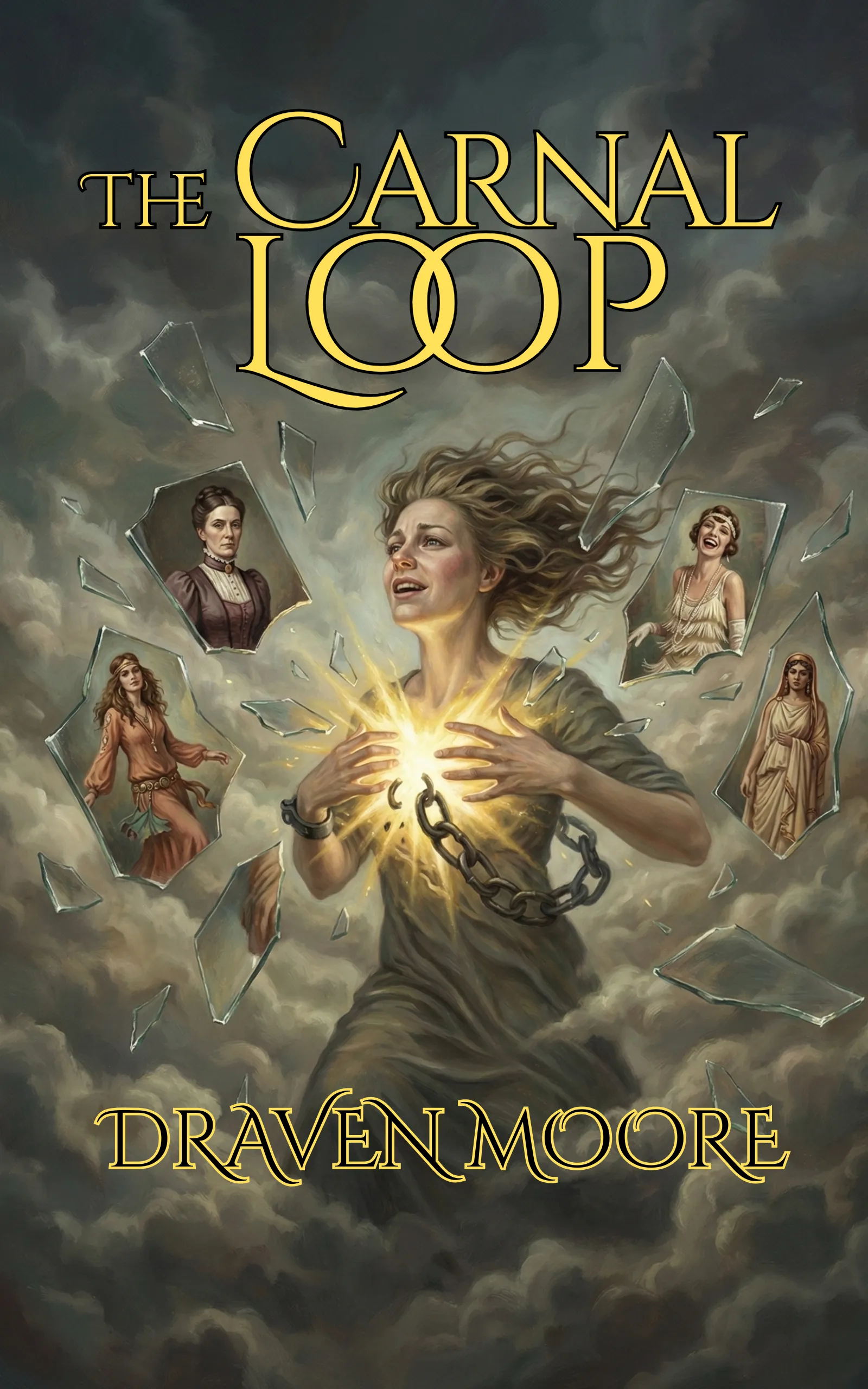
8. The Carnal Loop — Lucian Gray (MF Paranormal Reincarnation Mate-Bond)
The mate-bond architecture pushed past the fae-court setting and into reincarnation territory. Lucian has lived a thousand lives, each one ending the same way — watching the woman he loves die before they can break the curse that binds them. He remembers every touch, every kiss, every heartbreak. She remembers nothing. When Lena Chen walks into his office seeking help for her emotional numbness, he recognises her instantly. This is his last chance. The memories are returning. The curse is closing. He has one lifetime left to do what a thousand attempts have not.
Where Maas runs the mate-bond architecture across the Inner Circle’s fae politics, Lucian Gray runs it across a thousand-year reincarnation curse with the BDSM power-exchange architecture the trope’s structural patience has earned. Soulmates, dominant hero, praise kink, he-falls-first across a thousand iterations. Inferno heat. For ACOTAR readers who came for the mate-bond’s structural permanence and want the indie KU paranormal variant with the on-page work the curse-bound architecture rewards. Read chapter one free →
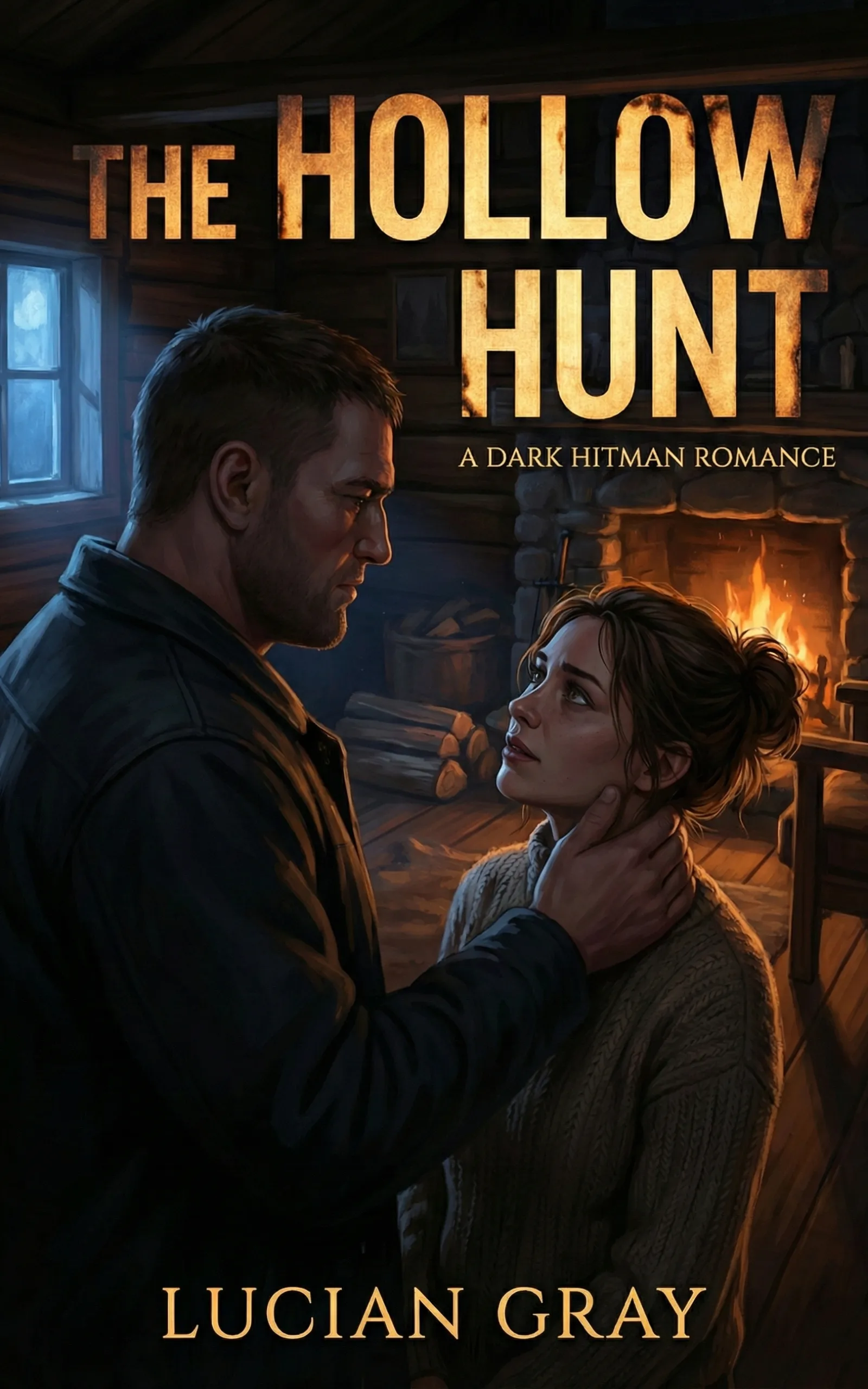
9. The Hollow Hunt — Lucian Gray (MF Dark Protector Hunter)
The protector-architecture entry. He was sent to kill her. He gave her a head start instead. Elara Vance has been invisible for two years, running from the people who burned her life down; the soldier sent to finish the job recognises her at exactly the moment refusing to do it becomes structurally inevitable. The careful, patient on-page work of two people who have both been carrying violence as a structural cost finally encountering the one person whose survival becomes the only thing either of them refuses to surrender.
Where Maas runs the High-Lord-protector architecture through Rhysand’s careful eight-month restraint, Lucian Gray runs the protector-meets-assassin architecture at the indie KU register with the morally-gray-warrior dynamic the trope rewards. Touch-her-and-die, the careful slow corruption of professional violence into the structural loyalty neither of them was supposed to need. For ACOTAR readers who came for the Inner-Circle’s protector loyalty and want the same dynamic in a single-volume indie KU read at the inferno heat ceiling. Read chapter one free →
Frequently Asked Questions
What book is most like ACOTAR?
For trad-pub: From Blood and Ash by Jennifer Armentrout is the most-recommended ACOTAR cross-comp — chosen-one heroine, morally-grey-immortal-bodyguard architecture, higher on-page heat than ACOTAR’s mainstream calibration. Fourth Wing by Rebecca Yarros covers the same morally-grey-love-interest structural DNA in a dragon-rider war-college setting. For indie KU at the inferno register: The Demon’s Tithe by Rowan Black (267K-word dark fantasy with monster-hunter-meets-ancient-entity architecture) is the closest structural comp at the heat ceiling the trad-pub romantasy shelf restrains.
What chapter is the spicy scene in ACOMAF?
Chapter 55. It’s the structural emotional and physical climax of Feyre and Rhysand’s slow-burn architecture across A Court of Mist and Fury. BookTok calls it “Chapter 55 energy” as shorthand for the combination of vulnerability, power exchange, and explicit intimacy that makes the scene iconic. For readers who want Chapter 55 energy distributed across multiple scenes per book rather than reserved for a single structural climax, From Blood and Ash and the Fractal Enigma indie KU dark fantasy picks above all run higher on-page registers.
Are romantasy books on Kindle Unlimited?
The trad-pub romantasy titles in this list (ACOTAR, From Blood and Ash, Kingdom of the Wicked, Daughter of No Worlds, Fourth Wing) are generally NOT on Kindle Unlimited — they’re trad-pub releases at standard pricing. The four indie KU picks from Fractal Enigma (The Demon’s Tithe, The King of Tides & Ruin, The Carnal Loop, The Hollow Hunt) ARE all free with a Kindle Unlimited subscription. The indie KU romantasy shelf is currently where the spicier dark-fantasy registers live.
Should I read ACOTAR in order?
Yes. The ACOTAR series is structurally a connected arc — each book builds on the political, magical, and character architecture established in the previous volume. Order: A Court of Thorns and Roses (book one), A Court of Mist and Fury (book two — most readers will tell you this is where the series “really begins”), A Court of Wings and Ruin (book three), A Court of Frost and Starlight (companion novella), A Court of Silver Flames (book four, focused on Nesta). Books five and beyond are forthcoming. Reading out of order will spoil Chapter 55, Velaris, and the Inner Circle reveals.
Are there spicier books like ACOTAR?
ACOTAR’s heat ceiling sits at mid-tier mainstream BookTok — Chapter 55 is the structural climax, not the regular register. Readers who want the same morally-grey-immortal architecture with the heat distributed across more scenes per book should look indie KU. The Demon’s Tithe by Rowan Black (267K-word dark fantasy, inferno register), The King of Tides & Ruin by Draven Moore (pirate romantasy, scorching), and The Carnal Loop by Lucian Gray (paranormal reincarnation mate-bond, inferno BDSM) all run the on-page work at the register the trad-pub romantasy shelf restrains.
Where do ACOTAR readers go after they exhaust the catalog?
For trad-pub: Maas’s other series (Throne of Glass, Crescent City) extend the same voice across new universes; Sarah J. Maas’s catalog functions as a multi-universe commitment for readers willing to commit. Beyond Maas: Jennifer Armentrout’s Blood and Ash and Rebecca Yarros’s Empyrean series are the strongest cross-author commitments. For indie KU at the inferno register: Rowan Black‘s dark fantasy catalog (The Demon’s Tithe), Draven Moore‘s dark pirate romantasy (The King of Tides & Ruin), and Lucian Gray‘s paranormal dark romance catalog are the closest indie comps.
This post contains Amazon affiliate links. As an Amazon Associate, Fractal Enigma earns from qualifying purchases at no extra cost to you. The four Fractal Enigma titles link to their book pages on this site where you can read the first chapter free.
Looking for more romantasy and dark fantasy recommendations? The newsletter sends new indie KU dark fantasy releases, bonus chapters, and reader-only giveaways straight to your inbox. 🔥
The form you have selected does not exist.