
Books Like The Hating Game — 10 Workplace Rivals & Corporate Romance Reads (2026)

You finished The Hating Game in a single Saturday afternoon with the architectural certainty that Sally Thorne had structurally invented a new genre of workplace torture. You spent the next week emotionally compromised by Lucy Hutton and Joshua Templeman — the executive assistant whose careful four-year war with her shared-desk colleague has been the load-bearing structural fabric of her workdays, the man whose tie matches her shirt every Friday with architectural precision that no one should be able to predict, the careful daily performance of mutual professional hatred that turns out to have been the structural cover for an attention neither of them was supposed to be carrying. You moved to 99 Percent Mine. You finished Second First Impressions. You worked through Beautiful Bastard twice. Now the question becomes: what fills the workplace-rivals-corporate-promotion shaped hole in your TBR until Sally Thorne drops the next one?
What makes The Hating Game land structurally isn’t the corporate setting. It’s the specific architecture: two protagonists whose mutual antagonism is the structural cover for an attention both of them have been carrying for years, the shared-desk forced-proximity that compresses the careful daily performance into an architectural pressure cooker that the protagonists themselves are structurally incapable of escaping, a promotion competition that elevates the architectural stakes from “we hate each other” to “we are professionally weaponised against each other,” and Thorne’s particular gift for letting the slow corruption of “I will end your career” into “I have been organising my entire professional architecture around being near you” land as inevitable rather than convenient. The workplace-rivals corporate shelf has more titles that hit that exact architecture — some Thorne-adjacent, some indie KU that runs the workplace-rivalry-with-real-stakes architecture at heat ceilings the trad-pub literary register restrains.
Ten reads below: five trad-pub Sally Thorne catalog and Christina Lauren cross-author comps that anchor the BookTok workplace-rivals shelf, then five indie KU workplace reads from Fractal Enigma — spread across four pen names hitting the analytics + tutor-tutee, FF cybersecurity workplace, MM cybersecurity workplace, FF dark-corporate, and MM therapist-patient ethics architecture at the indie KU inferno register. The trad-pub picks are priced individually on Amazon; the indie picks are free with a Kindle Unlimited subscription.

What Makes a Great Hating Game Readalike
The structural criteria that separate “book where the protagonists work together” from “actually a great Hating Game readalike”:
- Mutual antagonism as architectural cover for attraction — not actual personal hatred. Lucy and Josh’s four-year war has been the structural device both of them used to maintain plausible deniability about an attention they have both been quietly carrying. The trope only lands when the hostility is doing the architectural work of carrying an emotion neither protagonist will name on the page.
- A workplace setup with structural stakes — the shared desk, the open-plan office, the promotion competition, the merger that requires both protagonists to navigate the same corporate architecture. The trope rewards books where the workplace is not just the backdrop — it is the load-bearing structural pressure that compresses every shared moment.
- A heroine whose professional competence is the load-bearing identity element — Lucy is structurally good at her job. Her competence is the architectural foundation of her professional identity. The trope only lands when the heroine has a career architecture the relationship has to fit alongside, not replace.
- Forced-proximity with no architectural escape — the shared desk faces Josh’s. Lucy can’t leave. The architectural setup has to compress the protagonists into the same physical space long enough for the careful daily performance to crack. Pure occasional-encounter workplace settings don’t enforce the structural pressure.
- Patient slow burn into earned on-page payoff — Thorne takes four years of architectural setup before the structural collision lands. The trope rewards architectural patience; books that rush the workplace-rivals timeline don’t compress the same structural weight.
Each pick below hits at least four of those five. The indie KU picks lift the on-page heat ceiling past where the trad-pub mass-market workplace shelf calibrates.
5 Trad-Pub Books Like The Hating Game
The BookTok workplace-rivals corporate-romance shelf, ranked by how directly the comp lands on The Hating Game’s specific architecture. Sally Thorne built the lane she defines across her catalog of workplace-tension romance; Christina Lauren covers the structural-workplace-foundation lane the entire BookTok mainstream is descended from; Lyssa Kay Adams covers the workplace + community adjacency. All five available on Amazon at standard trad-pub pricing.
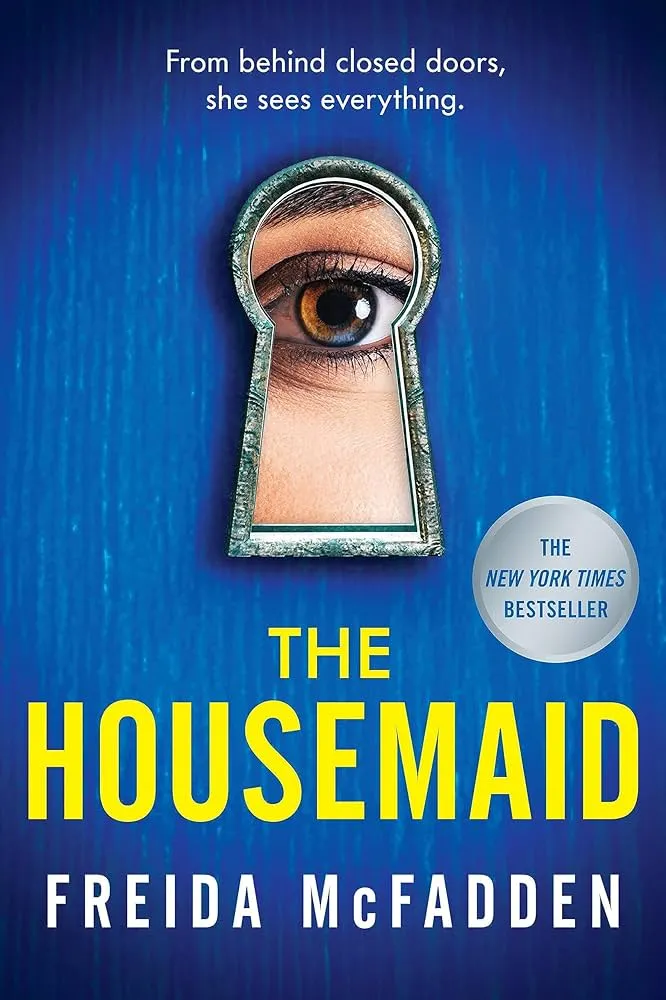
1. The Hating Game — Sally Thorne
The book this list is anchored on, and the BookTok romance title that pulled an entire generation of readers into the workplace-rivals corporate-promotion lane. Lucy Hutton is the executive assistant whose four-year war with her shared-desk colleague Joshua Templeman has been the architectural fabric of her workdays at the publishing house formed by the merger of her old company and his. The careful daily performance of mutual professional hatred is the structural cover for an attention neither of them is supposed to be carrying. Then a promotion opens up — one position, the two of them in direct competition, the entire architectural-professional war compressed into a three-week pressure cooker neither of them is structurally prepared to survive.
If you’ve somehow landed on this list without having read The Hating Game yet, you’re in the rare position of having Thorne’s foundational workplace-rivals romance still in front of you. Read this first; the rest of the list waits. The architectural payoff lives in the back half of the promotion competition — that’s where the four-year war’s structural cover starts cracking. Get The Hating Game on Amazon →
2. 99 Percent Mine — Sally Thorne
Thorne’s structural-second entry and the catalog entry that runs the architectural-long-history-between-protagonists setup through a different specific configuration. Darcy Barrett is the thirty-year-old whose entire structural existence has been organised around being her twin brother Jamie’s chaotic counterweight; her grandmother has just died and left her the cottage that needs structural renovation before it can be sold. Tom Valeska is the contractor — her brother’s best friend since childhood, the boy she has been carefully not looking at directly for the architectural duration of her entire adolescence, and the man whose careful adult composure is the structural cover for an attention Darcy was structurally certain was reserved for someone else.
Where The Hating Game runs the architectural-antagonism setup through Lucy and Josh’s four-year corporate war, 99 Percent Mine runs the architectural-long-history-between-protagonists setup through the brother’s-best-friend + renovation-cottage configuration. Same Thorne voice, same upper-mainstream literary BookTok calibration, the architectural patience the lane rewards. Get 99 Percent Mine on Amazon →
3. Second First Impressions — Sally Thorne
Thorne’s newer catalog entry and the structural-workplace-with-fish-out-of-water configuration. Ruthie Midona is the twenty-five-year-old who has structurally been running the operations of Providence Luxury Retirement Villa since she was a teenager; the architectural certainty that the retirement community is her entire professional life is about to be tested by the corporate-acquisition that has just brought new ownership to the property. Teddy Prescott is the corporate-heir-apprentice the new owner has sent to learn the business — tattooed, structurally not-corporate, architecturally the precise wrong fit for the careful retirement-community architecture Ruthie has spent her career maintaining.
Where The Hating Game runs the architectural-workplace-rivals setup through Lucy and Josh’s identical corporate positions, Second First Impressions runs the workplace setup through Ruthie’s careful-administrator + Teddy’s structural-misfit configuration with the corporate-acquisition as the architectural pressure. Same Thorne voice, same workplace-stakes architecture, the patient deferral the catalog rewards. Get Second First Impressions on Amazon →
4. Beautiful Bastard — Christina Lauren
The structural-workplace-rivals foundational entry and the catalog entry that runs the architectural-boss-and-assistant + corporate-empire setup through the foundational text of the entire modern BookTok workplace-rivals lane. Chloe Mills is the MBA intern whose final-semester rotation has just placed her under Bennett Ryan — the architectural face of Ryan Media Group, structurally the most insufferable boss in the Chicago corporate skyline, the man whose careful daily campaign of professional impossibility has been Chloe’s structural reason for surviving the internship. Then a conference room. Then a structural breakdown of the careful professional performance both of them have been maintaining. Then the architectural recognition that neither of them is the person they have been performing.
Beautiful Bastard is the structural-grandparent of every workplace-rivals romance the BookTok mainstream has produced since. Where Thorne runs the architectural-rivals setup at upper-mainstream BookTok calibration, Christina Lauren established the workplace-rivals architecture in its original combative-explicit register. For Hating Game readers who want the foundational workplace-rivals text the entire lane is structurally descended from. Get Beautiful Bastard on Amazon →
5. The Bromance Book Club — Lyssa Kay Adams
The cross-author workplace-adjacent entry and the recommendation for Hating Game readers who came for the architectural-marriage-as-workplace + professional-stakes setup and want the marriage-architecture variant. Gavin Scott is the Nashville Legends second baseman whose marriage is structurally three months from collapse; his wife Thea has discovered something about his professional performance that has turned the careful four-year architecture of their marriage into a structural breakdown neither of them was prepared for. The architectural solution arrives through the team’s secret book club — the professional athletes who have been reading historical romance novels for marital advice and are now applying the architectural-patience-and-attention setup of the entire genre to Gavin’s structural problem.
Where The Hating Game runs the architectural-workplace-rivals setup through Lucy and Josh’s promotion competition, The Bromance Book Club runs the architectural-workplace + community + second-chance setup through the marriage-as-professional-stakes configuration with the secret-book-club as the structural pressure. Adams writes the workplace-adjacent + community + second-chance dynamic at the upper-mainstream BookTok register; the catalog continues across multiple Nashville Legends volumes for readers who want the wider commitment. Get The Bromance Book Club on Amazon →

Where Indie KU Lifts the Workplace-Rivals Heat Ceiling
The trad-pub Sally Thorne + Christina Lauren + Adams catalog above is calibrated to the BookTok upper-mainstream workplace register. Thorne runs the architectural-rivals setup carefully — the four-year-antagonism setup is the load-bearing structural work, the promotion-competition is the engine, and the on-page heat is calibrated to let the architectural patience lead. Christina Lauren runs the workplace-rivals at the slightly higher original combative-explicit register that established the lane. The dynamics are real, the workplace architecture is intact, the door closes deliberately at the structural pivot points the trad-pub mass-market workplace shelf has been calibrated for.
The indie Kindle Unlimited workplace shelf doesn’t have those constraints. The architectural-workplace-rivals setup stays load-bearing, the structural patience stays intact, but the on-page work engages the heat the architectural setup has earned. The college-sports + analytics-genius architecture where the workplace is the team’s analytics department. The FF cybersecurity workplace where the architecture of being the only woman on the security team is the structural cover for the attraction the team’s lead developer has been carefully not naming. The MM cybersecurity workplace where the penetration-testing professional and the new corporate-security-hire are structurally engaged in an architectural-rivalry that maps onto the actual professional rivalry their roles require. The FF dark-corporate workplace where the architectural-power-imbalance is the structural foundation. The MM therapist-patient workplace ethics architecture where the professional-ethics violation is the structural cost of the attention neither protagonist was prepared to acknowledge.
Five indie KU workplace reads below, from four different Fractal Enigma pen names, hitting the analytics + tutor-tutee, FF cybersecurity, MM cybersecurity, FF dark-corporate, and MM therapist-patient architecture across MF, MM, and FF pairings. All five free with Kindle Unlimited; the individual book page for each title lists current retailers and content warnings.
5 Indie KU Workplace Reads from Fractal Enigma
6. The Blurred Playbook — Rowan Black (MF Analytics + Tutor-Tutee)
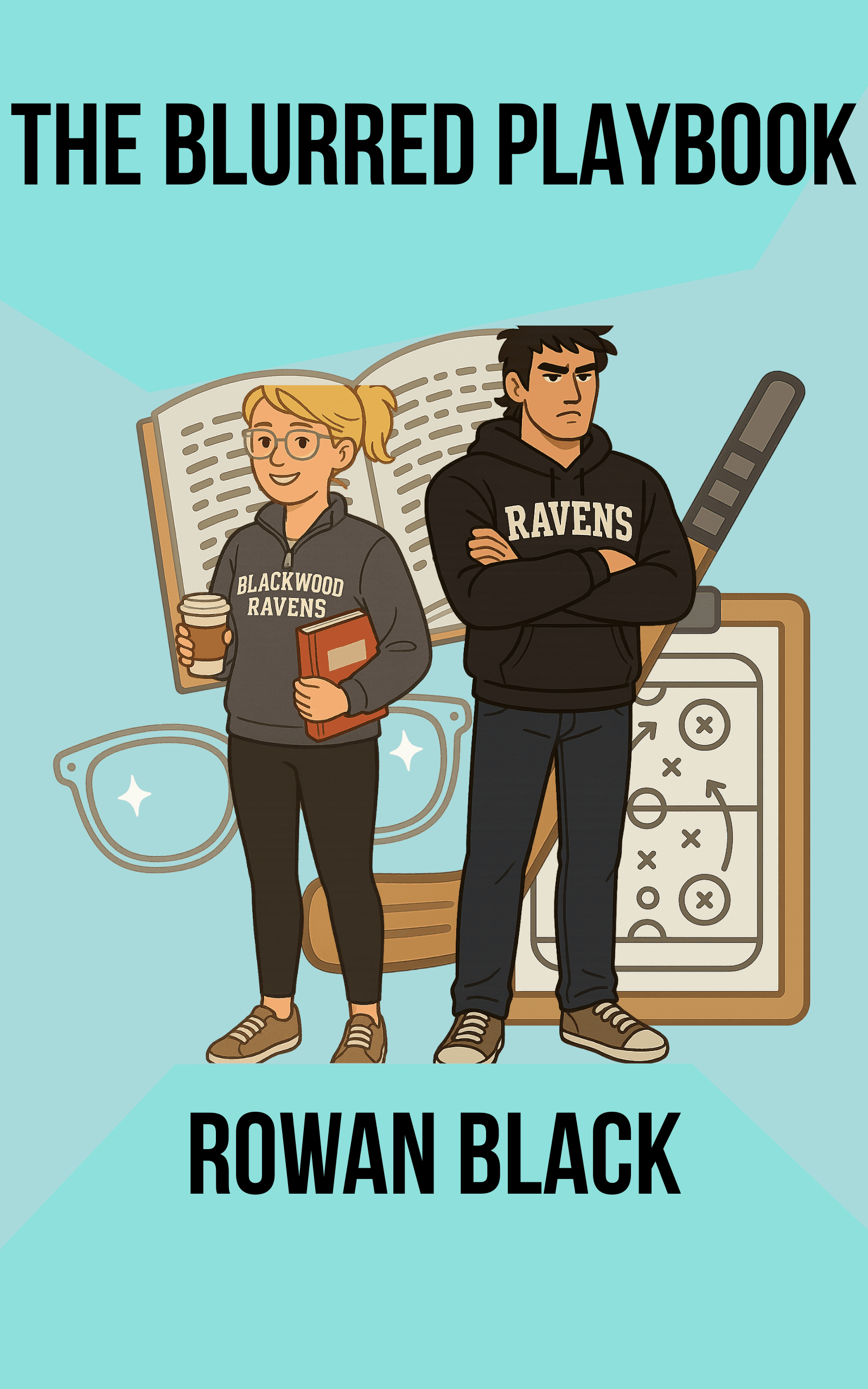
The closest direct comp to The Hating Game’s specific architectural-professional-rivalry-with-real-stakes setup on this list. Sadie is the coach’s niece and the undergraduate analytics genius whose statistical work has been quietly improving the Blackwood Ravens hockey program for two seasons. Jax is the NHL prospect failing Econ whose draft year requires academic eligibility he cannot produce on his own. The fake-tutoring arrangement is the structural cover that compresses both of them into the same physical space three nights a week; the architectural-rivalry between Sadie’s quiet professional competence and Jax’s structural-public-failure is the load-bearing pressure the entire book engineers into a workplace-stakes architecture.
Where The Hating Game runs the architectural-rivals + workplace-stakes setup through Lucy and Josh’s shared-desk corporate war, The Blurred Playbook runs the same architecture through the analytics-genius + NHL-prospect + fake-tutoring configuration with the dyslexia representation handled with care and the on-page heat the indie KU register engages. Rowan Black writes the workplace-rivals-with-real-stakes dynamic at the inferno register. For Hating Game readers who came for the architectural-workplace-rivals engine and want the college-sports variant. Read chapter one free →

7. Power Play, Pretty Girl — Aurora North (FF Cybersecurity Workplace)
The FF cybersecurity workplace entry and the recommendation for Hating Game readers who came for the architectural-workplace-rivals + professional-competence + forbidden-attraction setup and want the FF sapphic variant in the structurally-male-coded cybersecurity industry. She is the analyst whose careful professional positioning across two years on the corporate security team has been the architectural cover for being the only woman in the room. The lead developer is the woman whose attention to her arrives at exactly the moment the architectural-professional-isolation is starting to crack — the careful daily performance of being just-another-analyst meeting the architectural reality that the woman who has been quietly running the security architecture has been carefully not looking at her directly for the same two years.
Where The Hating Game runs the architectural-workplace-rivals + shared-desk setup through Lucy and Josh’s MF configuration, Power Play, Pretty Girl runs the workplace-rivals + professional-ethics setup through FF sapphic + cybersecurity-corporate at the indie KU inferno register. Aurora North writes the FF workplace + cyber dynamic with the on-page work the trad-pub sapphic shelf doesn’t ship. For Hating Game readers who came for the architectural-workplace + professional-stakes engine and want the FF cybersecurity variant. Read chapter one free →

8. Penetration Testing — Jace Wilder (MM Cybersecurity Workplace)
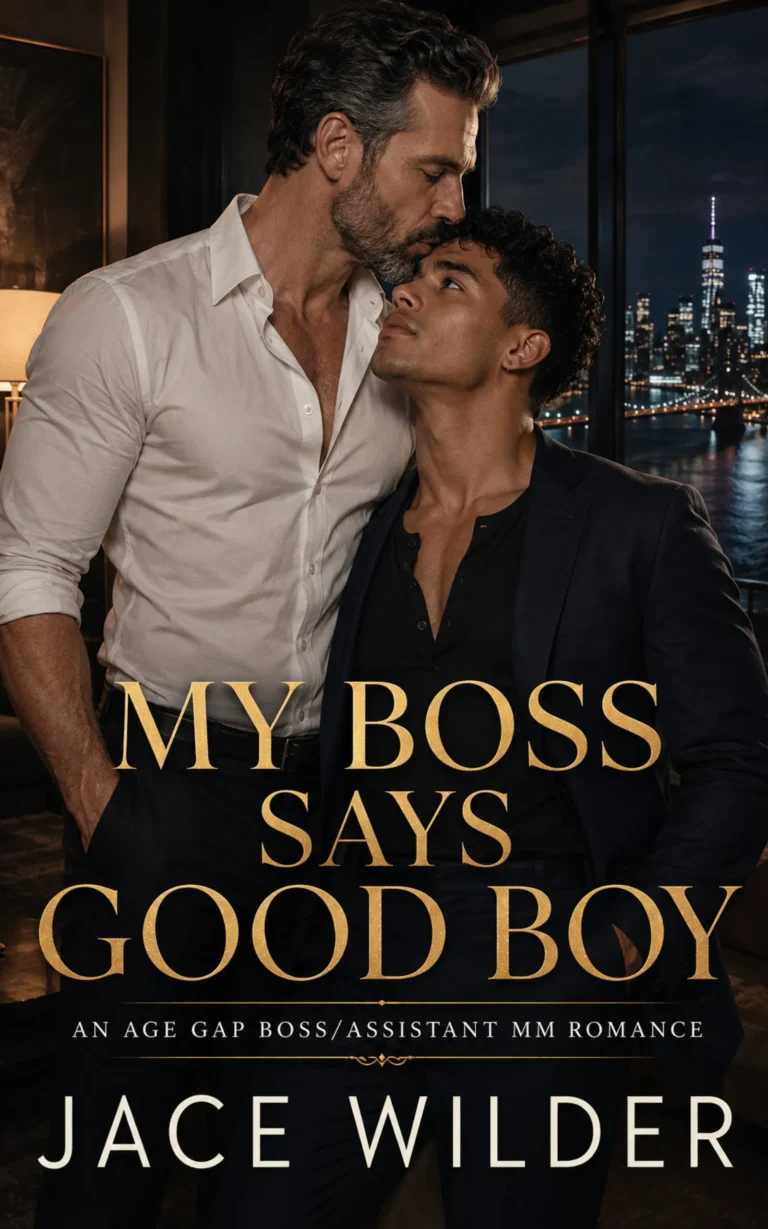
The MM cybersecurity workplace entry and the closest direct MM variant of Hating Game’s architectural-workplace-rivals + professional-rivalry setup. He is the freelance penetration-tester whose contract assignment has just brought him into the corporate-security architecture of a Fortune 500 he has spent his entire career professionally circling. The corporate-security-hire is the man whose careful professional composure has been the structural cover for being the only person in the building who actually understands the architectural-vulnerability his department has been refusing to acknowledge. The penetration-test is structurally inevitable. The architectural-rivalry between the freelancer and the hire is the load-bearing pressure that compresses every professional encounter into a careful adult performance neither of them was prepared to sustain.
Where The Hating Game runs the architectural-workplace-rivals setup through the corporate MF configuration, Penetration Testing runs the same architecture through MM cybersecurity + age-gap + competence-kink at the indie KU inferno register. Jace Wilder writes the MM workplace-rivals + cyber dynamic with the on-page heat the trad-pub Thorne calibration restrains. For Hating Game readers who came for the architectural-workplace-rivals engine and want the MM cybersecurity variant. Read chapter one free →

9. Zero Day — Aurora North (FF Dark-Corporate Cybersecurity)
The FF dark-corporate cybersecurity entry and the recommendation for Hating Game readers who came for the architectural-professional-rivalry + dark-corporate-power-imbalance setup and want the FF sapphic dark variant. She is the freelance hacker whose architectural-anonymity has been the structural cover for an entire career of corporate-security exploits the Fortune 500 community has spent five years carefully not connecting to a single person. The chief security officer is the woman whose attention to the exploits has been the structural cover for an architectural-fascination that has been building across the entire timeline of those exploits — and the architectural moment the hacker arrives in person to negotiate a contract is the structural pressure cooker neither of them was prepared to enter.
Where The Hating Game runs the workplace-rivals setup through the upper-mainstream calibration, Zero Day runs the same architectural-professional-rivalry setup through FF dark-corporate + cybersecurity + morally-gray-heroine at the indie KU inferno register. Aurora North writes the FF dark + cybersecurity dynamic with the on-page work the trad-pub sapphic mainstream restrains. For Hating Game readers who came for the architectural-rivals engine and want the FF dark-corporate variant. Read chapter one free →

10. Good For Me — Milo Hart (MM Therapist-Patient Workplace Ethics)
The MM workplace-ethics + therapist-patient entry and the recommendation for Hating Game readers who came for the architectural-professional-stakes + forbidden-attraction-with-career-cost setup and want the MM variant with structural-professional-ethics as the load-bearing forbidden element. Marc Rivera is thirty, a finance VP with a forty-seventh-floor view and three panic attacks in a month. HR called it burnout. They referred him to Dr. David Chen — thirty-six, the kink-aware therapist whose psychology practice specialises in exactly the architecture Marc has spent his entire adult life refusing to look at directly. Six sessions are supposed to be a professional engagement.
Where The Hating Game runs the architectural-workplace-stakes setup through Lucy and Josh’s corporate-promotion war, Good For Me runs the structural-professional-ethics setup through a therapist-patient relationship at the MM register — same intellectual-respect + professional-cost + careful-attention architecture, MM pairing, indie KU inferno heat. For Hating Game readers who came for the architectural-workplace + professional-ethics + careful-attention engine and want the MM therapist variant. Read chapter one free →
Frequently Asked Questions
What book is most like The Hating Game?
For trad-pub: 99 Percent Mine by Sally Thorne is the closest direct successor inside Thorne’s catalog — same Thorne voice, similar architectural-long-history-between-protagonists setup, different specific configuration (brother’s best friend rather than workplace rivals). Outside Thorne’s catalog: Beautiful Bastard by Christina Lauren is the closest cross-author workplace-rivals comp at the foundational lane register. For indie KU at the inferno register: The Blurred Playbook by Rowan Black (MF analytics-genius + workplace-rivals + fake tutoring) runs the closest structural comp at the heat ceiling the trad-pub Thorne register restrains.
Are Sally Thorne’s books on Kindle Unlimited?
Sally Thorne’s catalog (The Hating Game, 99 Percent Mine, Second First Impressions) is generally NOT on Kindle Unlimited — these are trad-pub William Morrow / HarperCollins releases at standard pricing. Christina Lauren’s Beautiful series and Lyssa Kay Adams’s Bromance Book Club catalogs are also generally not on KU. The five indie KU picks from Fractal Enigma above (The Blurred Playbook, Power Play Pretty Girl, Penetration Testing, Zero Day, Good For Me) are all free with a Kindle Unlimited subscription.
What’s the right order to read Sally Thorne?
Thorne’s catalog consists of standalones — no series prerequisites. Reading order chronological: The Hating Game (2016), 99 Percent Mine (2019), Second First Impressions (2021). Each book is structurally complete on its own; no overlapping characters or universe. New readers should start with The Hating Game as the foundational text that established Thorne’s workplace-rivals voice; readers who love it tend to commit to the catalog.
Are there spicier books like The Hating Game?
Thorne’s heat ceiling sits at upper-mainstream BookTok — the architectural patience is doing the structural work, the workplace-rivals + four-year-antagonism setup is the engine, and the on-page heat is calibrated to let the careful build lead. Readers who want the same workplace-rivals + corporate-promotion-stakes architecture with the heat ceiling lifted past the trad-pub mass-market level should look indie KU. The Blurred Playbook by Rowan Black (MF analytics-genius + workplace-stakes, inferno), Penetration Testing by Jace Wilder (MM cybersecurity workplace-rivals, inferno), and Zero Day by Aurora North (FF dark-corporate cybersecurity, inferno) all run the architectural-workplace-rivals setup at on-page registers the trad-pub Thorne shelf restrains.
Are there MM or FF workplace-rivals books like The Hating Game?
The trad-pub MM and FF workplace-rivals shelf at The Hating Game’s specific architecture is structurally smaller than the MF mainstream lane. Indie KU has filled the gap. For MM workplace-rivals + cybersecurity + competence kink: Penetration Testing by Jace Wilder (MM cybersecurity workplace-rivals, indie KU inferno) is the closest direct comp. For FF workplace forbidden + cybersecurity: Power Play, Pretty Girl by Aurora North (FF sapphic cybersecurity + workplace forbidden + age-gap, indie KU inferno) covers the FF adjacency. Both run the architectural-workplace-rivals setup at the heat ceiling the trad-pub Thorne register restrains.
Where do Sally Thorne readers go next?
For trad-pub: working through Thorne’s catalog (99 Percent Mine, Second First Impressions) plus Christina Lauren’s Beautiful series (Beautiful Bastard, Beautiful Stranger) covers the workplace-rivals foundational lane. Beyond that: Elena Armas’s catalog (Spanish Love Deception, American Roommate Experiment), Ali Hazelwood’s STEMinist catalog (Love Hypothesis, Love on the Brain), and Christina Lauren’s wider catalog (Love and Other Words, The Unhoneymooners) cover the trad-pub workplace adjacencies. For indie KU at the inferno register: Rowan Black‘s sports + STEMinist workplace catalog (The Blurred Playbook), Aurora North‘s FF cybersecurity workplace catalog (Power Play, Zero Day), Jace Wilder‘s MM cybersecurity catalog (Penetration Testing), and Milo Hart‘s MM workplace-ethics catalog (Good For Me) are the closest indie comps.
This post contains Amazon affiliate links. As an Amazon Associate, Fractal Enigma earns from qualifying purchases at no extra cost to you. The five Fractal Enigma titles link to their book pages on this site where you can read the first chapter free.
Looking for more workplace-rivals and corporate romance recommendations? The newsletter sends new indie KU contemporary releases, bonus chapters, and reader-only giveaways straight to your inbox. 💼
The form you have selected does not exist.