Books Like Throne of Glass — 10 Assassin & Dark Fantasy Romance Reads (2026)
You finished Throne of Glass in a long weekend with the architectural certainty that Sarah J. Maas had structurally engineered an assassin-high-fantasy specifically to ruin every other Empire-scale-fantasy book for you. You spent the next week emotionally compromised by Celaena Sardothien and Chaol Westfall — the eighteen-year-old whose Endovier salt-mine imprisonment has been the structural cost of an entire year of the Empire’s careful architectural-erasure of Adarlan’s Assassin, the Captain of the Royal Guard whose careful adult composure has been the architectural cover for a professional-loyalty to Prince Dorian that Celaena’s structural-arrival at the palace is engineered to test, the King’s Champion competition that compresses Celaena into the structurally-impossible position of winning her freedom by earning the architectural title of the Empire’s official assassin. You moved to Crown of Midnight. You finished Heir of Fire. You worked through the entire eight-book saga. Now the question becomes: what fills the assassin-Empire-scale-dark-fantasy shaped hole in your TBR until Sarah J. Maas drops the next one?
What makes Throne of Glass land structurally isn’t the assassin premise. It’s the specific architecture: a heroine whose architectural-identity has been organised around being the deadliest assassin the Empire has ever produced and whose careful adult composure is the structural cover for a trauma-history the Endovier salt-mines have architecturally compounded, a love interest (across the saga’s rotating architectural configuration) whose careful professional composure is structurally about to be tested by an assassin whose architectural-danger is genuinely lethal, an Empire-scale political-faction setup where every conversation is structurally a strategic move and the architectural-magic-forbidden-in-Adarlan setup is the load-bearing worldbuilding pressure, and Maas’s particular gift for letting the slow corruption of “I am serving my sentence” into “the architectural-Empire I am serving is structurally the one that killed everyone I loved” land as structural inevitability rather than convenient rebellion. The assassin dark-fantasy shelf has more titles that hit that exact architecture — some Maas-adjacent, some indie KU that runs the assassin-and-morally-grey architecture at heat ceilings the trad-pub YA-crossover restrains.
Ten reads below: five trad-pub Sarah J. Maas Throne of Glass catalog and Kerri Maniscalco cross-author comps that anchor the BookTok assassin dark-fantasy shelf, then five indie KU dark fantasy reads from Fractal Enigma at the indie KU inferno register — hitting the assassin-protector, monster-hunter, cursed-king, mate-bond, and modern-morally-gray architecture. The trad-pub picks are priced individually on Amazon; the indie picks are free with a Kindle Unlimited subscription.

What Makes a Great Throne of Glass Readalike
The structural criteria that separate “book with a dangerous protagonist” from “actually a great Throne of Glass readalike”:
- A morally-grey protagonist whose architectural-lethality is the load-bearing identity element — Celaena is not a reformed criminal. Her architectural-identity as the deadliest assassin in the Empire is structurally the entire point. The trope only lands when the protagonist’s lethality is doing genuine plot work — the danger is not decorative, and the architecture rewards the protagonist’s willingness to use it.
- An Empire-scale or continental political-faction architecture — Adarlan, Terrasen, Wendlyn, the Deserts, the Southern Continent. The trope only lands when the political-faction structure has genuine worldbuilding weight and the architectural-scale is doing real plot work — the Empire has to be structurally engineered, not just decorative backdrop.
- A structurally-forbidden magic or supernatural architecture — magic is forbidden in Adarlan for architectural political reasons that unfold across the saga. The trope rewards books where the magic-system has structural political stakes — the forbidden-architecture has to be doing genuine load-bearing work.
- A protagonist whose interior wound is structurally load-bearing — Celaena carries the architectural-trauma-history of Endovier and the family-annihilation that predates her assassin career. The trope only lands when the interior work is genuine — the darkness has to have structural weight the plot is engineered to navigate.
- Multi-volume architectural patience with earned payoff — Maas builds the architectural-Celaena reveal across the entire saga; the payoff lives in the structural cross-book architecture. The trope rewards books where the architectural-patience is genuinely doing structural work across a saga or series commitment.
Each pick below hits at least four of those five. The indie KU picks lift the on-page heat ceiling past where the trad-pub YA-crossover shelf calibrates.
5 Trad-Pub Books Like Throne of Glass
The BookTok assassin + Empire-scale + dark-fantasy shelf, ranked by how directly the comp lands on Throne of Glass’s specific architecture. Sarah J. Maas built the Throne of Glass saga she defines; Kerri Maniscalco covers the cross-author witch/assassin adjacency. All five available on Amazon at standard trad-pub pricing.
1. Throne of Glass — Sarah J. Maas
The book this list is anchored on, and the BookTok assassin dark-fantasy title that pulled an entire generation of readers into Sarah J. Maas’s Adarlan Empire saga. Celaena Sardothien is the eighteen-year-old whose Endovier salt-mine imprisonment has been the structural cost of an entire year of the Empire’s careful architectural-erasure of Adarlan’s Assassin. The King of Adarlan’s King’s Champion competition is the architectural-offer that structurally compresses Celaena into the impossibility of winning her freedom by earning the title of the Empire’s official assassin. Chaol Westfall is the Captain of the Royal Guard whose careful adult composure has been the architectural cover for a professional-loyalty to Prince Dorian that Celaena’s structural-arrival at the palace is engineered to test. Prince Dorian is the heir whose architectural-family-obligation is structurally about to be compromised by the assassin his father has just structurally invited into the palace.
If you’ve somehow landed on this list without having read Throne of Glass yet, you’re in the rare position of having Maas’s foundational Adarlan Empire saga still in front of you. Read this first; the rest of the list waits. Commit to the entire eight-book saga — the architectural payoff spans the structural cross-book Celaena reveal that Throne of Glass is engineered to defer. Get Throne of Glass on Amazon →
2. Crown of Midnight — Sarah J. Maas
Throne of Glass Book Two and the catalog entry that delivers on the architectural-King’s-Champion setup Throne of Glass has been engineered to defer. Celaena has structurally won the competition; the architectural-cost of the King’s Champion title is that she is now structurally required to execute the King’s political enemies. The architectural-tension between Celaena’s careful assassin composure and the structural-impossibility of being the Empire’s official killer for the man who structurally destroyed everything she came from is the load-bearing work of the volume. Crown of Midnight is where the architectural-Celaena reveal that Throne of Glass has been holding back structurally starts to land.
For Throne of Glass readers who finished the first volume and immediately needed the architectural-payoff, Crown of Midnight is the book. Same Maas voice, same upper-mainstream BookTok YA-crossover heat calibration, the architectural-Celaena-identity deepening the first volume’s resolution earned. Get Crown of Midnight on Amazon →
3. Heir of Fire — Sarah J. Maas
Throne of Glass Book Three and the volume that pivots the architectural-Adarlan saga into the wider Wendlyn + Fae-court political architecture Maas has been structurally engineering. Celaena has structurally left Adarlan for reasons the second volume’s architectural-collision has forced; her arrival in Wendlyn compresses her into the architectural-Fae political factions the saga has been structurally deferring. Rowan Whitethorn is the Fae Prince whose architectural-training-obligation to Celaena is the structural cover for the deepest partnership of the entire saga. Heir of Fire is where the saga’s architectural-scale opens; the volume is structurally the pivot point that the eight-book architecture has been engineered around.
For Throne of Glass readers who finished the first two volumes and are ready for the architectural-saga-scale pivot, Heir of Fire is the book. Same Maas voice, upper-mainstream BookTok YA-crossover heat calibration, the architectural-Fae-scale opening the saga has been structurally engineering. Get Heir of Fire on Amazon →
4. A Court of Thorns and Roses — Sarah J. Maas
Maas’s structural-catalog-continuation and the ACOTAR series opener that runs the architectural-fae-court + mate-bond setup through a different specific configuration. Feyre Archeron is the human huntress whose architectural-family-poverty has been the structural foundation of her life; the High Lord who arrives in her cottage to take her in lieu of the wolf she shot has just structurally pulled her into the High Lord politics that will end three different ways across five different volumes. The architectural-mate-bond arrives across the catalog with the same structural-political-faction stakes Maas runs through the Throne of Glass Empire configuration.
Where Throne of Glass runs the architectural-Empire + assassin setup through Adarlan’s political configuration, ACOTAR runs the architectural-fae-court + mate-bond setup through the Prythian High Lord multiverse. Same Maas voice, same architectural-scale + political-faction stakes, the catalog cross-reference the BookTok Maas mainstream has been organising around. For Throne of Glass readers who finished the saga and want the Maas catalog continuation. Get A Court of Thorns and Roses on Amazon →
5. Kingdom of the Wicked — Kerri Maniscalco
The cross-author witch-and-demon-prince entry and the closest direct comp to Throne of Glass’s specific architectural-morally-grey-heroine + supernatural-political-court setup outside the Maas catalog. Emilia di Carlo is the seventeen-year-old witch whose architectural-family-collapse has just structurally arrived with her twin sister Vittoria’s murder in Sicily; the architectural-supernatural-court-politics is the structural framework the investigation compresses into. Wrath is the Prince of Wrath — one of the Seven Demon Princes of Hell whose architectural-summoning by Emilia is structurally the collision the entire trilogy is engineered around. The architectural-supernatural-court-politics + demon-prince-and-witch-heroine setup runs the same architectural-morally-grey + dangerous-love-interest dynamic Maas runs through the Throne of Glass Fae-court configuration.
Where Throne of Glass runs the architectural-assassin + political-court setup through Adarlan’s Empire configuration, Kingdom of the Wicked runs the architectural-witch + demon-prince-court setup through the Seven Princes of Hell configuration at the same upper-mainstream BookTok YA-crossover register. Maniscalco’s catalog continues into Kingdom of the Cursed and Kingdom of the Feared for readers who want the trilogy commitment. Get Kingdom of the Wicked on Amazon →

Where Indie KU Lifts the Assassin Dark-Fantasy Heat Ceiling
The trad-pub Sarah J. Maas + Kerri Maniscalco catalog above is calibrated to the BookTok upper-mainstream YA-crossover assassin dark-fantasy register. Maas runs the architectural-Adarlan-Empire setup carefully — the assassin-identity is the load-bearing work, the multi-volume architectural-Celaena reveal is the engine, and the on-page heat is calibrated to the YA-crossover-into-adult register the saga was structurally designed for. Maniscalco calibrates similarly at the witch-and-demon configuration. The dynamics are real, the assassin dark-fantasy architecture is intact, the door closes deliberately at the structural pivot points the trad-pub mass-market YA-crossover-and-adult-mainstream shelves have been calibrated for.
The indie Kindle Unlimited dark fantasy shelf doesn’t have those constraints. The architectural-assassin + morally-grey-protagonist setup stays load-bearing, the structural-political-faction is intact, but the on-page work engages the heat the architectural setup has earned. The assassin-sent-to-kill-her architecture where the professional-violence-cost is the load-bearing structural pressure. The demon-blooded monster hunter whose contract-architecture pulls him into an ancient entity’s court. The cursed king whose seven-year-transformation is the structural cost of having been the Empire’s most-feared witch-hunter. The reincarnation mate-bond whose thousand-life curse is the architectural-pressure the entire book compresses into. The modern morally-gray-billionaire whose corporate-empire is the contemporary urban-fantasy register for everything Maas runs through Throne of Glass Empire-scale political stakes.
Five indie KU dark fantasy reads below, from three different Fractal Enigma pen names, hitting the assassin-protector, monster-hunter, cursed-king, mate-bond reincarnation, and modern-morally-gray architecture at the indie KU inferno register. All five free with Kindle Unlimited; the individual book page for each title lists current retailers and content warnings.
5 Indie KU Dark Fantasy Reads from Fractal Enigma
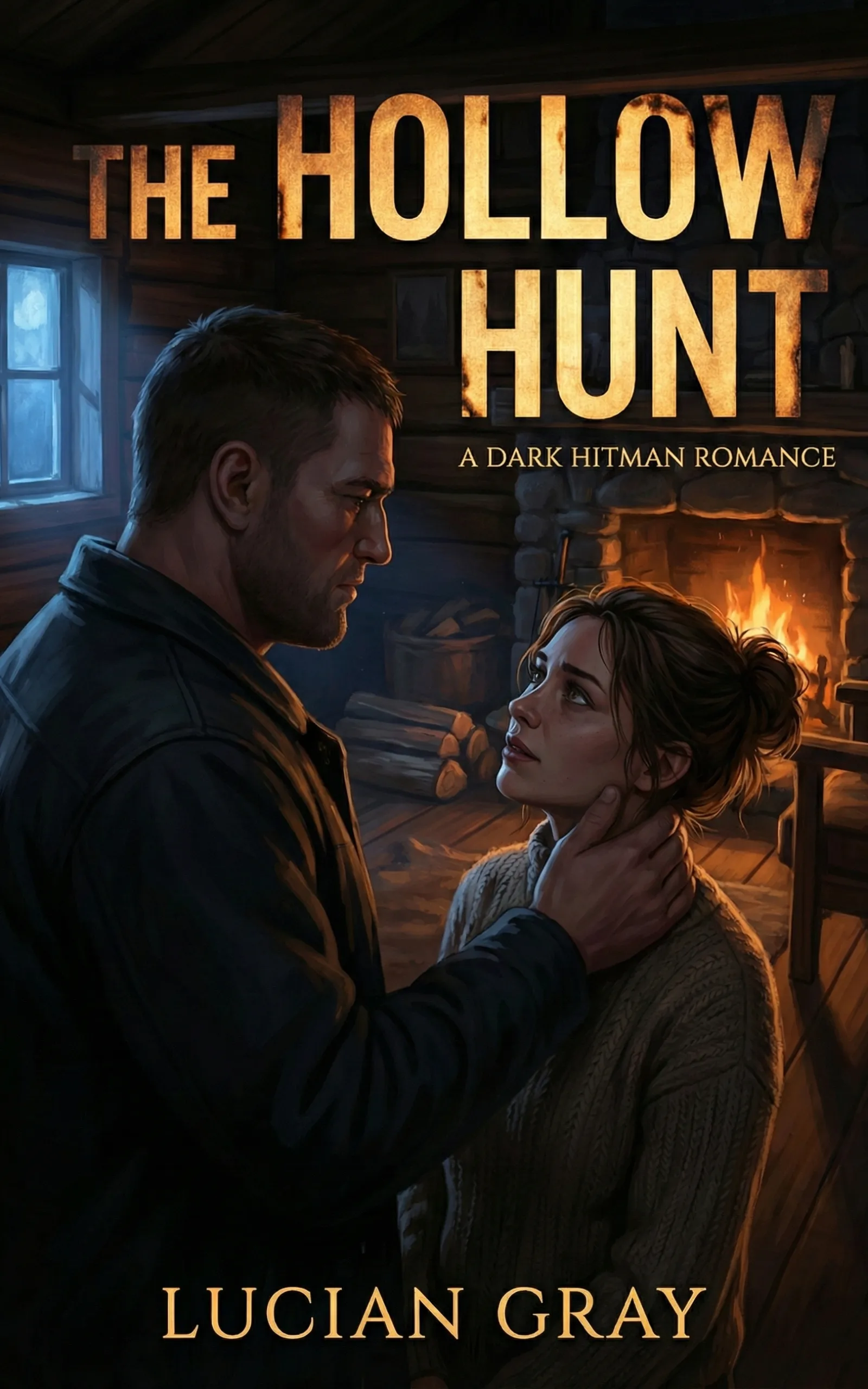
6. The Hollow Hunt — Lucian Gray (MF Assassin-Sent-to-Kill-Her)
The closest direct comp to Throne of Glass’s specific architectural-assassin + morally-grey-protagonist setup on this list. He was sent to kill her. He gave her a head start instead. Elara Vance has been invisible for two years, running from the people who burned her life down; the soldier sent to finish the job recognises her at exactly the moment refusing to do it becomes structurally inevitable. The careful, patient on-page work of two people who have both been carrying violence as a structural cost finally encountering the one person whose survival becomes the only thing either of them refuses to surrender. The architectural-assassin-and-target dynamic that Throne of Glass runs through the King’s Champion configuration lives here in a modern single-volume compression.
Where Throne of Glass runs the architectural-assassin + political-faction setup through Celaena’s Adarlan Empire configuration, The Hollow Hunt runs the assassin + protector architecture at the indie KU register with the morally-gray-warrior + structural-cost-of-professional-violence dynamic. Touch-her-and-die, the careful slow corruption of professional violence into the structural loyalty neither of them was supposed to need. For Throne of Glass readers who came for Celaena’s architectural-assassin-with-real-stakes engine and want the modern single-volume indie KU inferno-heat variant. Read chapter one free →
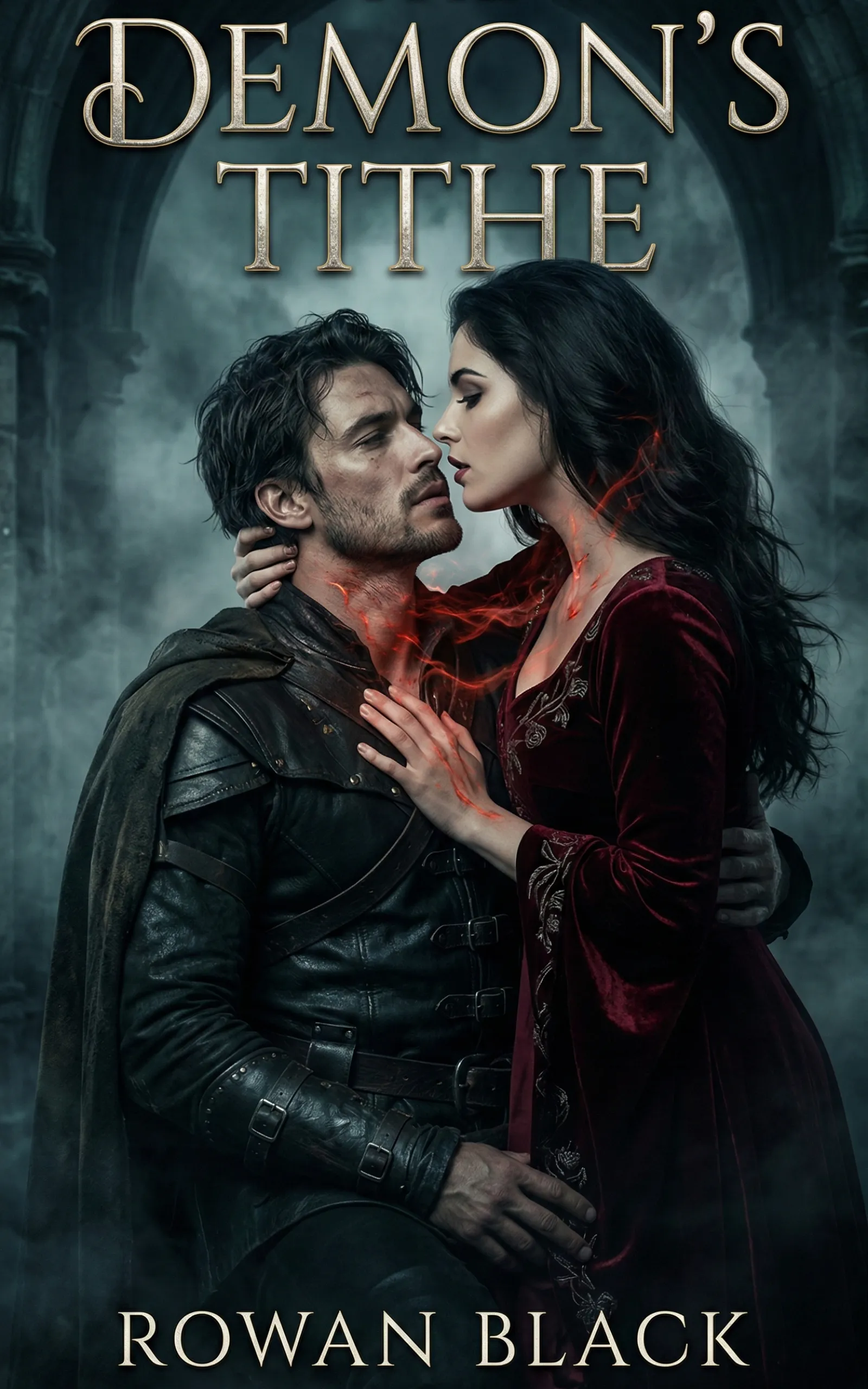
7. The Demon’s Tithe — Rowan Black (MF Demon-Blooded Monster Hunter)
The 267,000-word dark fantasy entry for Throne of Glass readers who came for Maas’s worldbuilding density and want the indie KU equivalent at the inferno heat register. Kaelen Ashward is a demon-blooded monster hunter with silver scars tracing his veins from the ritual that made him what he is — the structural cost of the architecture is on his body, the contract that pays him is the only structure his existence answers to, and he has spent a decade structurally certain that being unattached is the only way to survive what he is. Then a contract brings him to Castle Voss and Lady Seraphine — beautiful, dangerous, ancient, and structurally hungry for something only he can provide.
Where Throne of Glass runs the architectural-worldbuilding + political-faction setup through Maas’s Adarlan Empire and Wendlyn Fae-court multiverse, The Demon’s Tithe runs the architectural-worldbuilding-density through 267,000 words of four interconnected storylines spanning werewolf hunts, drowned choirs, and a blind oracle. Morally-grey-protagonist + ancient-entity dynamics, on-page power-exchange work that engages the dynamic the trad-pub Maas YA-crossover register restrains. For Throne of Glass readers who came for the architectural-worldbuilding-scale engine and want the indie KU equivalent at the heat ceiling lifted past trad-pub. Read chapter one free →
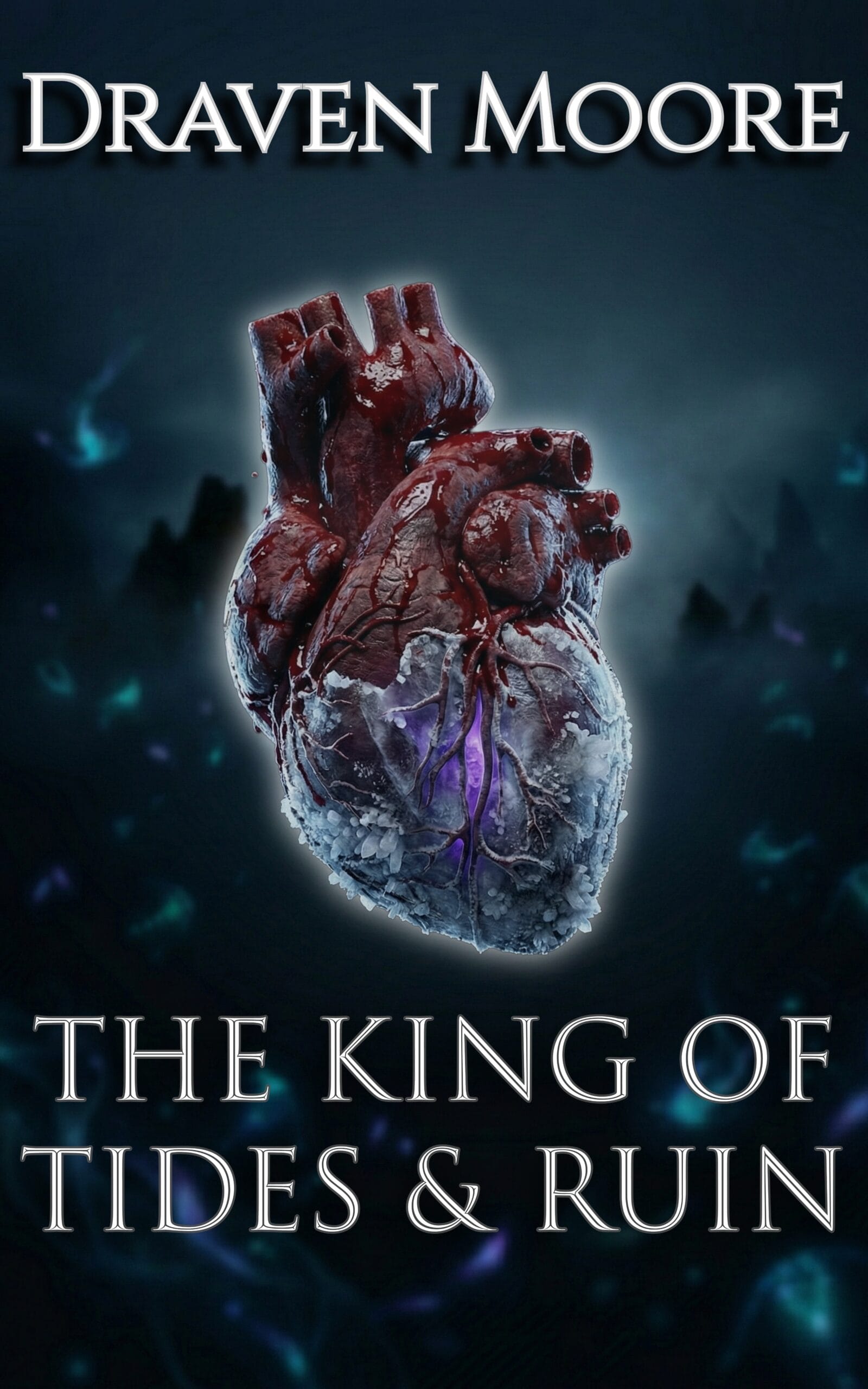
8. The King of Tides & Ruin — Draven Moore (MF Cursed King + Empire-Scale)
The cursed-king + Empire-scale entry and the recommendation for Throne of Glass readers who came for the architectural-Empire-scale + morally-grey-king setup and want the maritime-fantasy variant. Rourke Thorne was once the Empire’s most-feared witch-hunter; now he is the Salted King, a pirate captain slowly turning into a statue of living crystal. For seven years he has felt nothing — no warmth, no pain, no hope. The curse is winning. The architecture of his transformation is the architecture of his death. Then Sera Blackwood, a healer with a dangerous gift — she can cure any curse, but only by taking it into herself — is captured by the Salted King.
Where Throne of Glass runs the architectural-Empire-scale + morally-grey-king setup through the Adarlan Empire configuration, The King of Tides & Ruin runs the same architectural-Empire-scale + morally-grey-king setup through the maritime pirate-Empire + cursed-king + healer-captive configuration at the indie KU scorching register. Draven Moore writes the morally-grey-cursed-king + healer-captive dynamic with the on-page heat the trad-pub Maas YA-crossover register restrains. For Throne of Glass readers who came for the architectural-Empire-scale engine and want the maritime variant. Read chapter one free →
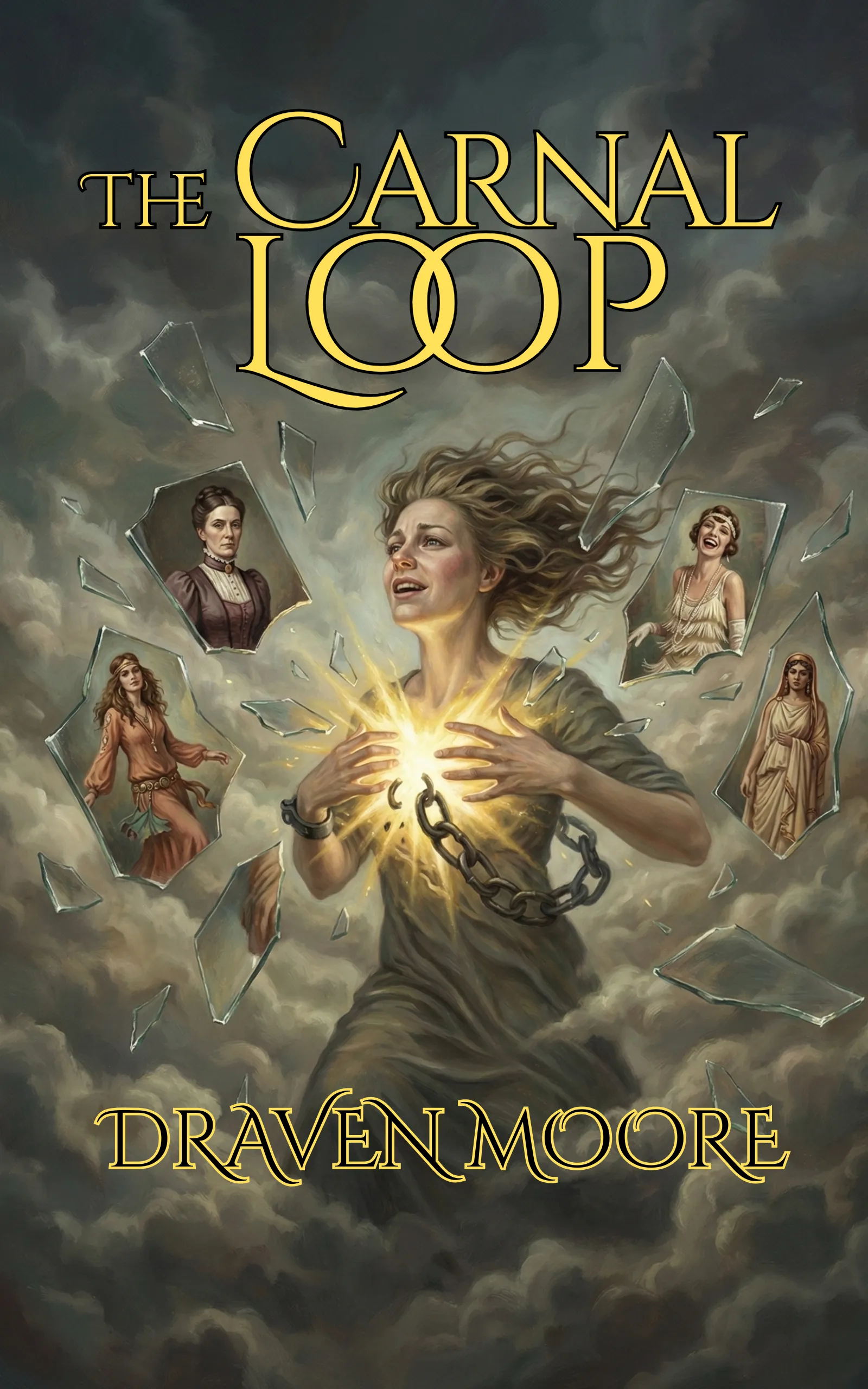
9. The Carnal Loop — Lucian Gray (MF Reincarnation Mate-Bond)
The architectural-mate-bond entry for Throne of Glass readers who came for the structurally-inevitable architectural-connection between Celaena and Rowan (and want the mate-bond variant pushed into reincarnation territory at the indie KU inferno register). Lucian has lived a thousand lives, each one ending the same way — watching the woman he loves die before they can break the curse that binds them. He remembers every touch, every kiss, every heartbreak. She remembers nothing. When Lena Chen walks into his office seeking help for her emotional numbness, he recognises her instantly. This is his last chance. The memories are returning. The curse is closing. He has one lifetime left to do what a thousand attempts have not.
Where Throne of Glass runs the architectural-mate-bond setup through Maas’s Fae-court Rowan configuration (arriving in Heir of Fire and deepening across the saga), The Carnal Loop runs the architectural-mate-bond setup through a thousand-year reincarnation curse at the indie KU inferno register. Soulmates, dominant hero, praise kink, he-falls-first across a thousand iterations. For Throne of Glass readers who came for the architectural-mate-bond engine and want the modern contemporary paranormal variant at the heat ceiling lifted past the trad-pub Maas register. Read chapter one free →
10. The Heir Apparent — Rowan Black (MF Modern Morally-Gray Empire)
The modern-urban Empire variant and the recommendation for Throne of Glass readers who came for the architectural-Empire-scale + morally-grey-succession setup and want the modern contemporary corporate variant. Norah Vane built Caleb Blackwood’s career from the ground up — ghostwrote his speeches, ran his division, kept his father’s empire from noticing his son was a liability. Then she walks into Caleb’s father’s gala and finds Caleb in a coatroom with someone who isn’t her. The father is watching the whole thing. The father is also Vance Blackwood — the patriarch she has spent two years carefully not looking at directly, the man whose attention now turns to her at exactly the moment her structural reason for tolerating Caleb has become null.
Where Throne of Glass runs the architectural-Empire + succession-politics setup through Adarlan’s royal-family configuration, The Heir Apparent runs the architectural-Empire + succession-politics setup through the modern corporate-empire + patriarch + heir configuration with the same morally-grey + structural-strategy DNA. Rowan Black writes the modern dark-billionaire architecture at the indie KU inferno register — the breeding kink, age-gap, and power-exchange dynamics the trope’s structural setup invites. For Throne of Glass readers who came for the architectural-Empire-scale engine and want the modern corporate variant. Read chapter one free →
Frequently Asked Questions
What book is most like Throne of Glass?
For trad-pub: Crown of Midnight by Sarah J. Maas is the structural sequel and the closest direct successor inside the Throne of Glass saga — same Maas voice, same Adarlan Empire architecture, the King’s Champion payoff Throne of Glass has been engineered to deliver. Outside Maas’s Throne of Glass catalog: A Court of Thorns and Roses is the closest cross-series Maas comp at the adult-mainstream register. Outside Maas’s catalog: Kingdom of the Wicked by Kerri Maniscalco is the closest cross-author witch/demon-court comp at the upper-mainstream BookTok YA-crossover register. For indie KU at the inferno register: The Hollow Hunt by Lucian Gray (MF assassin-sent-to-kill-her + morally-grey-protector) runs the closest structural comp at the heat ceiling the trad-pub Maas YA-crossover register restrains.
Is Throne of Glass on Kindle Unlimited?
Sarah J. Maas’s catalog (Throne of Glass saga, ACOTAR, Crescent City) is generally NOT on Kindle Unlimited — these are trad-pub Bloomsbury releases at standard pricing. Kerri Maniscalco’s Kingdom of the Wicked trilogy is also generally not on KU. The five indie KU picks from Fractal Enigma above (The Hollow Hunt, The Demon’s Tithe, The King of Tides & Ruin, The Carnal Loop, The Heir Apparent) are all free with a Kindle Unlimited subscription.
What’s the right order to read the Throne of Glass series?
The Throne of Glass saga reads in publication order: The Assassin’s Blade (prequel novellas), Throne of Glass (2012), Crown of Midnight (2013), Heir of Fire (2014), Queen of Shadows (2015), Empire of Storms (2016), Tower of Dawn (2017), Kingdom of Ash (2018). Some readers prefer to read The Assassin’s Blade after Crown of Midnight for the architectural-timeline reveal impact; the Bloomsbury official reading order recommends publication order. Tower of Dawn runs structurally in parallel with Empire of Storms and can be read either concurrent-with or immediately-after Empire of Storms for the architectural-payoff.
Are there spicier books like Throne of Glass?
Maas’s Throne of Glass heat ceiling sits at YA-crossover-into-adult-mainstream — the architectural-Empire-scale is doing the structural work, the assassin-identity + political-faction setup is the engine, and the on-page heat is calibrated to the YA-crossover register the early volumes were structurally designed for (though the later volumes shift toward adult-mainstream). Readers who want the same assassin + Empire-scale + morally-grey-protagonist setup with the heat ceiling lifted past the trad-pub YA-crossover level should look indie KU. The Hollow Hunt by Lucian Gray (MF assassin-sent-to-kill-her, inferno), The Demon’s Tithe by Rowan Black (MF 267K-word dark fantasy monster-hunter, inferno), and The King of Tides & Ruin by Draven Moore (MF cursed-king + healer captive, scorching) all run the architectural-assassin + Empire-scale setup at on-page registers the trad-pub Maas shelf restrains.
Should I read Throne of Glass or ACOTAR first?
The two Maas series are structurally separate and share only the wider Maas voice + architectural-patience commitments — no shared universe until Crescent City House of Flame and Shadow starts weaving crossovers. New Maas readers can start with either depending on lane preference: ACOTAR for adult-mainstream fae-court + mate-bond architecture at the shorter series commitment (5 books), Throne of Glass for YA-crossover-into-adult assassin + Empire-scale saga at the longer commitment (8 books). Readers who came to Maas through her upper-mainstream BookTok adult catalog often start with ACOTAR; readers who came through YA fantasy often start with Throne of Glass. Both reward the catalog commitment.
Where do Throne of Glass readers go next?
For trad-pub: working through Maas’s catalog (the rest of the Throne of Glass saga, then ACOTAR and Crescent City) covers her entire Adarlan / Prythian / Midgard multiverse. Beyond Maas: Kerri Maniscalco’s Kingdom of the Wicked trilogy, Sarah A. Parker’s Moonfall series (When the Moon Hatched), Rebecca Yarros’s Empyrean series (Fourth Wing), and Jennifer L. Armentrout’s Blood and Ash series cover the adult-mainstream romantasy adjacencies. For indie KU at the inferno register: Lucian Gray‘s paranormal + assassin catalog (The Hollow Hunt, The Carnal Loop), Rowan Black‘s dark fantasy catalog (The Demon’s Tithe, The Heir Apparent), and Draven Moore‘s dark pirate romantasy (The King of Tides & Ruin) are the closest indie comps.
This post contains Amazon affiliate links. As an Amazon Associate, Fractal Enigma earns from qualifying purchases at no extra cost to you. The five Fractal Enigma titles link to their book pages on this site where you can read the first chapter free.
Looking for more assassin and dark fantasy romance recommendations? The newsletter sends new indie KU dark fantasy releases, bonus chapters, and reader-only giveaways straight to your inbox. ⚔️
The form you have selected does not exist.