
Books Like Something to Talk About — 10 Sapphic FF Workplace & Age-Gap Reads (2026)

You finished Something to Talk About in a single Saturday with the architectural certainty that Meryl Wilsner had structurally engineered a sapphic FF workplace-Hollywood romance specifically to ruin every other boss-and-assistant book for you. You spent the next week emotionally compromised by Jo Jones and Emma Kaplan — the Chinese-Jewish Hollywood showrunner whose careful professional composure has been the architectural cover for the industry-visibility she has spent an entire decade calibrating, the assistant whose five-year architectural-loyalty to Jo has been the structural foundation of her adult professional life, the red-carpet photograph the industry gossip mill has structurally engineered into a rumor neither Jo nor Emma is architecturally prepared to correct. You moved to Mistakes Were Made. You finished Cleat Cute. You worked through the entire Wilsner catalog. Now the question becomes: what fills the sapphic-FF-workplace-Hollywood-rumor-mill shaped hole in your TBR until Meryl Wilsner drops the next one?
What makes Something to Talk About land structurally isn’t the Hollywood setting. It’s the specific architecture: a heroine whose architectural-industry-visibility is the load-bearing identity element and whose careful professional composure has been the structural cover for the entire adult performance her career has structurally required, a love interest whose five-year architectural-loyalty is the structural foundation of the partnership neither of them has been prepared to name, a workplace setup where the rumor-mill industry-gossip is the architectural pressure that structurally forces both protagonists to confront what the professional-arrangement has been carrying, and Wilsner’s particular gift for letting the slow corruption of “this is a professional relationship” into “the architectural five-year architecture we have been maintaining was structurally never professional at all” land as inevitable rather than convenient. The sapphic FF workplace shelf has more titles that hit that exact architecture — some Wilsner-adjacent, some indie KU that runs the FF workplace architecture at heat ceilings the trad-pub sapphic mainstream restrains.
Ten reads below: five trad-pub Meryl Wilsner, Ashley Herring Blake, and Kelly Quindlen comps that anchor the BookTok sapphic FF workplace shelf, then five indie KU FF workplace reads from Fractal Enigma’s Aurora North catalog at the indie KU inferno register — a full FF workplace + age-gap + dark-corporate spotlight. The trad-pub picks are priced individually on Amazon; the indie picks are free with a Kindle Unlimited subscription.

What Makes a Great Something to Talk About Readalike
The structural criteria that separate “book with two women who work together” from “actually a great Something to Talk About readalike”:
- A workplace or professional-partnership architecture with structural long-standing history — not a fresh workplace romance. Jo and Emma have five years of professional partnership before the book opens. The trope only lands when the workplace-history is the architectural foundation of the entire structural setup — the load-bearing five-year architectural arrangement has to be doing real plot work.
- An age-gap or seniority-differential the industry structurally enforces — Jo is the showrunner, Emma is her assistant. The architectural-power-differential is the load-bearing structural cost of any acknowledgment. The trope only lands when the seniority-differential is genuinely doing the architectural work of making the arrangement structurally forbidden, not just providing decorative age-gap positioning.
- A public-image or industry-rumor architecture with real professional stakes — the red-carpet photograph, the industry gossip, the studio-executive suspicion. Wilsner runs the architecture through actual professional stakes for both protagonists. The trope rewards books where the architectural-public-visibility is structurally doing real plot work.
- A heroine whose career-architecture is the load-bearing identity element — Jo is a Hollywood showrunner whose entire adult life has been organised around the architectural-visibility her career structurally required. The trope rewards books where the heroine’s career-architecture is genuinely the load-bearing structural work — the relationship has to fit alongside the career, not replace it.
- Patient slow burn into earned on-page payoff — Wilsner takes the full architectural patience the five-year workplace history requires before the structural collision lands. The trope rewards architectural patience; books that rush the sapphic FF workplace timeline don’t compress the same structural weight.
Each pick below hits at least four of those five. The indie KU picks lift the on-page heat ceiling past where the trad-pub sapphic mass-market shelf calibrates.
5 Trad-Pub Books Like Something to Talk About
The BookTok sapphic FF workplace + age-gap + industry-rumor shelf, ranked by how directly the comp lands on Something to Talk About’s specific architecture. Meryl Wilsner built the sapphic FF workplace lane she defines; Ashley Herring Blake covers the sapphic FF small-town adjacency; Kelly Quindlen covers the FF YA-crossover. All five available on Amazon at standard trad-pub pricing.
1. Something to Talk About — Meryl Wilsner
The book this list is anchored on, and the BookTok sapphic FF workplace romance title that pulled an entire generation of readers into Wilsner’s Hollywood boss-and-assistant lane. Jo Jones is the Chinese-Jewish Hollywood showrunner whose careful adult-professional composure has been the architectural cover for a decade of industry-visibility calibration; Emma Kaplan is Jo’s assistant of five years, whose structural-loyalty to Jo has been the load-bearing foundation of her entire adult career. Then a red-carpet photograph the industry gossip mill has structurally engineered into a rumor neither Jo nor Emma is architecturally prepared to correct. The architectural pressure the rumor generates is the structural engine of the entire book — the careful professional partnership both of them have been maintaining cannot survive the architectural-public-visibility the industry has structurally created.
If you’ve somehow landed on this list without having read Something to Talk About yet, you’re in the rare position of having Wilsner’s foundational sapphic FF workplace romance still in front of you. Read this first; the rest of the list waits. The architectural payoff lives in the second-half industry-visibility cascade — Wilsner takes the full patience the five-year workplace architecture has structurally earned. Get Something to Talk About on Amazon →
2. Mistakes Were Made — Meryl Wilsner
Wilsner’s structural-pivot-into-darker FF entry and the catalog continuation that runs the architectural-age-gap setup through a different specific configuration. Cassie Klein is the college senior whose architectural-family-collapse has been the structural foundation of an adult composure her mother’s parenting failure has structurally trained her to maintain. Erin is the woman she meets in the hotel bar during her college’s parents’ weekend — the woman she structurally does not know is her college roommate’s mother until the family brunch the next morning. The architectural-impossibility of the situation is the load-bearing structural pressure the entire book compresses into.
Where Something to Talk About runs the architectural-workplace-age-gap setup through Jo and Emma’s Hollywood partnership, Mistakes Were Made runs the architectural-age-gap + mother’s-friend + structural-impossibility setup through Cassie and Erin’s dark FF configuration. Same Wilsner voice, structural pivot into darker FF territory the sapphic BookTok mainstream had been asking from the catalog. For Something to Talk About readers who came for Wilsner’s architectural-age-gap engine and want the dark variant. Get Mistakes Were Made on Amazon →
3. Cleat Cute — Meryl Wilsner
Wilsner’s sapphic FF sports entry and the catalog entry that runs the architectural-workplace setup through professional women’s soccer. Grace Henderson is the veteran USWNT midfielder whose architectural-career has been organised around being the reliable-veteran the roster has structurally counted on for a decade. Phoebe Matthews is the twenty-two-year-old rookie whose architectural-transfer to Grace’s club has structurally placed the veteran-and-rookie configuration in the same daily training environment. The architectural-workplace-partnership between Grace and Phoebe compresses both of them into a training-schedule neither was structurally prepared to navigate.
Where Something to Talk About runs the architectural-workplace + age-gap setup through the Hollywood configuration, Cleat Cute runs the same architectural-workplace + age-gap setup through the USWNT + veteran/rookie configuration. Same Wilsner voice, same upper-mainstream BookTok sapphic FF register, the architectural-patience the catalog rewards in a professional-sports variant. Get Cleat Cute on Amazon →
4. Delilah Green Doesn’t Care — Ashley Herring Blake
The cross-author sapphic FF small-town entry and the closest direct comp to Something to Talk About’s specific architectural-professional-composure + adult FF architecture in a distinct small-town configuration. Delilah Green is the architecturally-cynical photographer whose entire adult-professional-life has been organised around not going back to the Vermont small town she grew up in; her stepsister’s wedding architecturally requires her return for a two-week event she is structurally not prepared to survive. Claire Sutherland is the single-mother bookshop-owner whose architectural-family-network is the structural foundation of the entire wedding-party circle Delilah is now structurally required to navigate.
Where Something to Talk About runs the architectural-sapphic-FF-professional-composure setup through Hollywood + workplace configuration, Delilah Green Doesn’t Care runs the architectural-sapphic-FF-adult-composure setup through the Vermont-small-town + wedding-week configuration. Same upper-mainstream BookTok sapphic FF register, the architectural-adult-work the catalog rewards in a small-town variant. Blake’s catalog continues into Astrid Parker Doesn’t Fail and Iris Kelly Doesn’t Date for readers who want the Bright Falls trilogy commitment. Get Delilah Green Doesn’t Care on Amazon →
5. She Drives Me Crazy — Kelly Quindlen
The cross-author sapphic FF YA-crossover entry and the closest direct comp to Something to Talk About’s specific architectural-rival-partnership + workplace-adjacent setup in a distinct YA configuration. Scottie Zajac is the high school basketball player whose architectural-recent-breakup with her best friend’s-girlfriend has just structurally landed her in a car accident with Irene Abraham — the architecturally-cold cheer captain who is Scottie’s fake-dating candidate for the plan she is structurally about to execute. The fake-dating arrangement is the structural cover that compresses both of them into a careful daily performance neither was prepared to sustain across the entire semester.
Where Something to Talk About runs the architectural-rumor-mill + workplace setup at adult Hollywood register, She Drives Me Crazy runs the architectural-rumor-mill + fake-dating setup at YA-crossover register. Same architectural-public-image + private-truth dynamic, YA-appropriate on-page heat, the sapphic FF architectural work the catalog delivers at the YA-crossover level. For Something to Talk About readers who came for the architectural-rumor-mill engine and want the YA variant. Get She Drives Me Crazy on Amazon →

Where Indie KU Lifts the Sapphic FF Workplace Heat Ceiling
The trad-pub Meryl Wilsner + Ashley Herring Blake + Kelly Quindlen catalog above is calibrated to the BookTok upper-mainstream sapphic FF workplace register. Wilsner runs the architectural-Hollywood-workplace setup carefully — the five-year professional-partnership is the load-bearing work, the industry-rumor + age-gap configuration is the engine, and the on-page heat is calibrated to let the architectural patience lead. Blake and Quindlen calibrate the same way across their respective specific configurations. The dynamics are real, the FF workplace architecture is intact, the door closes deliberately at the structural pivot points the trad-pub mass-market sapphic FF shelf has been calibrated for.
The indie Kindle Unlimited sapphic FF workplace shelf doesn’t have those constraints. The architectural-workplace + age-gap setup stays load-bearing, the structural-professional-partnership stays intact, but the on-page work engages the heat the architectural setup has earned. The workplace + boss/assistant + forbidden professional-ethics configuration where the architectural-authority-imbalance is the structural pressure. The wedding-week + wedding-party FF configuration where the family-network is the load-bearing architectural pressure. The dark-sapphic + power-exchange architecture where the professional-composure has been the structural cover for what neither protagonist has been prepared to name. The FF apartment-building-neighbors + financial-pressure architecture where the class-adjacency is the structural context. The FF dark-corporate cybersecurity architecture where the professional-morally-gray positioning is the load-bearing dark work.
Five indie KU FF workplace reads below, all from Aurora North‘s dedicated FF sapphic catalog, hitting the workplace-boss/assistant, wedding, dark-power-exchange, apartment-building-neighbors, and dark-corporate cybersecurity architecture at the indie KU inferno register. All five free with Kindle Unlimited; the individual book page for each title lists current retailers and content warnings.
5 Indie KU Sapphic FF Workplace Reads from Fractal Enigma
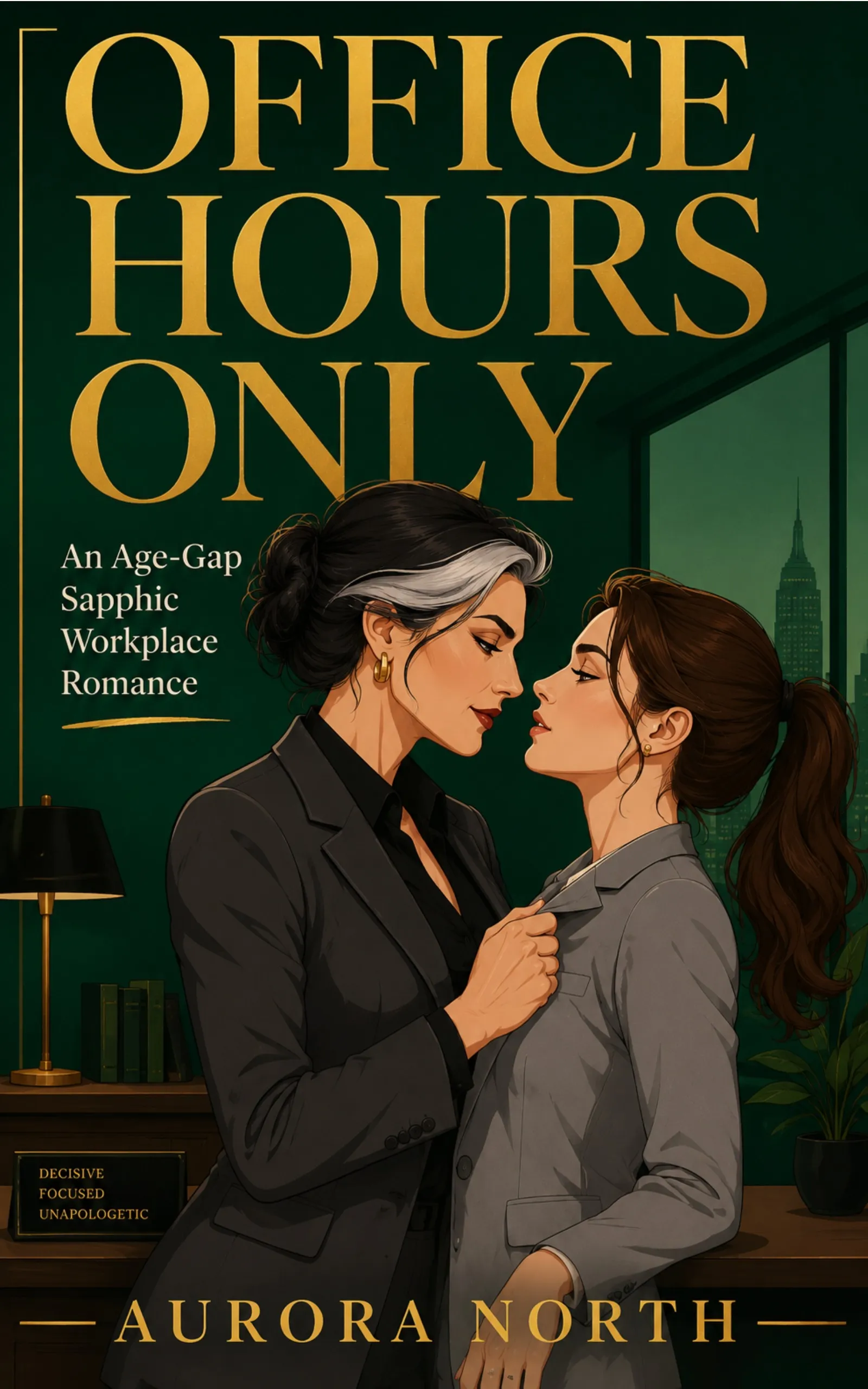
6. Office Hours Only — Aurora North (FF Workplace Age-Gap Boss/Assistant)
The closest direct comp to Something to Talk About’s specific architectural-workplace-age-gap + boss/assistant setup on this list. She is the corporate executive whose careful adult composure has been the architectural cover for an entire professional-image the company has been structurally trained to expect. Her assistant is the woman whose two-year architectural-loyalty has been the structural foundation of the executive’s day — the woman whose late-night after-hours presence in the office has become the structural cover for an architectural-attention neither of them is prepared to acknowledge. The architectural-forbidden-workplace + age-gap + professional-ethics compression is the load-bearing pressure the entire book compresses into.
Where Something to Talk About runs the architectural-workplace-age-gap + boss/assistant setup through Jo and Emma’s Hollywood configuration, Office Hours Only runs the same architectural-workplace-age-gap setup through the corporate-executive + assistant configuration at the indie KU inferno register. Aurora North writes the FF workplace + age-gap + forbidden professional-ethics dynamic with the on-page heat the trad-pub Wilsner mainstream restrains. For Something to Talk About readers who came for the architectural-workplace-age-gap engine and want the corporate variant. Read chapter one free →
7. Bridesmaid Not Sorry — Aurora North (FF Wedding-Week Family-Network)
The FF wedding-week entry and the closest direct comp to Something to Talk About’s specific architectural-public-image + family-network dynamic on this list. She is the bridesmaid whose architectural-loyalty to her best friend has structurally placed her in the wedding-party for the wedding-week she was structurally not prepared to survive. The other bridesmaid is the woman whose architectural-fresh-out-of-relationship positioning arrives at the wedding-week with the careful adult composure the family-network structurally demands of every guest. The architectural-wedding-week + family-network + forbidden-attraction compression is the load-bearing pressure that compresses every rehearsal-dinner architecture.
Where Something to Talk About runs the architectural-public-image + industry-network setup through Jo and Emma’s Hollywood configuration, Bridesmaid Not Sorry runs the same architectural-public-image + family-network setup through the wedding-week + bridesmaid + family-pressure configuration at the indie KU inferno register. Aurora North writes the FF wedding + family-network + slow-burn dynamic with the on-page heat the trad-pub Wilsner mainstream restrains. For Something to Talk About readers who came for the architectural-public-image engine and want the wedding variant. Read chapter one free →
8. Hers to Break — Aurora North (FF Dark Power-Exchange)
The dark-sapphic + power-exchange entry and the recommendation for Something to Talk About readers who came for the architectural-professional-composure + adult FF architecture and want the dark power-exchange variant. She is the heiress whose careful adult composure has been organised around the architectural certainty that she is structurally untouchable. She is also the woman whose attention has just been turned on her by the one person in the room whose careful sapphic-dominant architecture is the precise pressure required to crack the heiress’s composure. The structural engine of the book is the gap between the heiress’s careful Manhattan-elite composure and the woman whose architectural-patience requires her to confront the question of whether the untouchability she has been performing is the only available shape of her life.
Where Something to Talk About runs the architectural-adult-professional-composure setup through Jo’s Hollywood configuration, Hers to Break runs the same architectural-adult-professional-composure setup through Manhattan-elite + dominant-sapphic + power-exchange configuration at the indie KU inferno register. Aurora North writes the FF dark + power-exchange + BDSM dynamic with the on-page work the trad-pub Wilsner mainstream restrains. For Something to Talk About readers who came for the architectural-adult-composure engine and want the dark power-exchange variant. Read chapter one free →
9. Insufficient Funds — Aurora North (FF Apartment-Building Money-Stress)
The FF money-stress + apartment-building-neighbors entry and the recommendation for Something to Talk About readers who came for the architectural-adult-professional-composure + financial-pressure dynamic and want the urban FF variant. She is the woman whose careful financial architecture has just structurally cracked in a way that requires her to look at her bank account every morning and reconsider the math. Her neighbor is the woman whose apartment is structurally next door, whose careful professional composure has been the architectural fact of the entire building’s hallway-encounter network, and whose attention to her arrives at exactly the moment the financial pressure is forcing her to confront how lonely the careful adult composure she has been performing has structurally been.
Where Something to Talk About runs the architectural-professional-composure + industry-adjacency setup through Jo and Emma’s Hollywood configuration, Insufficient Funds runs the same architectural-professional-composure + urban-adjacency setup through the FF sapphic + apartment-building-neighbors + money-stress configuration at the indie KU inferno register. Aurora North writes the FF + financial-architecture + slow-burn dynamic with the on-page work the trad-pub Wilsner mainstream restrains. For Something to Talk About readers who came for the architectural-adult-composure engine and want the urban money-stress variant. Read chapter one free →
10. Zero Day — Aurora North (FF Dark-Corporate Cybersecurity)
The FF dark-corporate cybersecurity entry and the recommendation for Something to Talk About readers who came for the architectural-professional-rivalry + dark-corporate-power-imbalance setup and want the FF sapphic dark variant. She is the freelance hacker whose architectural-anonymity has been the structural cover for an entire career of corporate-security exploits the Fortune 500 community has spent five years carefully not connecting to a single person. The chief security officer is the woman whose attention to the exploits has been the structural cover for an architectural-fascination that has been building across the entire timeline of those exploits — and the architectural moment the hacker arrives in person to negotiate a contract is the structural pressure cooker neither of them was prepared to enter.
Where Something to Talk About runs the architectural-workplace + industry-visibility setup through the upper-mainstream Hollywood configuration, Zero Day runs the same architectural-professional-rivalry setup through FF dark-corporate + cybersecurity + morally-gray-heroine configuration at the indie KU inferno register. Aurora North writes the FF dark + cybersecurity dynamic with the on-page work the trad-pub sapphic mainstream restrains. For Something to Talk About readers who came for the architectural-professional-rivalry engine and want the FF dark-corporate variant. Read chapter one free →
Frequently Asked Questions
What book is most like Something to Talk About?
For trad-pub: Mistakes Were Made by Meryl Wilsner is the structural pivot inside Wilsner’s catalog into darker FF age-gap territory, and Cleat Cute is the sports-workplace continuation. Outside Wilsner’s catalog: Delilah Green Doesn’t Care by Ashley Herring Blake is the closest cross-author sapphic FF adult comp at the upper-mainstream BookTok register. For indie KU at the inferno register: Office Hours Only by Aurora North (FF workplace age-gap boss/assistant + forbidden professional-ethics) runs the closest structural comp at the heat ceiling the trad-pub Wilsner register restrains.
Is Something to Talk About on Kindle Unlimited?
Meryl Wilsner’s catalog (Something to Talk About, Mistakes Were Made, Cleat Cute) is generally NOT on Kindle Unlimited — these are trad-pub Berkley / St. Martin’s releases at standard pricing. Ashley Herring Blake’s Bright Falls trilogy and Kelly Quindlen’s catalog are also generally not on KU. The five indie KU picks from Fractal Enigma above (Office Hours Only, Bridesmaid Not Sorry, Hers to Break, Insufficient Funds, Zero Day) are all free with a Kindle Unlimited subscription.
What’s the right order to read Meryl Wilsner?
Wilsner’s catalog consists of standalones — no series prerequisites. Reading order chronological: Something to Talk About (2020), Mistakes Were Made (2022), Cleat Cute (2023). Each book is structurally complete on its own; the pairings rotate across workplace-Hollywood (Something to Talk About), dark-age-gap (Mistakes Were Made), and sports (Cleat Cute). New readers should start with Something to Talk About as the foundational text that established Wilsner’s voice; readers who love it tend to commit to the catalog.
Are there spicier sapphic FF workplace books like Something to Talk About?
Wilsner’s heat ceiling sits at upper-mainstream BookTok — the architectural-workplace-history is doing the structural work, the age-gap + rumor-mill configuration is the engine, and the on-page heat is calibrated to let the architectural patience lead. Readers who want the same FF workplace + age-gap + forbidden setup with the heat ceiling lifted past the trad-pub mass-market level should look indie KU. Office Hours Only by Aurora North (FF workplace age-gap boss/assistant, inferno), Hers to Break by Aurora North (FF dark power-exchange, inferno), and Zero Day by Aurora North (FF dark-corporate cybersecurity, inferno) all run the architectural-FF-workplace setup at on-page registers the trad-pub Wilsner shelf restrains.
Something to Talk About or Mistakes Were Made — which Wilsner should I read first?
Structurally, Something to Talk About is the more familiar upper-mainstream sapphic FF workplace register; Mistakes Were Made is the darker structural-impossibility age-gap configuration. New Wilsner readers can start with either depending on lane preference: Something to Talk About for the workplace-Hollywood + industry-rumor architecture, Mistakes Were Made for the dark-age-gap + mother’s-friend architecture. Readers who came to Wilsner through her workplace-focused sapphic FF catalog often find Something to Talk About the more approachable entry; readers who came through darker FF often find Mistakes Were Made the more compelling commitment. The catalog overlap is in voice and architectural patience, not plot or characters.
Where do Meryl Wilsner readers go next?
For trad-pub: working through Wilsner’s catalog (Mistakes Were Made, Cleat Cute) plus Ashley Herring Blake’s Bright Falls trilogy (Delilah Green Doesn’t Care, Astrid Parker Doesn’t Fail, Iris Kelly Doesn’t Date), Kelly Quindlen’s catalog (She Drives Me Crazy, Late to the Party), and Casey McQuiston’s sapphic FF catalog (One Last Stop) covers the upper-mainstream sapphic FF lane. Beyond that: Alison Cochrun’s The Charm Offensive and Kiss Her Once for Me for the workplace-adjacent adjacencies. For indie KU at the inferno register: Aurora North‘s FF sapphic catalog (Office Hours Only, Bridesmaid Not Sorry, Hers to Break, Insufficient Funds, Zero Day, plus Her Best Friend’s Wedding, Her Plus-One Problem, Stormed In Turned On, Power Play, Her Name on My Lease) is the closest indie FF commitment available across the workplace, wedding, dark-power-exchange, and cybersecurity architecture.
This post contains Amazon affiliate links. As an Amazon Associate, Fractal Enigma earns from qualifying purchases at no extra cost to you. The five Fractal Enigma titles link to their book pages on this site where you can read the first chapter free.
Looking for more sapphic FF workplace recommendations? The newsletter sends new indie KU sapphic releases, bonus chapters, and reader-only giveaways straight to your inbox. 💋
The form you have selected does not exist.