

Best Spicy Sapphic Slow Burn Romance Books 2026 — FF Romance That Earns the Burn
Slow burn is the trope sapphic romance was made for. The recognition that takes a hundred pages to land. The first accidental brush of fingers that neither woman acknowledges. The decade of careful avoidance suddenly compressing into a single shared elevator. The ice queen whose composure starts cracking on chapter eleven and is fully gone by chapter eighteen, in private, where only one person gets to see it. The sapphic slow burn doesn’t waste its architecture — it builds, and builds, and then it scorches.
The reason readers keep searching for “spicy sapphic slow burn” is that the gateway titles — the trad-pub mainstream that gave the subgenre its first wave of visibility — almost universally fade past the door. The build is gorgeous. The kiss is earned. And then the chapter ends, the next chapter starts the morning after, and the reader is left holding a book that worked for three hundred pages and then politely declined to cash the check.
The indie Kindle Unlimited shelf is where that check is currently being cashed. Below: six trad-pub gateway comps that earned the subgenre its slow-burn reputation, plus seven indie KU titles where the slow burn actually combusts. Ice queens, age gaps, second chances, sapphic CEOs and the women who walk into their offices and refuse to be intimidated. All featured below run Inferno-tier on-page heat. All free with Kindle Unlimited.

Cleat Cute — Meryl Wilsner

The mainstream gateway. Grace Henderson is the legendary captain of the U.S. women’s national soccer team — thirty-two, decorated, the face of the program for a decade. Phoebe Matthews is the rookie phenom called up to replace Grace’s longtime partner on the wing, six years younger and already being called the future of American soccer. They share a hotel room. They share a press tour. They have, by the third game, shared considerably more than that, and now Grace has to figure out how to play the most important season of her career while pretending she isn’t quietly losing her mind every time Phoebe scores a goal.
Wilsner does the sapphic-sports slow-burn architecture with the precision the trope rewards. The professional context is real — Grace’s captain duties, Phoebe’s rookie pressure, the locker room politics of replacing a fan-favorite veteran — and the romance grows out of the work rather than around it. The age gap is small but structurally meaningful. The forced-proximity tournament travel does its job. And the slow recognition that what started as a hookup has rearranged Grace’s entire emotional landscape is paced with the patience the architecture demands.
Heat ceiling is moderate-to-high — Wilsner doesn’t fade, but the on-page work stays inside trad-pub bounds. For readers crossing into sapphic from MF or MM, this is the entry that explains why the subgenre is currently the strongest place in romance for slow-burn architecture.
Something to Talk About — Meryl Wilsner
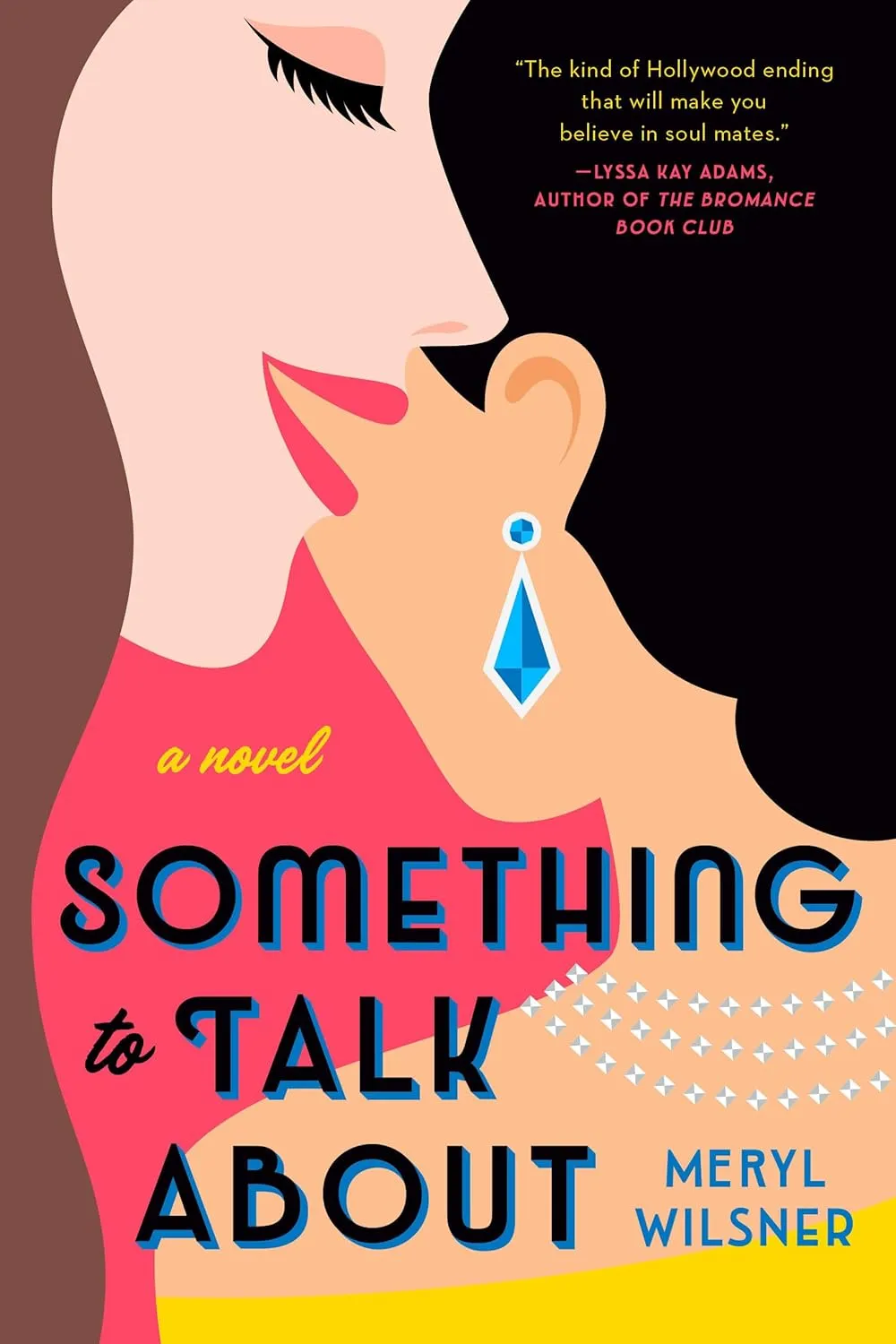
The Hollywood-power-imbalance variant. Jo Jones is a wildly successful television showrunner and producer with a closely guarded private life. Emma Kaplan is her assistant, brilliant and underestimated and quietly in love with the woman she works for. A red-carpet photograph gets misinterpreted by the tabloid press, the rumor mill activates, and the carefully maintained professional distance between the two women starts collapsing under the weight of the attention.
Wilsner writes the boss/assistant slow burn with the structural rigor it deserves — Jo’s interiority is the masterclass, the careful management of her closeted-Hollywood life crashing into the recognition that the woman who makes her coffee is the only person who has ever seen her clearly. The age gap, the power imbalance, the public scrutiny — all real, all earning their place in the architecture. And the slow erosion of the boundaries Jo has spent fifteen years maintaining is the entire engine of the back half.
Heat ceiling is mainstream — closed-door, mostly — but the slow-burn craft is the point. For readers who want the gateway-tier sapphic boss/employee architecture before exploring the indie KU shelf where the same trope finally pays off explicitly, this is the entry.
Get Something to Talk About on Amazon →

She Drives Me Crazy — Kelly Quindlen

The high-school enemies-to-slow-burn variant. Scottie Zajac is having the worst week of her life. She lost the basketball game. She broke up with her ex-girlfriend. And then, on the way home, she rear-ended Irene Abraham — the captain of the cheerleading squad, the most obnoxious girl in school, the human being Scottie has spent every day of her senior year actively despising. Now they have to share a car to school every morning until the insurance sorts itself out, and the proximity is exposing a problem neither of them is ready to label.
Quindlen does YA-tier sapphic slow burn at the highest level — the carpool-forced-proximity device is structurally perfect, the rivalry is specific and earned, and the slow corruption of Scottie’s certainty that she hates Irene is paced with extraordinary care. She Drives Me Crazy is the gateway many sapphic readers cite first, and the architectural reason is precise: it does the slow burn the genre is famous for in a setting tight enough that every concession registers as seismic.
Heat ceiling is YA-clean — no on-page work — but the emotional payoff is the masterclass. For readers who want to understand why slow-burn sapphic became the subgenre’s signature register, this is the book that explains it.
Get She Drives Me Crazy on Amazon →
The X Ingredient — Roslyn Sinclair
The boss/assistant masterpiece. Diana Parker is a ruthless Atlanta lawyer in her late forties — controlled, untouchable, the woman whose name junior associates whisper before depositions. Cassie Pemberton is the brilliant young assistant who has been quietly running Diana’s life for the better part of a year, watching the woman she works for and trying very hard not to want her. The X Ingredient is what happens when professional restraint finally collides with the slow accumulation of a year of mutual recognition.
Sinclair writes the age-gap sapphic slow burn at the structural extreme. Diana’s interiority is precise — late-forties, divorced, the kind of professional brilliance that has cost her everything except her career. Cassie’s competence is the load-bearing thing the entire dynamic rides on. And the eventual collapse of the boss/employee composure into something neither woman is going to be able to walk away from is paced with the patience and craft the architecture demands.
Heat is high — Sinclair opens the door and stays inside it — and the on-page work is some of the best sapphic age-gap writing currently in print. For readers who want the gateway sapphic boss/assistant book that crosses fully into explicit territory, this is the title.
Get The X Ingredient on Amazon →

Delilah Green Doesn’t Care — Ashley Herring Blake
The small-town sapphic slow-burn romcom. Delilah Green has spent the last decade running away from her hometown of Bright Falls, Oregon, and the stepfamily she never asked for. When her stepsister’s wedding pulls her back for two weeks of forced reunion, the last person she expects to run into is Claire Sutherland — her stepsister’s best friend, single mom of an eleven-year-old, owner of the local bookstore, and the only woman in Bright Falls who has never been impressed by Delilah’s whole deal. The two-week timeline is the device. The accumulated history neither of them is ready to name is the engine.
Blake does small-town sapphic slow burn with the texture the trope demands — Bright Falls feels lived-in, the bookstore is real, the eleven-year-old daughter is treated as a character rather than a plot device. And the slow recognition that Delilah’s careful “I don’t care” is in fact a load-bearing emotional defense Claire is fully prepared to dismantle is paced with the patience the genre rewards. The trilogy continues with Astrid and Iris, the other two leads of the Bright Falls books, but Delilah Green is the entry.
Heat is moderate — open door, mainstream-romance register. For readers who want the romcom-tier sapphic slow burn before the indie KU heat ceiling, this is the gateway.
Get Delilah Green Doesn’t Care on Amazon →
One Last Stop — Casey McQuiston
The time-displacement slow-burn variant. August moves to New York at twenty-three because she has nowhere else to go and is convinced she doesn’t believe in love. Then she meets Jane on the Q train — leather jacket, perfect smile, exactly the kind of woman August would fall for if August fell for anyone. And then it turns out Jane has been displaced from 1977 and is stuck on the subway, riding back and forth, and August is the only person who can help her figure out how to go home.
McQuiston does the sapphic slow burn with a structural device almost no one else has tried — the romance is impossible by definition, which means every shared subway car has weight, every accidentally-too-long eye contact is a concession against a future that may not exist. The found-family architecture (August’s apartment is full of queer chosen family treating her like the protagonist of her own life) is the slow-burn engine the impossible-romance plot rides on.
Heat is moderate — open door, mainstream-romance pacing. The structural ambition is the masterclass. For readers who want the sapphic slow burn that takes the genre’s signature pacing and applies it to a premise nobody else would have tried, this is the book.

Indie KU Sapphic Slow Burn — Where the Build Actually Combusts
Here’s the gap the trad-pub gateway titles cannot fill. Wilsner, Quindlen, Blake, McQuiston, Sinclair — all of them build the sapphic slow-burn architecture with extraordinary craft. The interiority is precise. The proximity devices are structurally rigorous. The tension is real. And then the heat ceiling caps out at “open door, mainstream-romance pacing” — which is exactly what some readers want, and exactly what other readers came to the genre to escape.
The indie KU sapphic shelf is currently doing the most ambitious slow-burn work in romance, full stop. Aurora North is the catalog operating at the structural extreme — every book runs Inferno-tier on-page heat, every book is built on a slow-burn architecture that earns the combustion when it finally arrives. Ice queens. Age gaps. Class differences. Boss/assistant. Garden tenders. Salon owners. Fortune 500 CEOs. The seven titles below are the indie KU sapphic slow burns the gateway titles built the audience for and the indie shelf finally delivers without flinching. All free with Kindle Unlimited.

Tending Her Garden — Aurora North (F/F Age Gap, Inferno Heat)
Elena Rostova is one of Montecito’s most powerful venture capitalists and has spent seven years behind walls of her own making — ever since the woman she trusted destroyed everything. Her composure is flawless, her brand is ice, and the only person she has spoken more than three sentences to in three years is the woman she pays to take care of her property. Then her landscape designer brings on a new gardener for the eight-week summer overhaul. And the new gardener doesn’t seem to notice the walls.
Tending Her Garden is the sapphic age-gap slow burn at the structural extreme. Aurora North does the architecture with the patience the trope demands — Elena’s interiority is the masterclass, the careful management of her ice-queen exterior cracking under the weight of a woman who simply will not look away. The class difference, the eight-week structural timeline, the slow recognition that the gardener has been seeing Elena clearly the entire time — every architectural lever the trope rewards.
Inferno-tier on-page heat. Praise kink. Competence kink. Power exchange. Touch starved. Forced proximity. Read Tending Her Garden free on KU →

The Gatekeepers — Aurora North (F/F Enemies to Lovers, Inferno Heat)
Victoria Chen is the Director of the Downtown Business Association — controlled, untouchable, the woman who decides which businesses get approved and which get rejected. She hasn’t let anyone past her defenses in three years. Then a scrappy bakery owner shows up at her office every Wednesday morning to fight for her permit, and Victoria’s carefully maintained ice-queen composure starts cracking against the warmth she has been telling herself she doesn’t need.
The Gatekeepers is the enemies-to-lovers sapphic slow burn that does the trope’s full architecture. Aurora North writes the bureaucratic-power-dynamic version of the trope with extraordinary precision — Victoria’s gatekeeping role is structurally perfect, the weekly Wednesday confrontations build at the pace the architecture demands, and the slow corruption of the rivalry into the secret relationship neither of them is ready to name produces a back half that lands hard.
Inferno-tier. Ice queen / sunshine. Secret relationship. Competence kink. Found family. Read The Gatekeepers free on KU →


Cold Snap — Aurora North (F/F Boss/Employee, Inferno Heat)
Elena Voss is the CEO they call the Ice Queen. Forty-one. Divorced. Worth three billion dollars and incapable of a genuine smile. She hasn’t let anyone past the glass desk in fifteen years. Her executive assistant is twenty-eight, brilliant, and has been quietly running Elena’s life for the better part of two years. Then a snowstorm strands them in Elena’s mountain cabin for four days. There is one bed. The first time Elena cracks is the moment the slow burn becomes a slow combustion.
Cold Snap is the sapphic boss/employee slow-burn book Wilsner and Sinclair fans ask for and the indie KU shelf delivers without fading past the door. Aurora North does the snowed-in-with-one-bed device with the structural patience the architecture demands — Elena’s ice-queen interiority is the load-bearing element, and the four-day cabin compression is the engine that finally breaks her composure. The age gap, the power dynamic, the secret-relationship constraint — all earned, all on-page.
Inferno-tier. Snowed in. One bed. Praise kink. Power exchange. Read Cold Snap free on KU →

The Fake Lesson — Aurora North (F/F Fake Dating, Inferno Heat)
Adeline Fox is thirty-four, a Fortune 500 CEO, and the woman the financial press calls the Ice Queen. She hasn’t cried in seventeen years. She hasn’t drawn since she was seventeen. She flinches when people touch her — an involuntary recoil she has spent two decades disguising. She hires a sex-positive intimacy coach to teach her how to fake it convincingly enough to satisfy a board demanding she present a stable personal life. The fake lessons were not supposed to feel real.
The Fake Lesson is the sapphic-fake-dating slow burn at the highest tier. Aurora North layers the touch-starved architecture under the fake-relationship premise with extraordinary precision — Adeline’s seventeen-year flinch is the load-bearing emotional element, and the slow corruption of the lessons from “performance training” into the only real thing in either woman’s life is paced with the patience the trope demands. The class difference, the trauma backstory, the slow recognition that the intimacy coach has been seeing Adeline more clearly than anyone has in two decades — all earned.
Inferno-tier. Touch starved. Trauma recovery. Praise kink. Power exchange. Read The Fake Lesson free on KU →


Insufficient Funds — Aurora North (F/F Age Gap, Inferno Heat)
Elena Vance is forty-two, married to a man worth twelve million dollars, and has never had an orgasm she didn’t perform. She lives in four thousand square feet of beige, kisses her husband’s cheek at six-thirty every morning, and drives a white Range Rover she never wanted. Then her credit card declines at a coffee shop, and the twenty-four-year-old barista on the other side of the counter looks at her like she sees the whole performance, and Elena’s carefully constructed life starts coming apart one careful concession at a time.
Insufficient Funds is the bi-awakening sapphic slow burn that does the architecture at full structural force. Aurora North writes the age-gap-with-class-difference variant with the precision the trope demands — Elena’s twenty years of performance, the barista’s quiet seeing-through, the slow accumulation of small concessions that build into a relationship neither of them is going to be able to walk away from. The infidelity arc is handled with the moral seriousness the architecture requires.
Inferno-tier. Bi awakening. Sugar mama. Forbidden. Class difference. Praise kink. Read Insufficient Funds free on KU →

Scissors Sisters — Aurora North (F/F Rivals to Lovers, Inferno Heat)
Sloane Kensington runs the Gilded Lily — Garnet Falls’s most prestigious salon. Every surface gleams. Every appointment runs on time. Every strand of hair obeys. She hasn’t let anyone past her defenses in thirteen years, and she’s not about to start now. Jax Mercer is the rebel hairstylist who left town at eighteen and has now come back to open a competing salon directly across the street, and the entire small town is watching to see whether the rivalry is going to be the death of one of them or the start of something neither of them is ready to call by its name.
Scissors Sisters is the small-town sapphic rivals-to-lovers slow burn at the structural extreme. Aurora North does the second-chance-thirteen-years-later variant with the precision the trope demands — the salon-rivalry framework is the device, the small-town watching is the structural enforcer, and the slow recognition that thirteen years of avoidance was always going to collapse into this is paced with the patience the architecture requires.
Inferno-tier. Second chance. Small town. Ice queen. Forced proximity. Read Scissors Sisters free on KU →


The Summer of Yes — Aurora North (F/F Bi Awakening, Inferno Heat)
Elara Vance is twenty-six, freshly out of a marriage she entered because she didn’t yet know she had options, and on her way to Provincetown for a summer that has one rule written in a leather notebook on the passenger seat: say yes. The woman who picks her up at the ferry has been waiting for this summer since Elara was nineteen. The “Summer of Yes” was not supposed to include the friend who has been quietly in love with her for seven years. The slow recognition that the trip Elara took to figure out what she wanted has been building toward this person the whole time is the entire architecture of the back half.
The Summer of Yes is the friends-to-lovers bi-awakening sapphic slow burn at full force. Aurora North writes the seven-year-mutual-pining variant with the patience the trope demands — Elara’s careful navigation of her newly-out life, her friend’s seven years of quiet waiting, and the eventual collapse of the friendship into the relationship neither of them is going to be able to call platonic. The Provincetown setting is the device. The accumulated history is the engine.
Inferno-tier. Bi awakening. Mutual pining. She falls first. Coming out arc. Throuple elements. Read The Summer of Yes →

Why Sapphic Slow Burn Hits Different
The trope persists in sapphic harder than in any other configuration of the genre because the architecture matches the lived emotional reality the genre has historically been quiet about.
MM contemporary slow burn is built around two men recognizing each other against the resistance of a world that has trained both of them to look away. MF slow burn is built around the friction of attraction that the gendered scripts of the genre have given a thousand romcom devices to compress. Sapphic slow burn does something neither of those does: it slows down the recognition itself. The question of whether the want is reciprocal, whether the friend is also looking, whether the boss has noticed, whether the rival is just a rival — these questions can take entire books to answer in sapphic, and the answer when it lands carries the weight of every chapter the reader has been holding their breath through.
That’s why the bi-awakening arc is structurally native to the subgenre. The question of “is this romantic or is this just intense friendship” is not a contrived obstacle in sapphic slow burn — it is the architectural reality the trope rides on, and the eventual recognition that the friendship was always something else is the trope’s signature payoff. It’s why the ice-queen archetype works in sapphic in a way it doesn’t quite in MF — the sapphic ice queen is not just emotionally guarded, she’s protecting herself from a recognition that, once she lets it land, will reorganize her entire life. The crack matters more because the wall was load-bearing.
And it’s why the on-page heat, when the slow burn finally arrives at its destination, lands harder in sapphic than in any other configuration of the genre. The accumulated weight of recognition denied, deferred, performed-around for hundreds of pages produces a combustion that mainstream romance is structurally not built to deliver. Trad-pub sapphic mostly fades past the door at this exact moment. Indie KU sapphic — Aurora North’s catalog in particular — does not. The slow burn earns the combustion. The two-hundred-page deferral earns the page-fifty-of-the-third-act payoff that lands like a truck.
That’s the gap the seven titles above fill. The architecture the gateway titles built the audience for, finally cashing the check.

Frequently Asked Questions
What’s the spiciest sapphic slow burn book on Kindle Unlimited?
Tending Her Garden, Cold Snap, and The Fake Lesson by Aurora North all run Inferno-tier on the indie KU sapphic shelf with structural rigor that holds up to the gateway-tier comparison. All three featured above. All three free with Kindle Unlimited.
What’s the difference between trad-pub and indie KU sapphic slow burn?
The architecture is the same. The heat ceiling is different. Trad-pub sapphic gateway titles (Wilsner, Quindlen, Blake, McQuiston) build the slow burn beautifully and almost universally fade past the door when the on-page work would otherwise begin. Indie KU sapphic — Aurora North’s catalog especially — runs Inferno-tier on-page heat earned by the same slow-burn architecture. For readers who came to the trope because the build is supposed to combust, the indie shelf is currently the strongest place in romance.
Best sapphic ice queen romance?
Cold Snap (Aurora North) for billionaire-CEO ice queen with snowed-in/one-bed payoff. Tending Her Garden (Aurora North) for venture-capitalist ice queen with class-difference age gap. The Fake Lesson (Aurora North) for Fortune-500-CEO ice queen with touch-starved fake-dating architecture. The Gatekeepers (Aurora North) for bureaucratic-power ice queen with enemies-to-lovers structure. All featured above. All Inferno-tier.
Best gateway sapphic slow-burn for readers crossing from MF?
Cleat Cute (Meryl Wilsner) for sports-romance readers. Something to Talk About (Wilsner) for boss/employee fans. Delilah Green Doesn’t Care (Ashley Herring Blake) for small-town romcom readers. The X Ingredient (Roslyn Sinclair) is the closest gateway-tier book to the indie KU heat ceiling — it opens the door and stays inside it.
Are these books all standalone?
Most of them. Cleat Cute is a standalone. Something to Talk About is a standalone. Delilah Green Doesn’t Care kicks off the Bright Falls trilogy (each book follows a different lead, all standalone-readable). One Last Stop is a standalone. The X Ingredient kicks off a series. The Aurora North titles featured above are all standalone first reads.
This post contains Amazon affiliate links. As an Amazon Associate, Fractal Enigma earns from qualifying purchases at no extra cost to you.
Never miss a release — join the newsletter for new books, exclusive bonus chapters, and reader-only giveaways. 🔥
The form you have selected does not exist.