

The Man He Was Paid to Kill
A Dark MM Hitman Romance
by Rafe Calder
Shop the ebook · Shop the audiobook
Available at all major retailers
Pairing: MM
Heat: 🌶️🌶️🌶️🌶️🌶️ Inferno
Series: The Kestrel Contracts, Book 1
Tropes: Hitman × Target, They Met Once Before, Second Chance, Protector Romance, Forced Proximity, One Bed, Written Terms, Touch Him and Die, He Falls First, Morally Grey Hero, Size Difference, Scar Worship, Hurt/Comfort, Praise Kink, Consensual Knife Play, Safe Word, Control and Surrender, Switch, Found Family, Only Soft for You
He was paid to kill me. Four years ago, I saved his life.
Ellis Navarro makes Gideon Armitage’s money look like money. Three weeks ago, at the end of a sixteen-hour day, he signed a reserve certification without checking it. Now eight point four million dollars of the city’s worst people’s money is gone, his badge is dead, and his name is on every lip on The Steps.
Dom Varga is the man they send when a story needs an ending. Nineteen years. No questions. Until the broker slides a four-by-six across her desk and he sees ink on a stranger’s thumb.
Not a stranger. The kid in the cheap gray suit who knelt in the rain behind a tailor’s shop and held Dom’s blood in with both hands.
Dom says no. Somebody else says yes.
So Dom does the one thing a professional never does. He walks into a parking garage and tells the target the truth.
I was paid to kill you. I said no. The man who said yes is two levels up.
Ellis wants terms. In writing. Initialed. Dom signs every clause, then breaks the ones that would let Ellis get hurt.
A safe house with one bed. A water heater with six minutes of hot water. A cracked wristwatch Dom has worn every day for four years and never once explained. A knife, offered handle-first, on his knees.
And a ledger that doesn’t balance, a forged signature on a dead man’s desk, and a man inside Armitage who wants Ellis gone before he can open his mouth.
Dom knows how to keep someone alive. He has no idea how to stay alive himself. Ellis is about to make that a clause.
The Man He Was Paid to Kill is a dark, high-heat MM hitman romance with a contract killer and the accountant who once saved his life, second chances, forced proximity, written terms, a forensic money trail, consensual knife play with a safe word, praise and control, a switch dynamic, on-page violence, a lot of on-page spice, no cheating, and a guaranteed HEA. Dual POV. The Kestrel Contracts, Book 1. Complete standalone romance.
You’ll love this book if you enjoy:
✅ “I was paid to kill you. I said no.” in a parking garage
✅ A cracked graduation watch stopped at 11:52, worn every day for four years
✅ An accountant who writes TERMS in a composition notebook, and a killer who initials every clause
✅ “Sorry. About your sleeve.”
✅ A knife offered handle-first by a man on his knees, and a safe word that’s an accounting term
✅ Praise that undoes a professional killer one “good” at a time
✅ A cheap lamp left burning in a room built to be abandoned in four minutes
✅ Paprikás every Sunday, a grumpy bookstore cat, and a sister who threatens to put him through a printing press
✅ Touch him and die, he falls first, switch, no cheating, 🌶️🌶️🌶️🌶️🌶️ heat, HEA guaranteed
⚠️ Content Warning: This novel contains explicit sexual content (graphic MM scenes, including consensual knife play with the flat of the blade and a negotiated safe word, negotiated dominance and submission, praise, rimming, oral sex, sex in a chair, sex in a shower, and both leads topping and bottoming; all on-page sex is consensual), assassination contracts and threats against the main character’s life, on-page violence (a fight in a lumber yard, a home invasion that leaves a secondary character with a broken arm and fractured cheekbone, a garage ambush), gunshot injuries and off-the-books surgery, an infected wound, the on-page shooting death of the antagonist, intimidation of family members, organized crime, financial fraud, workplace coercion, grief for dead parents and a grandmother, alcohol, and strong language. No sexual violence, no dub-con, no cheating. Intended for readers 18+.
📖 Read Chapter One Free
Not sure yet? Read all of Chapter One right here.
Chapter One: Dom
The photograph was the wrong size for what it was asking.
Anika Kestrel had always printed them small. Four by six, glossy, the kind of thing a grandmother kept in a wallet. She said it was courtesy. Dom had decided years ago that it was strategy, because nobody could look at a face that size and think of it as a whole person. It was a stamp. A token. Something you could cover with your thumb.
She slid it across the desk with two fingers and let go.
“Take your time,” she said, which was what she always said, and which was never true.
The back office of the Gilt Room smelled like cedar polish and the bourbon the bartenders downstairs poured too heavy on Thursdays. Through the floor came the low churn of the supper crowd, cutlery and laughter and a piano player working through something slow. Anika’s desk lamp threw a warm circle onto the blotter. The rest of the room stayed in the kind of brown dimness expensive people paid for.
Dom looked down.
A man on the steps of a glass tower. Mid-stride, caught from across a street with a long lens. Dark suit, good cut, no tie. One hand around a paper coffee cup. The other pushing a pair of reading glasses up into a mess of dark curls he’d clearly tried and failed to discipline that morning. His mouth was open a little, as if he’d been about to say something sharp to whoever was out of frame.
Dom’s body knew him before his mind caught up.
His left side went hot, then cold, in a long line under the ribs, where the scar sat like a seam. His hands, resting on his thighs, curled. There was rain in his mouth suddenly, rain and copper and the gritty taste of a brick wall against his cheek, and a voice—no, hey, hey, look at me, stay with me, you’re doing great—close enough that he could feel the breath of it.
He did not move. He had spent nineteen years learning not to move.
“Ellis Navarro,” Anika said. “Thirty. Financial controller for Armitage Commercial Group, which means he’s the man who makes Gideon Armitage’s money look like money. Lives alone. North Ward. No partner on record, no children, one sister. No security beyond a doorman who reads paperbacks.”
Dom kept his eyes on the photograph. The man’s thumb had a smear of ink on it. Pen, not marker. He’d been writing something by hand that morning, like it was 1985.
“What did he do?”
Anika’s eyebrows rose a quarter of an inch. In eleven years she had perhaps heard him ask that question twice.
“According to the client,” she said, “he took eight point four million dollars out of the Armitage reserve and has been preparing to leave the city with it. The reserve isn’t Gideon’s alone. It’s obligations. Other people’s money held in trust, so to speak, if you’ll forgive the word. When it goes missing, Gideon doesn’t just lose face. He loses friends.”
“And the client is Gideon.”
“The client is Armitage. The authorization is Gideon’s. The paperwork came through his treasurer, Isobel Keene.” She folded her hands. “Is something wrong with the file?”
“How do they know he took it?”
“His signature is on the certification that hid the gap. Three weeks ago, he signed off on the reported balance. Since then, he’s been asking a great many questions about the confirmations behind that balance—questions the client says were designed to muddy the record before he ran.” She paused. “Two questions, Dominik. That’s two more than I usually get from you.”
Dom set the photograph face up on the blotter. He made his hand let go of it.
Ellis Navarro had been twenty-six the last time. Thinner in the face. He’d worn a suit then, too—a cheaper one, gray, and the right sleeve had gone dark to the elbow by the end.
Sorry, Dom had said, lying on wet concrete with his own blood leaking out through the gaps between his fingers. Your sleeve. Sorry about your sleeve.
And the man had laughed. Actually laughed, high and terrified and real. Are you serious right now? Shut up about my sleeve. What’s your name? No, don’t—okay, don’t tell me, that’s fine. I’m Ellis. Stay with me.
“No,” Dom said.
Anika didn’t blink. She was very hard to surprise; it was most of why she was good. But she let the silence sit for three full seconds before she answered, and in Anika’s language that was a slap across the face.
“No,” she repeated.
“I’m not accepting it.”
“May I ask why?”
“You may.”
A thin smile. “Will you answer?”
“No.”
She sat back. The leather of her chair made a small sound. Downstairs, the piano player found the bridge of whatever he was playing and leaned into it.
“You understand what refusal means,” she said. “You’re entitled to it. You’ve always been entitled to it, before acceptance, and I’ve never once held it against you. But it doesn’t make the job go away. The client has already paid the deposit. They’ll want it fulfilled.”
“I know.”
“I want to be sure you know.” She reached into the folder, removed a second sheet, and turned it toward him without sliding it over. A name, a time, a fee. “If you say no, it goes to the next contractor on the list, who has already indicated availability. Soren Holt.”
Dom knew Soren Holt the way you knew weather. Silver-blond, quiet, precise in a way that made other precise men uneasy. Dom had been in the same room with him three times in nine years. Each time, Soren had sat very still and watched the exits, and each time Dom had noticed that Soren had noticed him noticing. They’d never spoken more than a sentence to each other. They’d never needed to.
Soren didn’t hurry. Soren didn’t miss. Soren didn’t have a single reason in the world to look at a four-by-six photograph and stop.
“When,” Dom said.
“Tonight. Window opens at midnight. He wanted it sooner but I don’t release assignments before the client’s final confirmation, and that came through an hour ago.” She checked the slim gold watch on her wrist. “Which gives you, if you were going to do something unwise, about six hours.”
“I didn’t say I was going to do something.”
“You didn’t have to.” Anika’s voice softened by a degree, which for her was a great deal. “Dominik. I’ve known you since you were twenty-six and still breaking jaws for the Lazars. I know when you’ve gone somewhere behind your eyes. You went there the moment you saw that photograph.”
He said nothing.
“So I’ll say this once, as a friend, and then never again, because after tonight I may not be allowed to be your friend.” She leaned forward into the lamplight. “Refusing is your right. Interfering is something else. If you touch Soren’s assignment—warn the target, move him, put yourself between them—that’s a dispute. Armitage will make a complaint. I’ll have to answer it. And you won’t just be a man who said no. You’ll be a party.”
“I understand.”
“I don’t think you do. I think you’re hearing the words and deciding they don’t apply to you.” She held his gaze. “Is he worth that?”
Dom stood. His knees protested; thirty-seven was beginning to have opinions. He picked the photograph up off the blotter, and Anika watched him do it and did not tell him to put it back.
“Thank you for the work,” he said.
“I didn’t give you any.”
“Thank you anyway.”
He was at the door when she spoke again, quieter.
“He’s not a choirboy, you know. Whatever you’re remembering. A man doesn’t get to sign Gideon Armitage’s certifications by being a choirboy.”
Dom paused with his hand on the brass.
“I know,” he said. “Neither am I.”
His apartment was on the fourth floor of a converted cannery on Blackwater Quay, and it was the cleanest place he had ever lived because there was nothing in it to make dirty.
He let himself in, locked the door, and stood in the dark for a moment, listening. The building groaned the way old brick did when the river wind picked up. Someone two floors down was watching a game with the volume too high. Under that, the long, wet breath of the water against the pilings.
He turned on the kitchen light.
Mattress on a low frame against the far wall, made with military corners because that was the only way he knew how to make a bed. A gun safe. A coffee maker that had cost more than the mattress. One chair. A window with no curtains, looking out at the black water and the cranes of the container port, their red lights blinking at the top like slow pulses. No pictures. No books. No plant, no rug, no second mug. A man could walk out of this room in four minutes with a single bag and leave nothing behind but a mattress, and that was the point. He had arranged his whole life so that it could be abandoned at speed.
He took the photograph out of his jacket and set it on the counter.
Then he went to the gun safe, keyed it open, and reached past the things that lived there to a small flat tin on the top shelf. Mints, once. Now it held only one object. He opened the lid and took it out.
A wristwatch. Cheap steel, the kind you bought in a department store for a graduation. The band was a little stretched. The crystal had a crack running diagonally across it from the four to the ten, and the second hand had stopped on the night it cracked and had never moved again, even after Dom had replaced the battery, twice, out of some stupidity he didn’t examine.
He turned it over in his palm. He didn’t need to look at the engraving on the back. He looked anyway.
He’d found it in Jonah Fen’s back room the morning after, tangled in the bloody wad of a gray suit jacket the doctor had cut away and dropped in a bin. The kid’s jacket. The kid’s watch, the clasp snapped open when he’d been pressing down with both hands and all his weight, swearing at Dom to stay awake, talking about the Fenwick Herons and their bullpen and how his mother’s coffee could strip paint.
Dom had stood in that back room, still gray from blood loss, holding the stopped watch, and had understood with total clarity that he should not go looking for its owner. Whoever had done this to him was still out there. Being seen with Dom Varga was not a gift anyone should receive. So he had kept the watch and kept his distance, and told himself it was the decent thing.
That had been true for about six months.
After that, it had been a story he told himself so that he wouldn’t have to find out whether the man who’d held his hand in the rain would recognize him in daylight and flinch.
He buckled the watch onto his left wrist. It sat loose, the band made for a narrower arm. He’d worn it like this for four years. He took it off for work. He always took it off for work.
He looked at the photograph on the counter. At the ink on Ellis Navarro’s thumb.
Here was what he knew. Refusal would not save the man. Soren Holt would collect his assignment at midnight and would be done by morning. By lunch the story would be finished: a thief who had stolen from dangerous people and been found, a cautionary tale, a name passed around The Steps for a week and then forgotten. Nobody would ask whether the thief had actually stolen anything. In Dom’s world nobody ever asked that. The asking was the thing the money paid you not to do.
He had never asked. Not once in nineteen years.
Here was what else he knew. He was not a good man. He had never once pretended to be one. He had killed for money, more than once, and some of the people he’d killed had probably deserved it and some had probably not, and he had not let himself find out which, because finding out was how you stopped being able to work. There was no ledger in which this canceled anything. One refusal did not wash nineteen years clean, and if he walked out that door tonight he wasn’t doing it for his soul.
He was doing it because a twenty-six-year-old kid had knelt in a puddle in a cheap suit and refused to leave a bleeding stranger alone in the dark. And that kid’s face was on his counter with a price on it, and Dom found that he simply could not live in a world where he’d let that stand.
That wasn’t goodness. It was something more selfish and less noble. It was want, old and buried and stubborn.
He went back to the safe. He took out what he needed and only what he needed. He changed his shirt and his jacket to dark ones that would hang loose over the things he carried. He did not look at the mattress or the coffee maker or the window. When he was ready, he picked up the photograph and slid it into his breast pocket, behind his phone, against his chest.
It was 6:14 p.m.
Five hours and forty-six minutes.
Rivergate at dusk was money pretending to be weather.
The financial district ran along the river in a long glittering wall—hotels and law offices and lending houses, all of them glass, all of them reflecting each other until the whole waterfront looked like a single enormous mirror held up to the sky. The river below was the color of an old knife. The new condos going up at the far end, half-skinned in blue tarp, swayed their tower cranes against a sky going violet and orange.
Armitage Tower was forty floors of black glass with a lobby the size of a cathedral and a parking structure tucked behind it like a dirty secret. Dom found a spot across the street in front of a closed bank, killed the engine, and settled in to watch.
He’d parked a car he didn’t own, under a name that wasn’t his, in a place with three ways out. That much was habit. The rest was not.
The rest was that his heart was beating slightly too fast. He could feel it in his throat, under his collar, and he examined the sensation with the faint disbelief of a man finding a stranger in his own kitchen. He did not get nervous. He hadn’t been nervous since he was twenty-two. Nervousness had been sanded out of him so long ago he’d forgotten what it felt like from the inside.
It felt like this, apparently. Like waiting for someone you used to know to turn and look at you.
People trickled out of the Armitage lobby in the end-of-day drift. Women in heels carrying their flats in tote bags. Men talking into earbuds with the self-importance of people who believe their phone calls are being admired. A security guard propping the door to smoke. Dom watched all of them and none of them, eyes moving, cataloging, filing.
He checked the parking structure next.
Four levels, concrete, with an entrance off the side street and an exit onto the river road. A pay booth nobody manned after six. Lights that buzzed. A stairwell in each corner. He couldn’t see much from here—just the slanted shadows of the ramps and the occasional sweep of headlights—but he watched the entrance anyway, and at 6:52 his patience paid out.
A gray sedan. Late model, forgettable, the exact shade of a wet sidewalk. It turned into the structure off the side street without signaling, without rushing, without doing anything at all that would draw the eye. It went up the ramp and out of sight.
It was not Soren Holt’s car. Soren didn’t keep cars; Soren used them, the way Dom did.
But Dom had seen that sedan’s driver for perhaps half a second through the windshield as it turned, and half a second was enough. Pale hair cut close. A stillness behind the wheel that wasn’t relaxation. A man sitting as if he’d been carved there.
Dom’s hands went flat on his thighs.
Midnight, Anika had said. The window opens at midnight. And Anika did not lie about the terms of her own assignments, because her network ran on the credibility of those terms the way a bridge ran on its bolts.
But Soren Holt was not doing anything yet. Soren was doing what any careful man did with a job that started at midnight: he was learning the shape of the target’s life before the clock started. Where he parked. When he left. Which stairwell he used. Whether he walked out alone. Nothing in Anika’s rules stopped a man from looking.
And a man who’d been looking all evening could be ready one minute after the window opened. One minute after midnight, Ellis Navarro would come home to an apartment that already had someone waiting in it, or he’d step out of his car on a street somebody had already walked, and it would be over before he’d even worked out that it had begun.
Unless he was not where they expected him to be at midnight.
Dom checked the time on his phone. Not the watch on his wrist; the watch on his wrist still said 11:52 and always would.
7:03.
He looked up at the tower. Forty floors of lit glass. Somewhere up there, on the thirty-first floor where Armitage kept its finance group, a man with ink on his thumb was having the worst day of his life and did not know yet how much worse it could get. Dom could almost picture him: sleeves rolled, glasses on, frowning at a screen, refusing to go home because there was one more thing to check, one more number that didn’t sit right.
That was the kind of man who stayed in the rain with a stranger. The kind who couldn’t leave a wrong thing alone.
Dom’s phone buzzed once against his leg. A message from a number with no name.
You were seen leaving with the file, Anika had written. I’m obliged to note it. I’m not obliged to tell anyone yet. Make good choices, Dominik.
He didn’t answer. He put the phone face down on the passenger seat and watched the lobby doors.
7:20. 7:31. A cleaning crew went in. The security guard finished a second cigarette and went back inside. The sky over the river went from violet to the deep sodium-tinted navy that was as dark as Fenwick ever got.
He thought about what he would say. He’d thought about it on the drive over and come up with nothing that wasn’t absurd. You saved my life once. No. I’ve been carrying your watch for four years. Absolutely not. Hello, I’m a professional killer and I’ve decided to inconvenience my profession on your behalf. That one at least had the virtue of being true.
He’d have to tell him the truth. That much he’d decided somewhere between the safe and the car. Not because honesty was a virtue Dom especially prized, but because anything else would get the man killed. A frightened liar told a frightened man to trust him and the frightened man ran, or called the wrong person, or went home to get his laptop. The truth was the only thing ugly enough to be believed.
He’d been hired to kill him. He’d said no. Someone else had said yes.
Ellis Navarro would look at him the way people looked at a dog that had gotten off its chain. Dom found he could tolerate that. He’d tolerated worse.
What he wasn’t sure he could tolerate was the other thing. The possibility that Ellis would look at him and see nothing at all. No flicker. No memory. Just a large stranger in a dark jacket in a parking garage, one more frightening man on a day full of them. That the night in the alley, which had sat in Dom’s chest for four years like a stone he kept turning over, had been for the other man nothing more than a bad evening he’d long since filed away.
That would be fair. That would be entirely fair.
It would still be a knife going in somewhere Dom hadn’t known he had soft.
7:48.
The lobby doors opened, and Ellis Navarro walked out alone.
The photograph hadn’t done him justice. That was the first, stupid, useless thought Dom had, and he was annoyed with himself for having it. The four-by-six had caught a face. In motion, under the lobby lights, Ellis was a whole argument. Medium height and lean, swimmer’s shoulders under a navy jacket, a leather messenger bag cutting a strap across his chest. He walked fast, the way people walked when they were angry and too disciplined to show it anywhere but their feet. His curls had given up entirely on whatever he’d done to them that morning. His glasses were folded in his breast pocket. His jaw was tight.
He had his phone to his ear. Even from across the street Dom could see his free hand moving as he talked, short precise chops through the air, the gesture of a man explaining something to someone who should already understand it.
He didn’t look left. He didn’t look right. He didn’t look at the bank or the closed café or the car with the man sitting very still in the driver’s seat across the street. He didn’t look up at the parking structure where a gray sedan had gone in an hour ago and not come out.
He walked straight toward it.
Dom was out of the car before he’d fully decided to be, the door closing behind him with a soft and final click. The river wind hit him across the face, cold and smelling of diesel and wet stone. His heartbeat had settled. That was the thing about the moment you’d been waiting for; when it finally came, all the nerves drained out through the soles of your feet and left you clean.
He crossed the street at an angle that kept a delivery van between himself and the parking entrance. Ellis’s voice reached him in pieces, carried on the wind.
“—no, I understand what she said, Mina, I’m asking what she meant—”
He turned into the side entrance of the structure. The overhead lights caught his hair, his profile, the tired line of his mouth.
“—because if they’ve locked my badge out of thirty-one, then tomorrow’s conversation isn’t a conversation, is it. It’s a—”
The concrete swallowed him.
Dom lengthened his stride. Under his jacket, the cracked watch slid loose against the bone of his wrist, its stopped hands still pointing at a minute four years gone.
Four levels of buzzing light. One gray sedan. One man walking into the dark on his phone, angry and alone, with no idea at all that he had already been sold.
Dom went in after him.
Want to keep reading? The full novel is available now.
🔥 Want an EXCLUSIVE Bonus Chapter?
Cleared — A scene TOO HOT for the bookstore
Six weeks ago, the night it snowed, Ellis wrote a clause in his notebook: the day Jonah clears you. Today Jonah clears him. No condom, no careful, the cream lamp on, and a promise to ride Dom so slow he forgets his own name.
More from Rafe Calder
Browse all Rafe Calder books.

The Unchosen Husband
The Caligo Alliance
He was never the groom I was promised. He's the only one I'd choose.
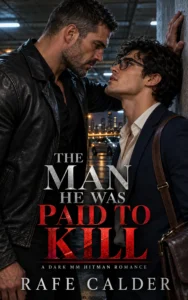
The Man He Was Paid to Kill
The Kestrel Contracts
He was paid to kill me. Four years ago, I saved his life.

A Vow Between Enemies
The Dunhaven Accord
Two families. Thirty years of war. One marriage to end it, if it doesn't end us first.

The Heir’s Last Order
My father's last order was my death. The man he gave it to is the only one I trust.

Crown Him in Blood
He handed me a loaded gun so I'd follow him home. He never told me what else he was carrying.
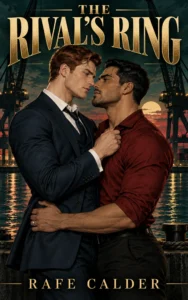
The Rival’s Ring
The ring was supposed to stop a war. The man who put it on me was supposed to stay my enemy.
Never Miss a Release
Get new release alerts, exclusive bonus content, and reader-only giveaways.